
Productive Human-AI Collaboration
Productive human-AI collaboration is not measured by how much work AI completes. It depends on whether the student remains responsible for setting the direction, evaluating possibilities, and making consequential decisions. When AI expands thinking without replacing judgment, students can leave the interaction with more than a finished product—they can become more capable learners.

Verification Is More Than Fact-Checking
AI-generated content can look polished, complete, and convincing even when it contains weak reasoning, missing context, or inaccurate information. Teaching students to verify AI means going beyond simple fact-checking to examine sources, assumptions, evidence, completeness, and whether an answer is reliable enough for its intended purpose.
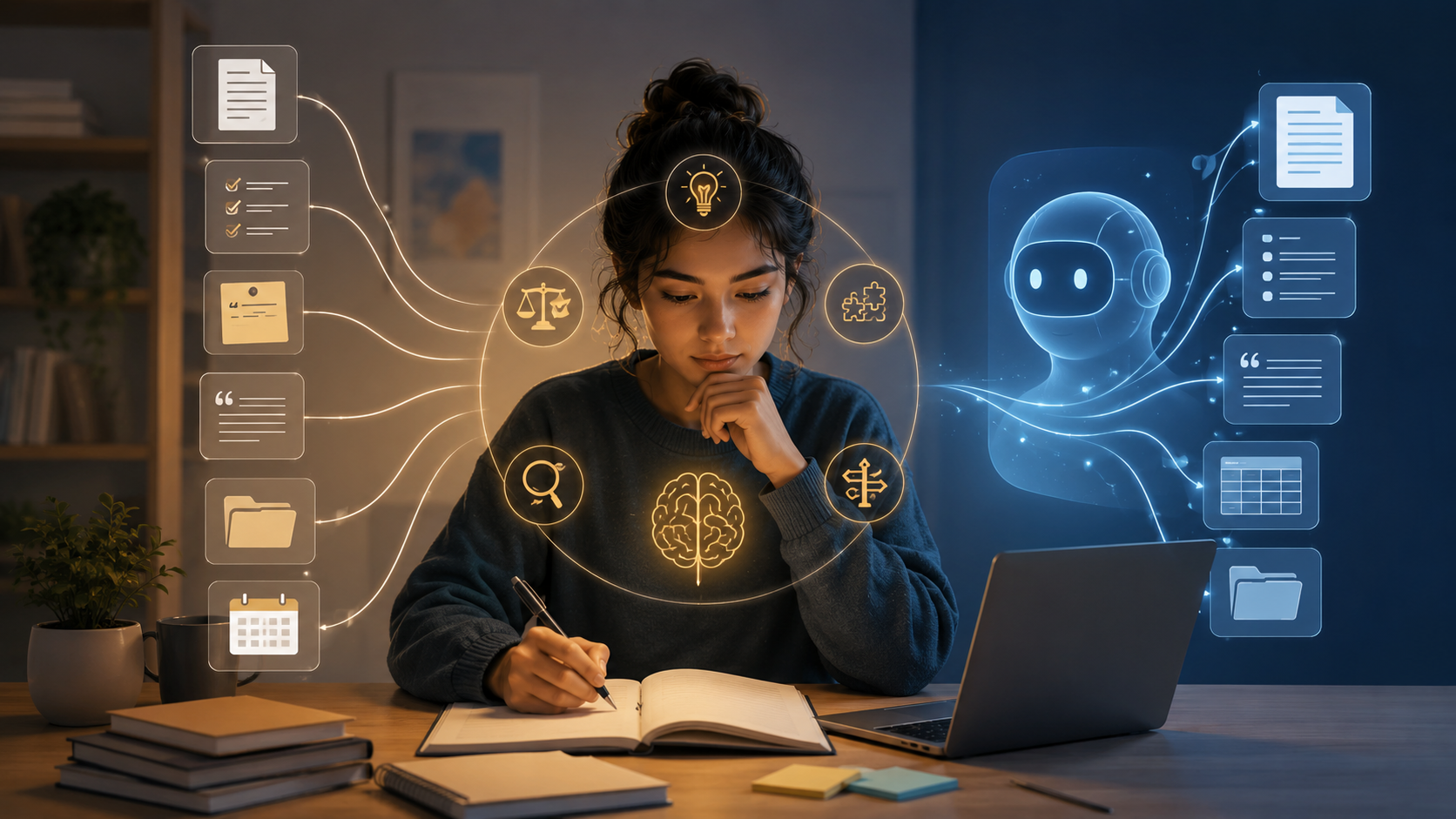
Cognitive Offloading: What Should We Hand Over to AI?
AI can make learning easier, but easier does not always mean better. Cognitive offloading can free students to focus on more meaningful thinking, but it can also remove the very effort needed to build understanding, judgment, and independence. The challenge is helping students decide what they can responsibly hand over to AI—and what thinking they still need to do themselves.

Asking Better Questions
In an AI-rich world, answers are becoming easier to generate—but easy answers can create a false sense of understanding. Curiosity keeps students from stopping at the first response, encouraging them to question assumptions, explore alternatives, and pursue deeper understanding. The students who thrive will not simply know how to get answers quickly; they will know how to keep asking better questions.
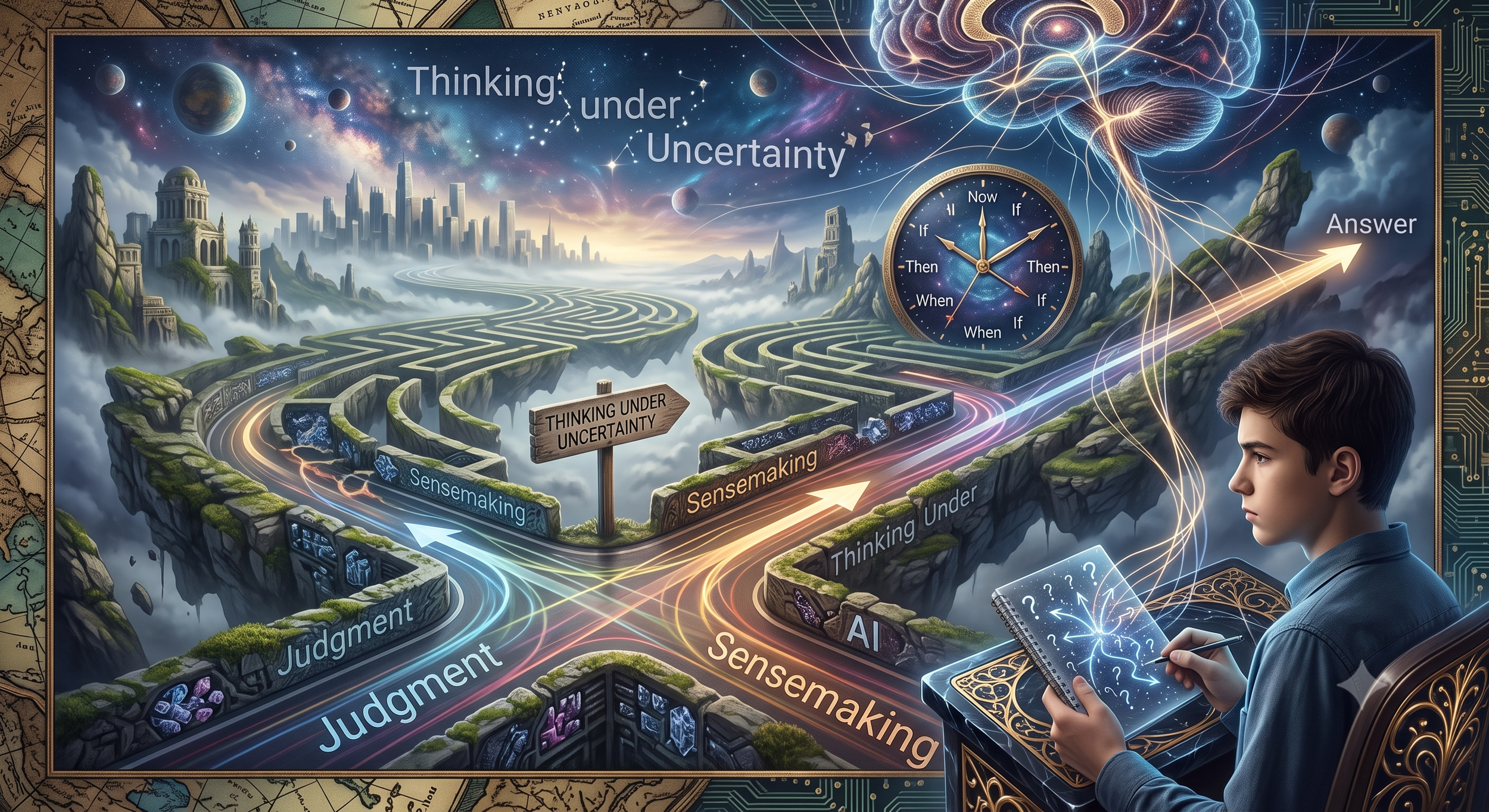
Thinking Under Uncertainty
The Illusion of Certainty
AI can create the impression that uncertainty has disappeared. Ask a question, and an answer appears. Ask for a recommendation, and the tool offers one. Ask for an explanation, and the response often arrives with clarity, structure, and confidence.
That confidence can be useful. But it can also be misleading.
Because many of the most important questions students will face do not have simple, final, or universally correct answers. What is the best solution for this situation? Which source should I trust? What matters most in this decision? What risks should I consider?
Those questions do not ask students simply to retrieve information. They ask students to reason through uncertainty.
Would you like a different excerpt that focuses more on the practical classroom strategies, or perhaps one that sets up the introduction?
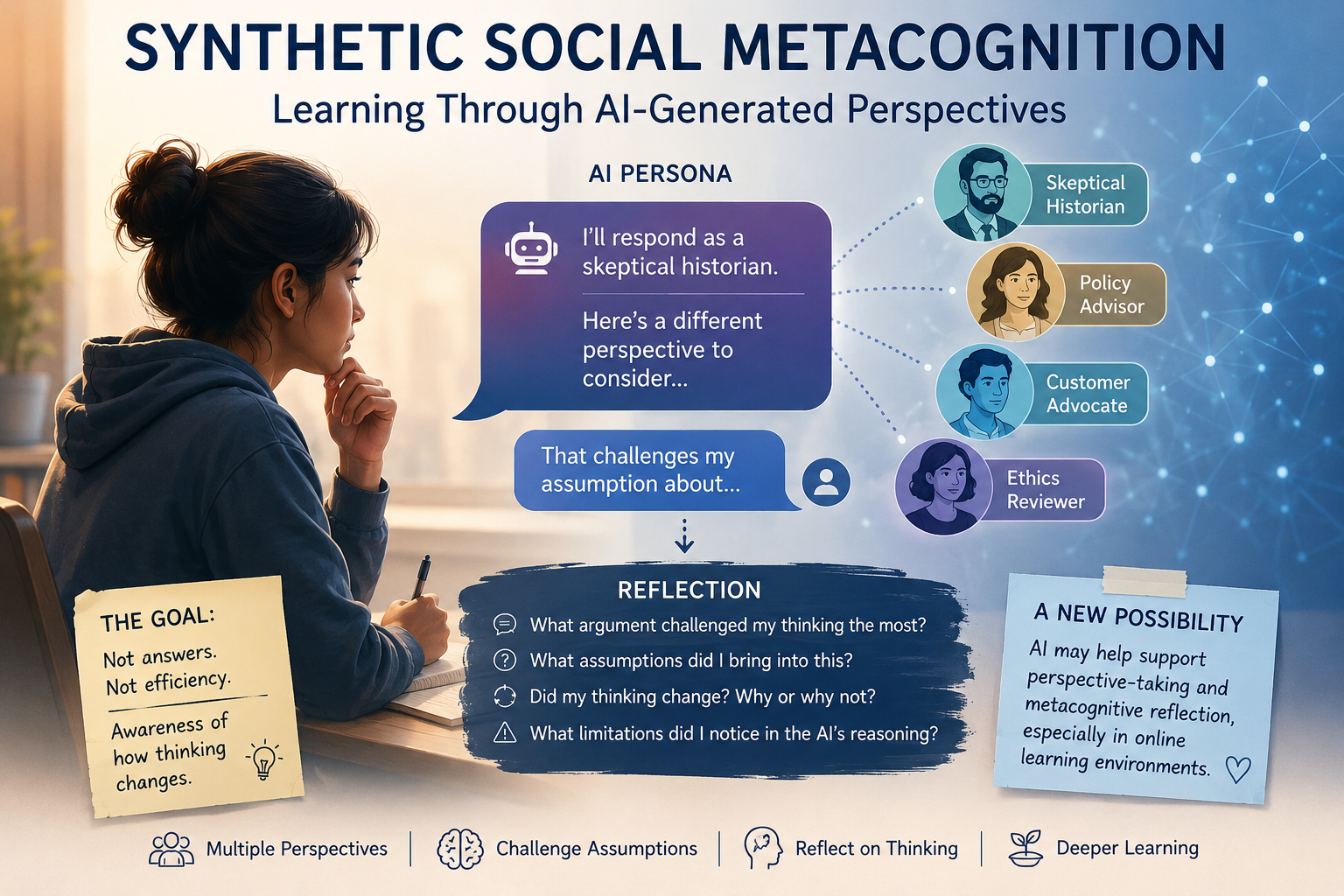
Can AI Support Social Metacognition?
Learning often happens when our assumptions are challenged and our thinking evolves. Traditionally, peers, instructors, and collaborative activities have helped create those moments. But could AI also play a role? This post explores the possibility of using AI personas to encourage perspective-taking, reflection, and metacognitive awareness—a concept I'm calling Synthetic Social Metacognition.