
AI Is Changing Tasks Before It Changes Jobs
AI is changing work, but not simply by replacing entire jobs. More often, it is reshaping the individual tasks, decisions, and responsibilities within them. Preparing students for this future means helping them understand what AI can support, what still requires human judgment, and where accountability remains.

AI as a Tutor, Not an Answer Machine
AI has real potential as a tutor, but only when it supports rather than removes the thinking students need to practice. The goal is not simply to help students reach answers faster, but to help them become more capable of learning and solving problems independently.

Verification Is More Than Fact-Checking
AI-generated content can look polished, complete, and convincing even when it contains weak reasoning, missing context, or inaccurate information. Teaching students to verify AI means going beyond simple fact-checking to examine sources, assumptions, evidence, completeness, and whether an answer is reliable enough for its intended purpose.

Cognitive Offloading: What Should We Hand Over to AI?
AI can make learning easier, but easier does not always mean better. Cognitive offloading can free students to focus on more meaningful thinking, but it can also remove the very effort needed to build understanding, judgment, and independence. The challenge is helping students decide what they can responsibly hand over to AI—and what thinking they still need to do themselves.
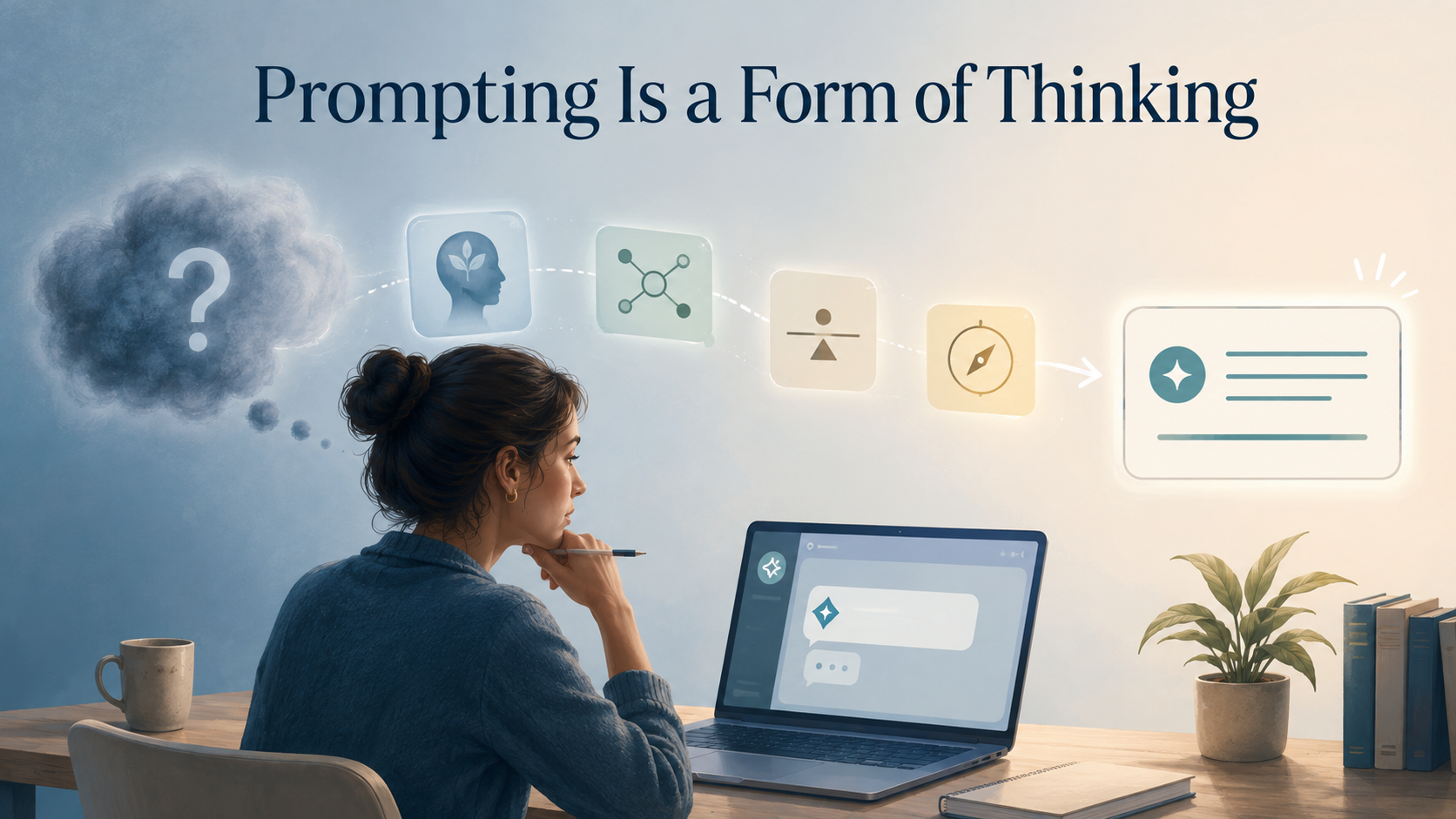
Prompting Is a Form of Thinking
Prompting is more than a technique for getting better AI responses. It requires students to define the problem, identify what they know, recognize what they still need, and decide what role AI should play. When students remain responsible for those decisions, prompting becomes a form of metacognition—and a way to learn alongside AI without handing over the thinking.
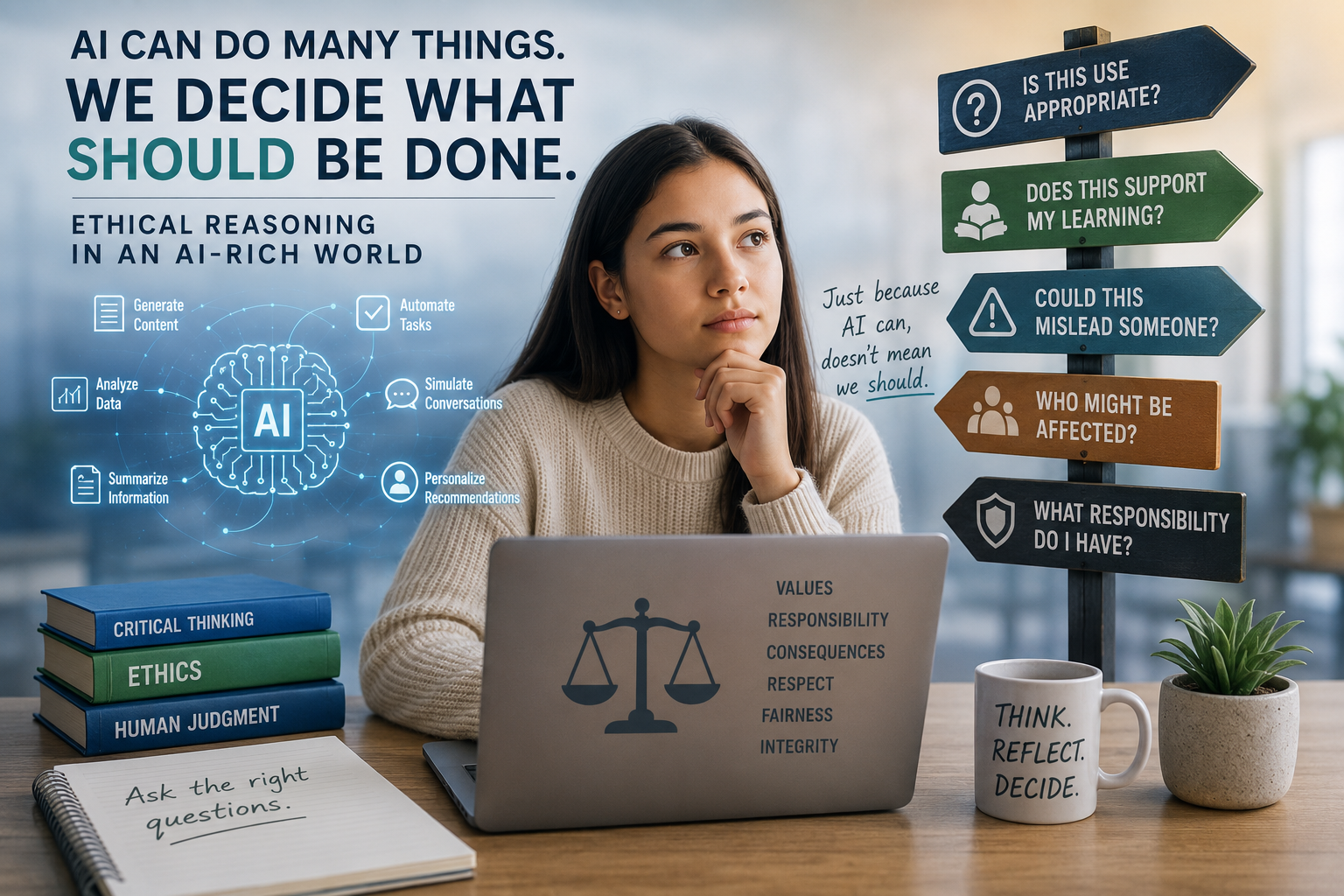
Ethical Reasoning: Not Just Can We, But Should We?
AI can generate content, automate tasks, and offer recommendations, but capability is not the same as responsibility. Students need opportunities to ask not only whether AI can be used, but whether its use supports learning, protects trust, respects others, and preserves human judgment.
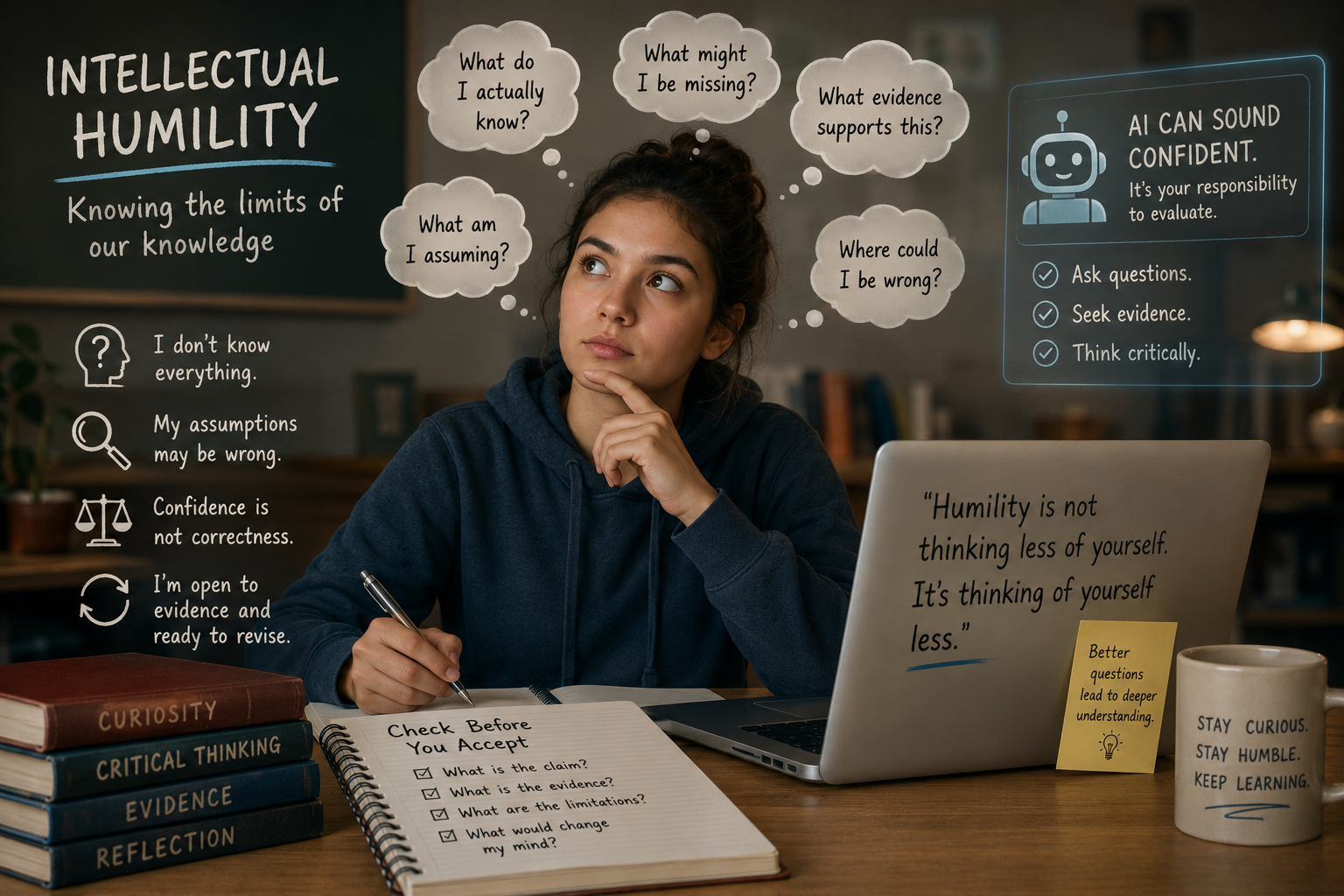
Intellectual Humility: Knowing the Limits of Our Knowledge
AI can generate polished, confident answers, but confidence is not the same as correctness. Intellectual humility helps students recognize the limits of their own knowledge, question assumptions, seek evidence, and remain open to revision. In an AI-rich world, this habit of mind is essential for helping students use technology without surrendering judgment.

Asking Better Questions
In an AI-rich world, answers are becoming easier to generate—but easy answers can create a false sense of understanding. Curiosity keeps students from stopping at the first response, encouraging them to question assumptions, explore alternatives, and pursue deeper understanding. The students who thrive will not simply know how to get answers quickly; they will know how to keep asking better questions.
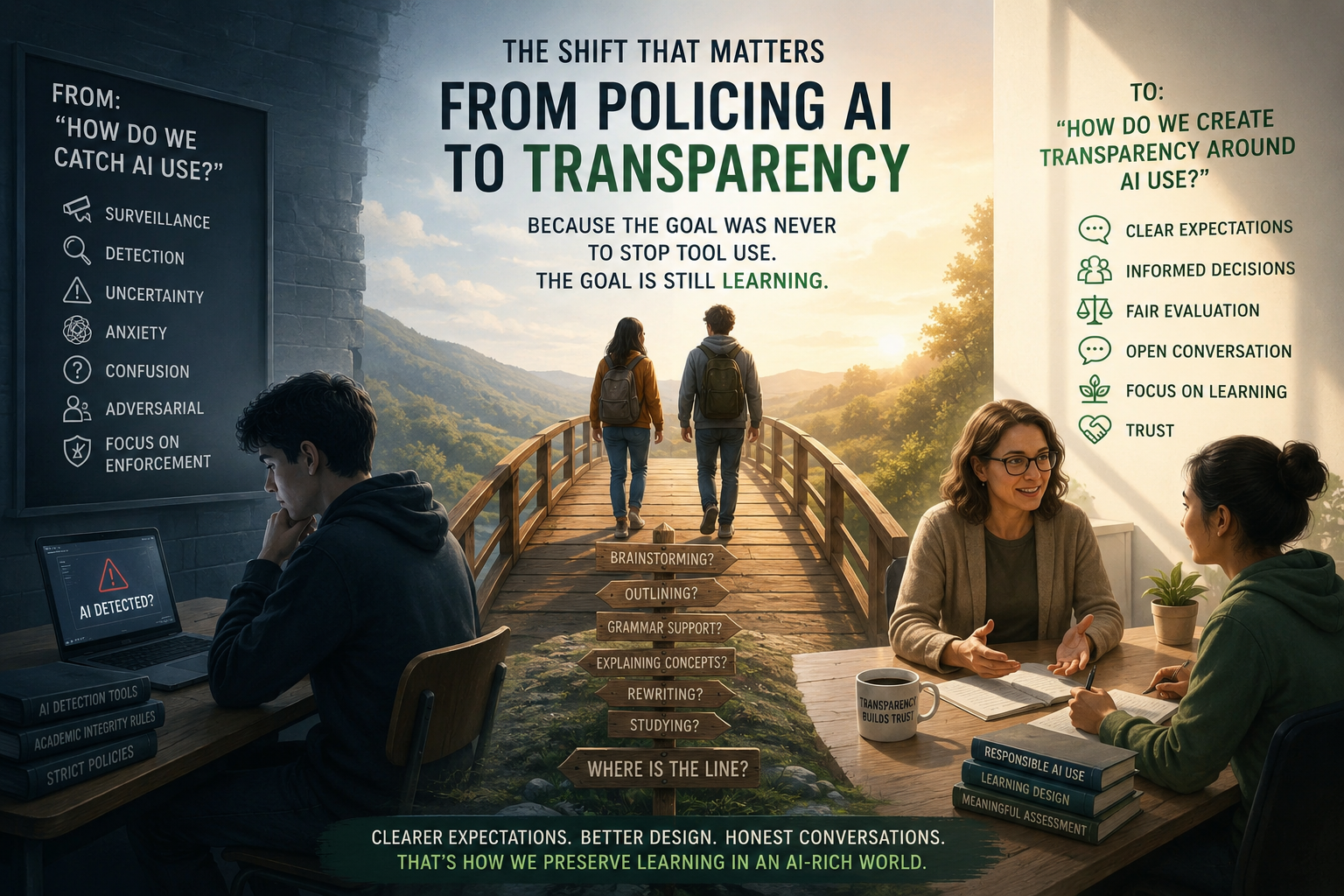
Transparency Over Policing
We keep asking: “How do we stop students from using AI?” But I’m not sure that’s the right question anymore. Because the reality is: You cannot out-police AI use.
The tools are evolving too quickly. Detection systems are inconsistent. And even the companies behind many AI detectors often acknowledge limitations, false positives, and uncertainty in their own documentation.
That creates a dangerous situation in education: