
Knowing When Human Oversight Is Necessary
“Keep a human in the loop” sounds reassuring, but the presence of a person does not guarantee meaningful oversight. A reviewer can investigate an AI recommendation, compare it with other evidence, and stop a harmful outcome—or simply glance at it and click approve. Both workflows include a human. Only one preserves human judgment.
As AI moves from generating information to taking actions across workplace systems, we need to ask a more useful question: What must the human be able to see, understand, decide, and stop?

Working With AI Without Losing Professional Expertise
AI can improve a novice’s performance without building the expertise needed to work, evaluate, and recover independently. As AI takes on more entry-level tasks, educators and employers need to ask which capabilities people must retain—and how learning experiences can help them develop those capabilities before efficiency becomes the only goal.
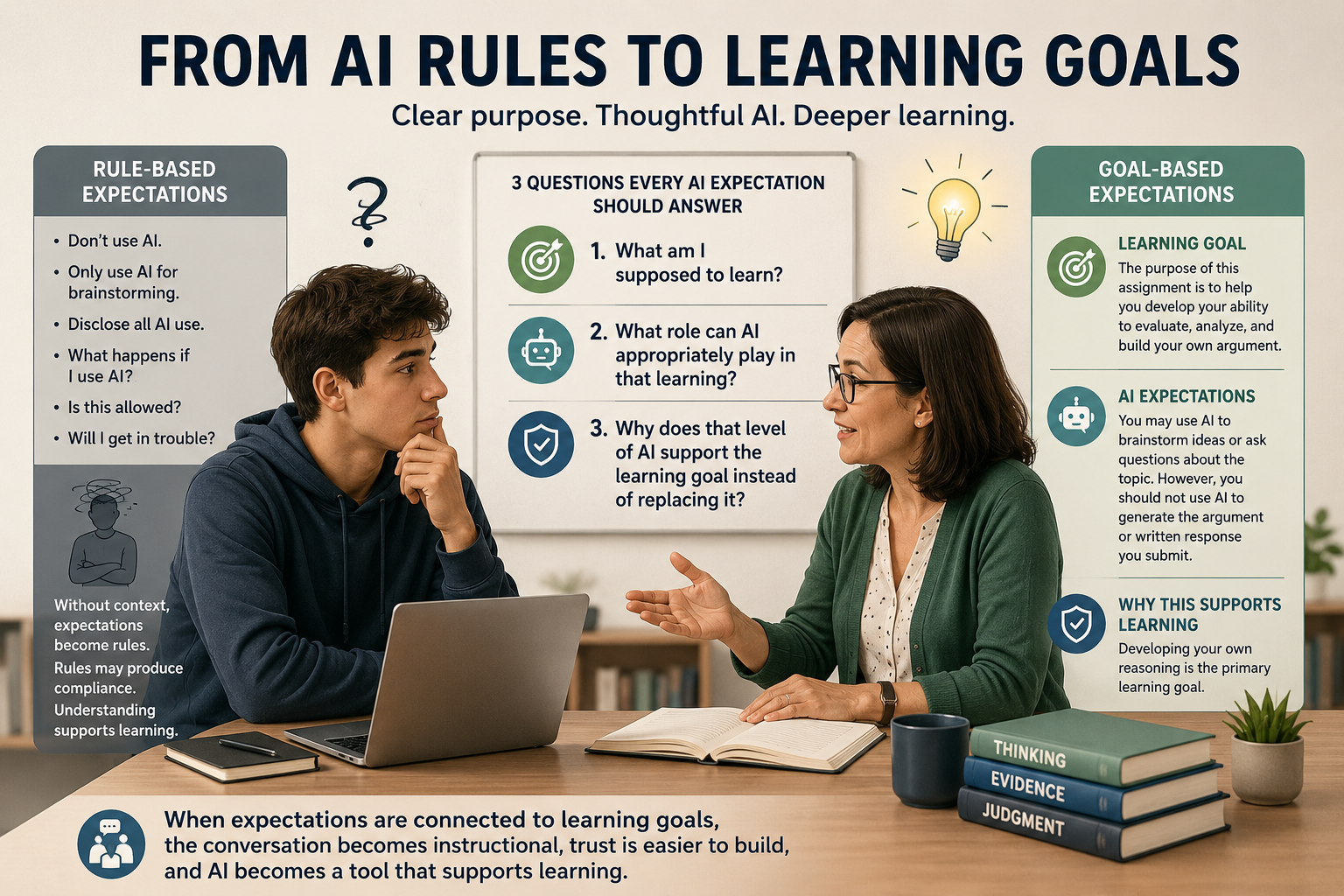
From AI Rules to Learning Goals
AI policies often focus on rules: what students can do, what they can't do, and when they must disclose AI use. But those rules make much more sense when students first understand what they're supposed to learn. Instead of starting with restrictions, we should start with learning goals. When AI expectations are connected to purpose rather than policy, students are more likely to understand not only what is expected, but why those expectations matter.
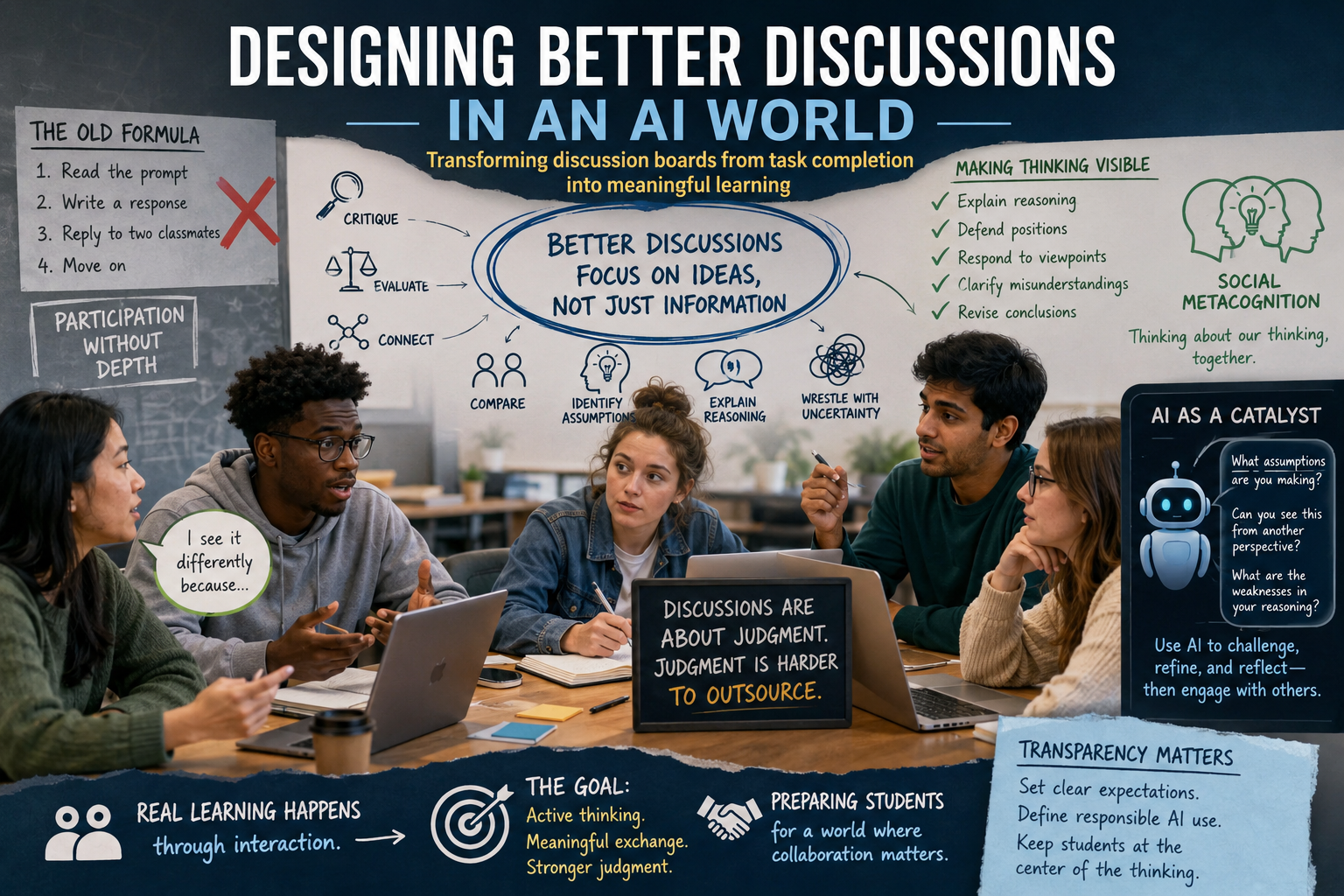
Designing Better Discussions in an AI World
Discussion boards have never been about simply posting answers—they've been about making sense of ideas together. In an AI-rich world, that distinction matters more than ever. Rather than making discussion prompts harder, instructors can design discussions that emphasize reasoning, judgment, and meaningful interaction. By focusing on visible thinking, social metacognition, and thoughtful use of AI, discussions can become powerful opportunities for students to challenge assumptions, refine their understanding, and develop the kinds of judgment that AI cannot easily replace.
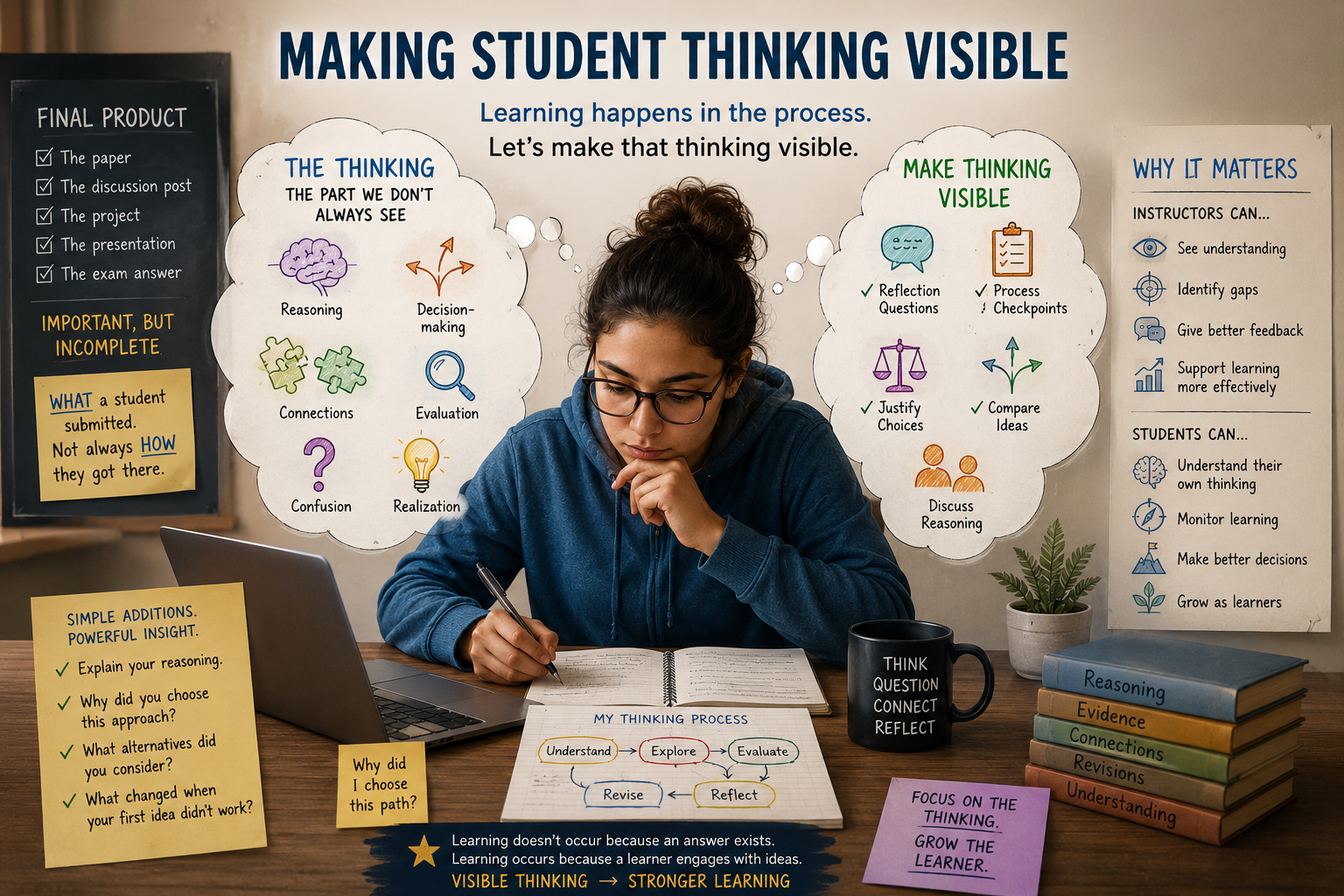
Making Student Thinking Visible
AI has not changed what learning is, but it has exposed how difficult it can be to see. Too often, we assess the final product without understanding the thinking that produced it. In an AI-rich world, instructional design must shift toward making reasoning, decision-making, and reflection visible. Small changes, such as asking students to justify their choices or explain their process, can provide richer evidence of learning while helping students develop the metacognitive skills that matter most.
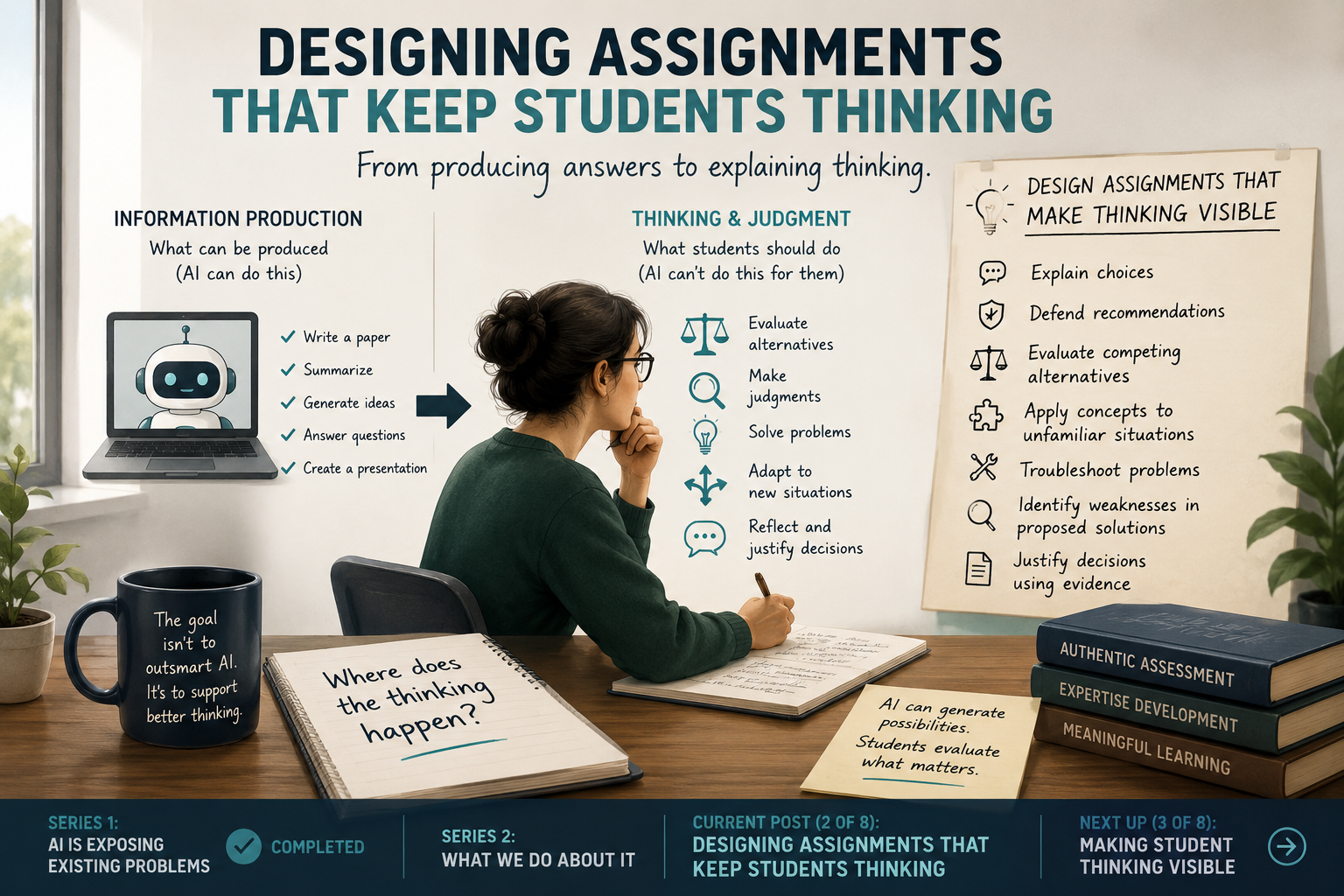
Designing Assignments That Keep Students Thinking
AI can generate information. Learning happens when students evaluate it. Rather than trying to design assignments that prevent AI use, faculty can design assignments that make student thinking visible. The goal isn't to outsmart AI, it's to create opportunities for students to explain, justify, evaluate, and apply their thinking in ways that reflect genuine learning.