Knowing When Human Oversight Is Necessary
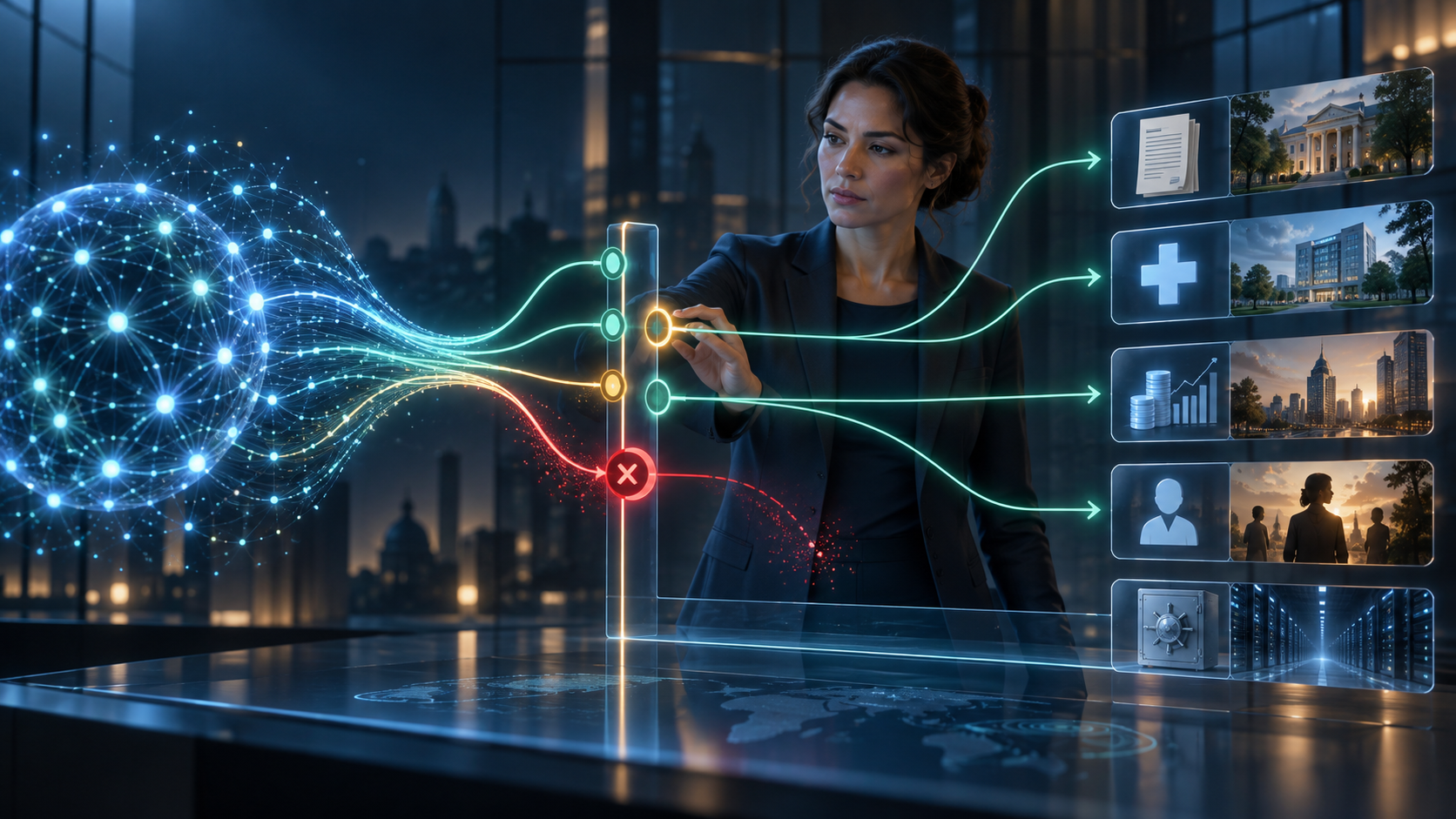
“Keep a human in the loop” sounds reassuring, but the presence of a person does not guarantee meaningful oversight. A reviewer can investigate an AI recommendation, compare it with other evidence, and stop a harmful outcome—or simply glance at it and click approve. Both workflows include a human. Only one preserves human judgment.
As AI moves from generating information to taking actions across workplace systems, we need to ask a more useful question: What must the human be able to see, understand, decide, and stop?

Working With AI Without Losing Professional Expertise
AI can improve a novice’s performance without building the expertise needed to work, evaluate, and recover independently. As AI takes on more entry-level tasks, educators and employers need to ask which capabilities people must retain—and how learning experiences can help them develop those capabilities before efficiency becomes the only goal.

Protecting Data in an AI-Enabled Workplace
AI tools can be genuinely useful when we provide context—but more context can also mean greater exposure. A customer note, student email, résumé, troubleshooting log, or internal document may contain information entrusted to us by someone else. The professional question is not simply, “Is this private?” It is, “Am I authorized to use this information in this way?” Before sharing anything with AI, we need to pause, minimize what we provide, and consider whose information is at stake.

Metacognition: Understanding Our Own Thinking
As AI makes polished answers easier to produce, students need to become more aware of what is happening to their own thinking. Metacognition helps them recognize when AI is supporting genuine learning—and when it is quietly doing the cognitive work for them.