
Metacognition: Understanding Our Own Thinking
As AI makes polished answers easier to produce, students need to become more aware of what is happening to their own thinking. Metacognition helps them recognize when AI is supporting genuine learning—and when it is quietly doing the cognitive work for them.
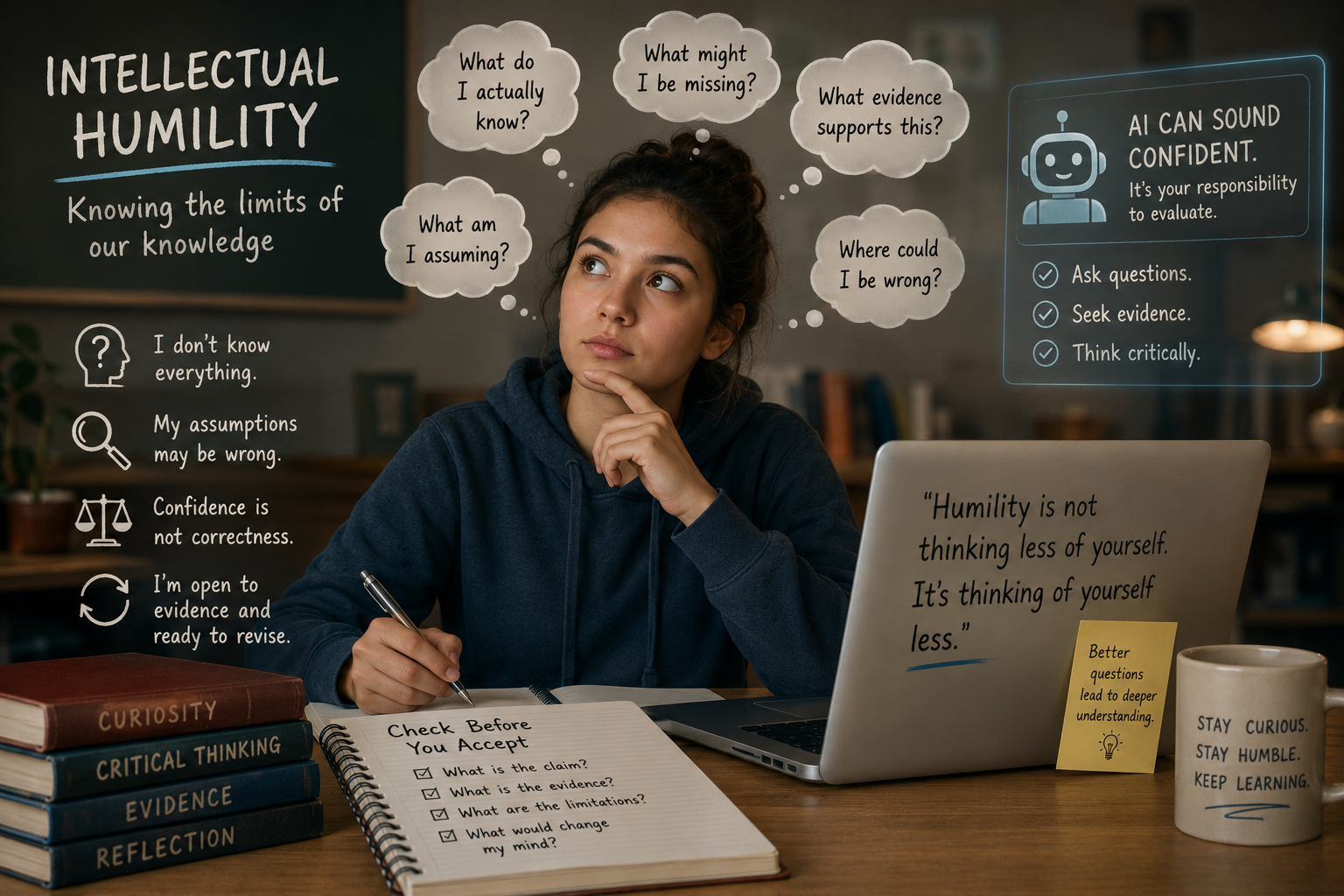
Intellectual Humility: Knowing the Limits of Our Knowledge
AI can generate polished, confident answers, but confidence is not the same as correctness. Intellectual humility helps students recognize the limits of their own knowledge, question assumptions, seek evidence, and remain open to revision. In an AI-rich world, this habit of mind is essential for helping students use technology without surrendering judgment.
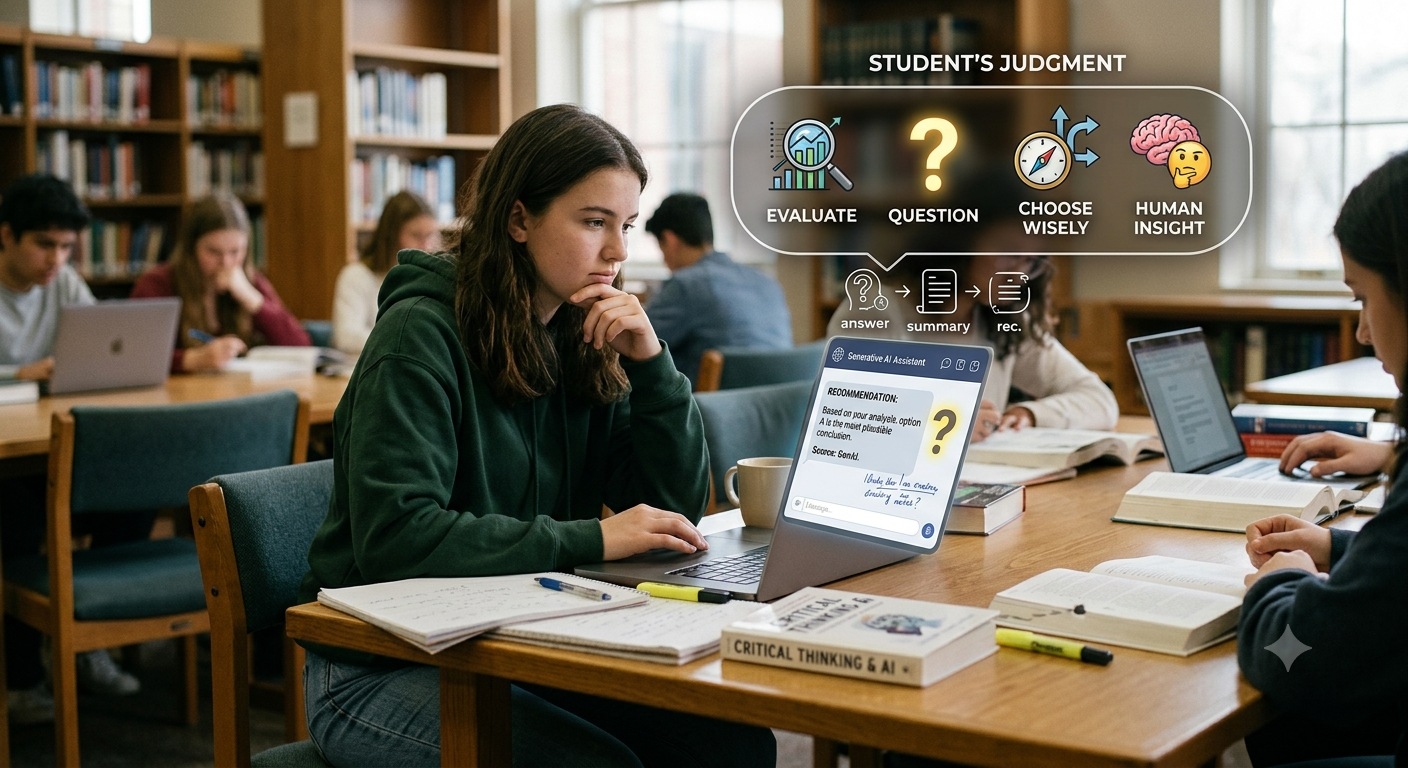
Judgment: Choosing Among Possibilities
In an AI-rich world, students do not only need to produce answers. They need to evaluate them. AI can generate possibilities, summaries, recommendations, and solutions, but students still need to decide what is accurate, appropriate, ethical, and useful. That is why judgment must become a more explicit learning goal. By asking students to compare options, explain criteria, identify trade-offs, and defend decisions with evidence, educators can help them practice the kind of human thinking that AI cannot replace.
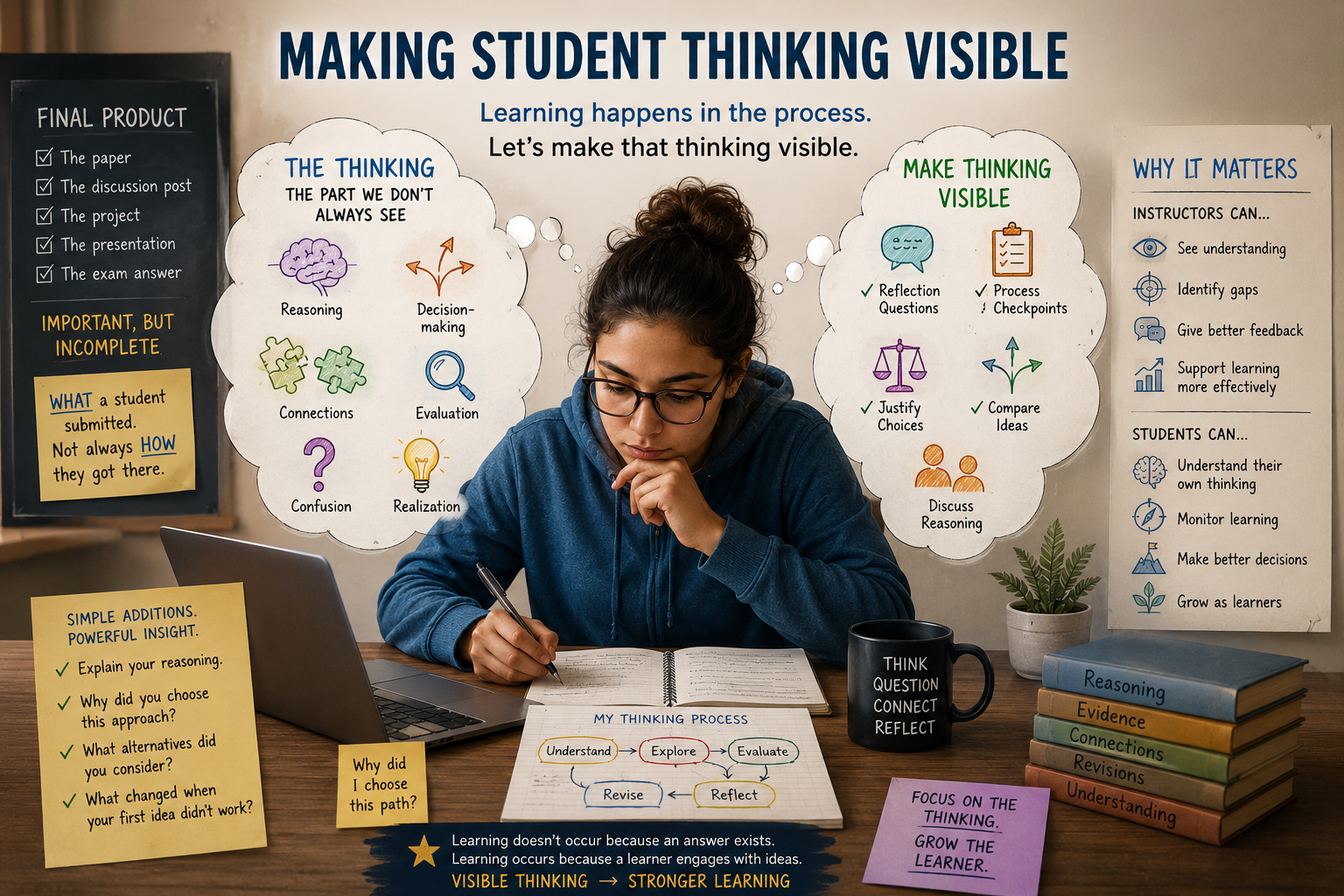
Making Student Thinking Visible
AI has not changed what learning is, but it has exposed how difficult it can be to see. Too often, we assess the final product without understanding the thinking that produced it. In an AI-rich world, instructional design must shift toward making reasoning, decision-making, and reflection visible. Small changes, such as asking students to justify their choices or explain their process, can provide richer evidence of learning while helping students develop the metacognitive skills that matter most.