

AI Can Recommend. Humans Still Have to Answer
AI can generate recommendations, identify risks, and help professionals work through complex information. But it cannot carry the consequences of the decisions that follow. As AI becomes part of workplace decision-making, students need more than technical skill: they need the judgment, authority, and professional courage to question a recommendation, recognize its limits, and take responsibility for how it is used.

Making AI Use Visible in Professional Work
As AI becomes part of everyday professional work, simply saying that it was used is no longer enough. Responsible practice requires documenting what AI contributed, how its output was evaluated, what decisions remained human, and who accepts responsibility for the final result.

AI Is Changing Tasks Before It Changes Jobs
AI is changing work, but not simply by replacing entire jobs. More often, it is reshaping the individual tasks, decisions, and responsibilities within them. Preparing students for this future means helping them understand what AI can support, what still requires human judgment, and where accountability remains.

Prompting Is a Form of Thinking
Prompting is more than a technique for getting better AI responses. It requires students to define the problem, identify what they know, recognize what they still need, and decide what role AI should play. When students remain responsible for those decisions, prompting becomes a form of metacognition—and a way to learn alongside AI without handing over the thinking.
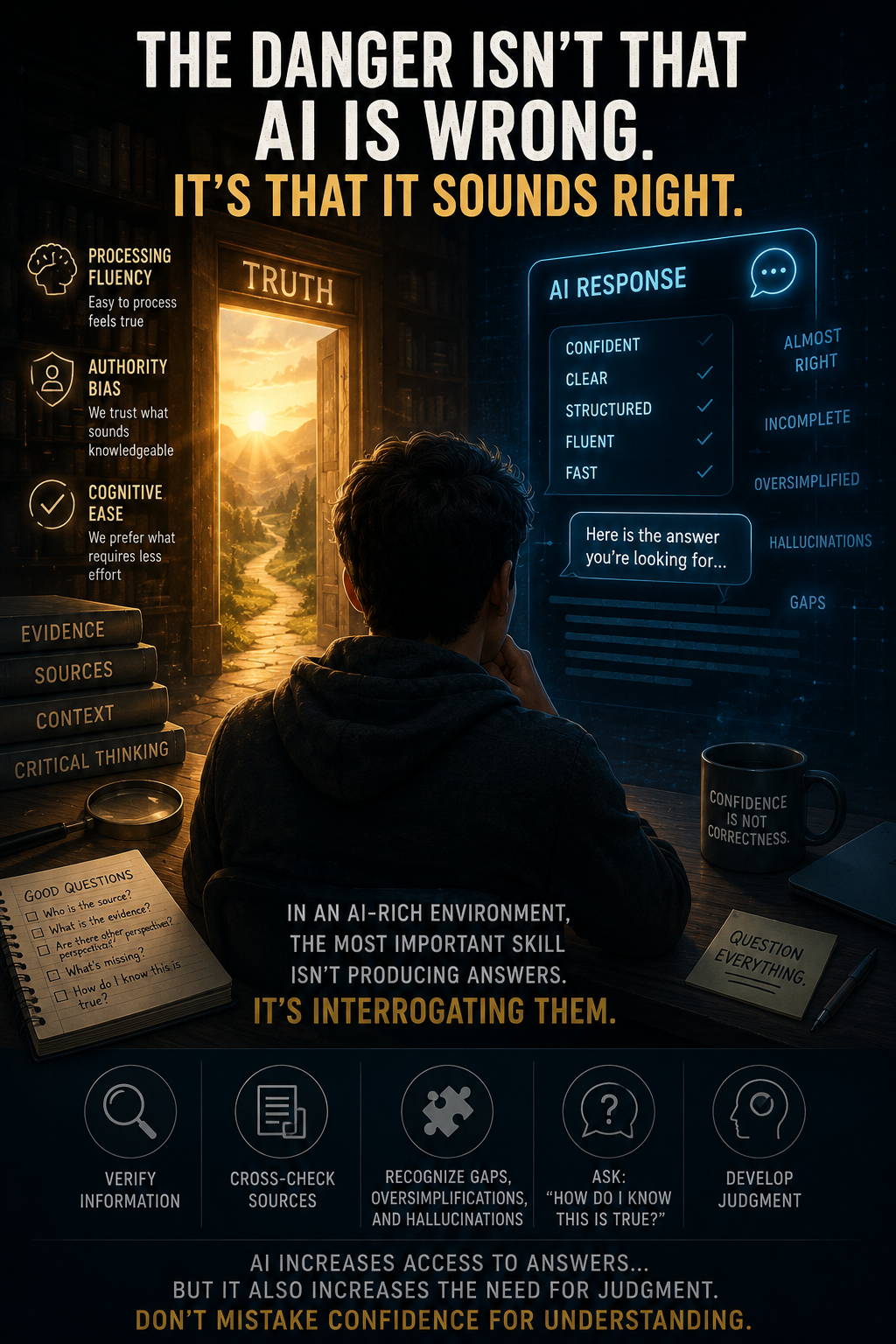
AI Confidence vs. Accuracy
The danger isn’t that AI is wrong. It’s that it sounds right.
AI doesn’t just give answers, it gives confident answers. Clear. Structured. Fluent. Often faster and more polished than what most of us would produce on our own. And that’s exactly the problem.
From a cognitive psychology perspective, this isn’t surprising.
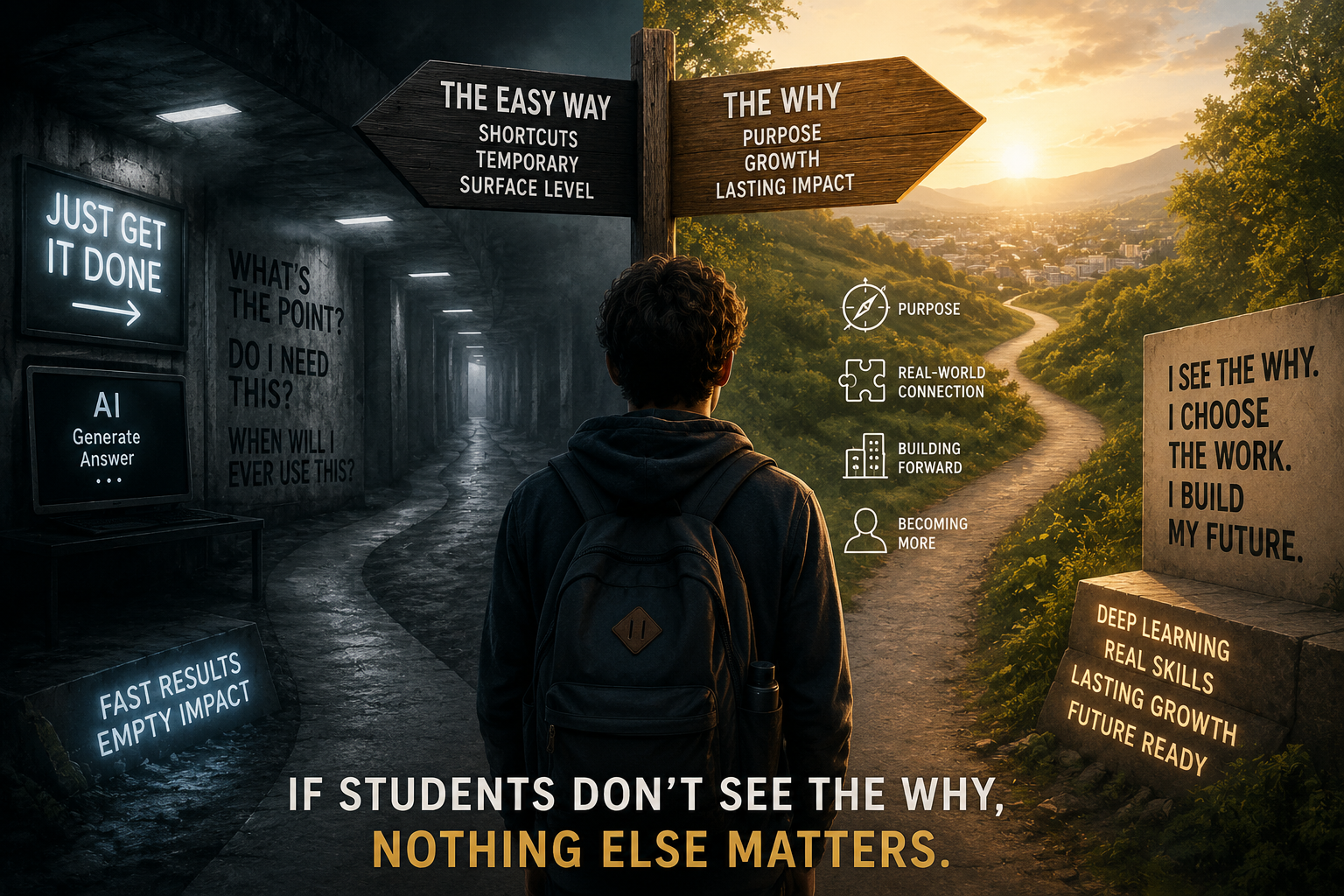
The Missing Purpose Problem
If students don’t see the why, nothing else matters.
We spend a lot of time talking about AI, academic integrity, and “cheating.”
But there’s a more uncomfortable truth underneath it: When students don’t understand the purpose of what they’re doing…shortcut behavior isn’t laziness. It’s rational.