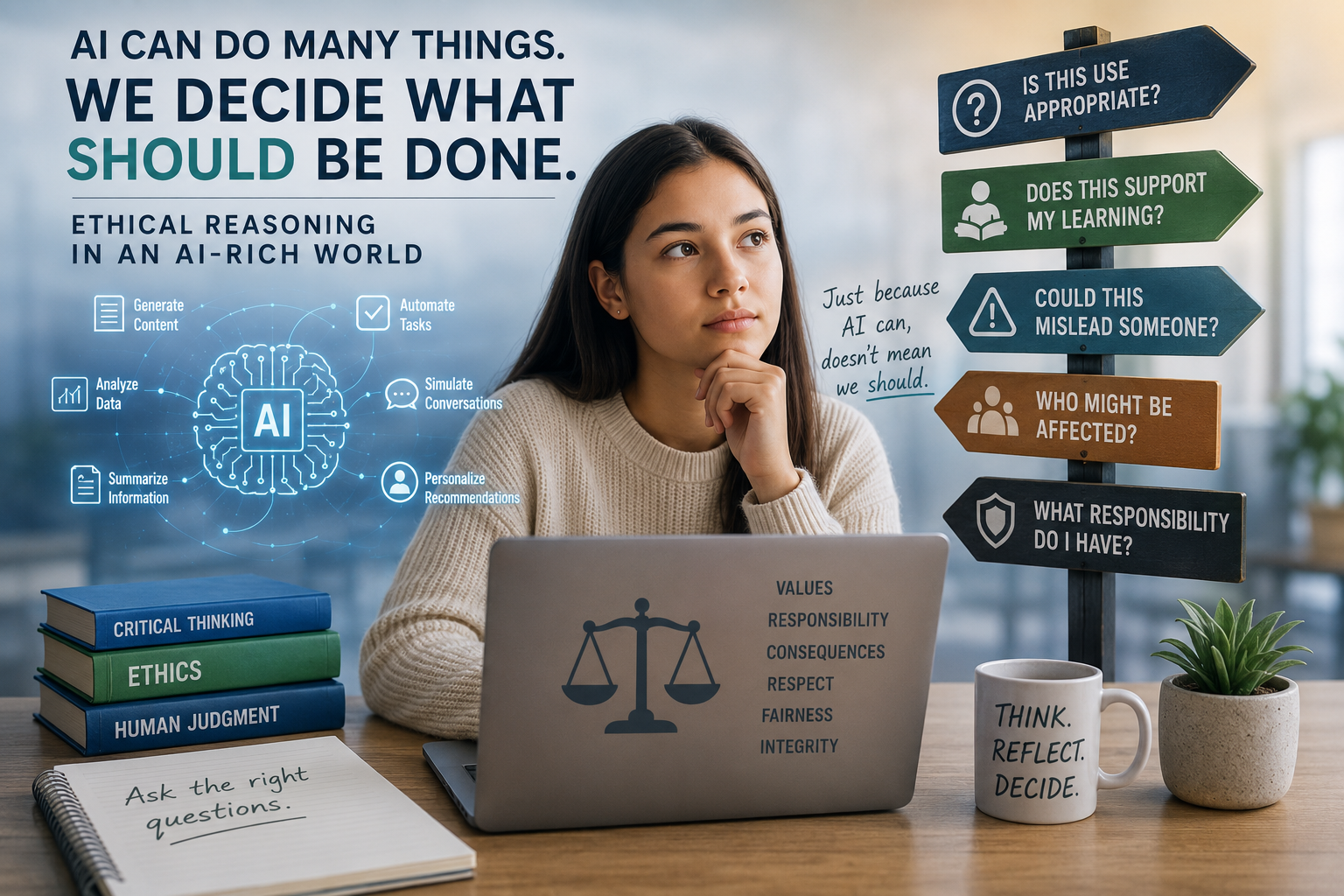
Ethical Reasoning: Not Just Can We, But Should We?
AI can generate content, automate tasks, and offer recommendations, but capability is not the same as responsibility. Students need opportunities to ask not only whether AI can be used, but whether its use supports learning, protects trust, respects others, and preserves human judgment.
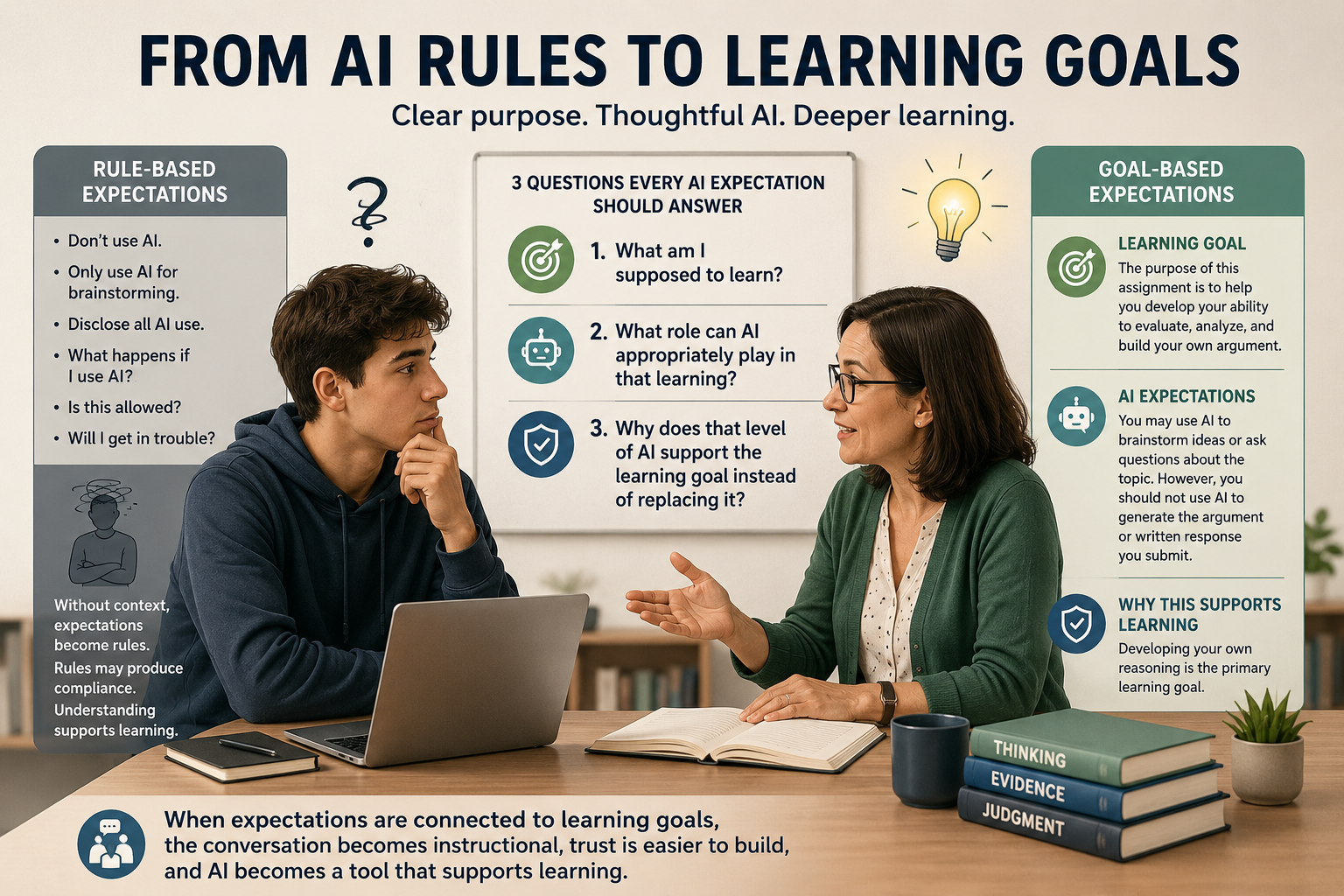
From AI Rules to Learning Goals
AI policies often focus on rules: what students can do, what they can't do, and when they must disclose AI use. But those rules make much more sense when students first understand what they're supposed to learn. Instead of starting with restrictions, we should start with learning goals. When AI expectations are connected to purpose rather than policy, students are more likely to understand not only what is expected, but why those expectations matter.
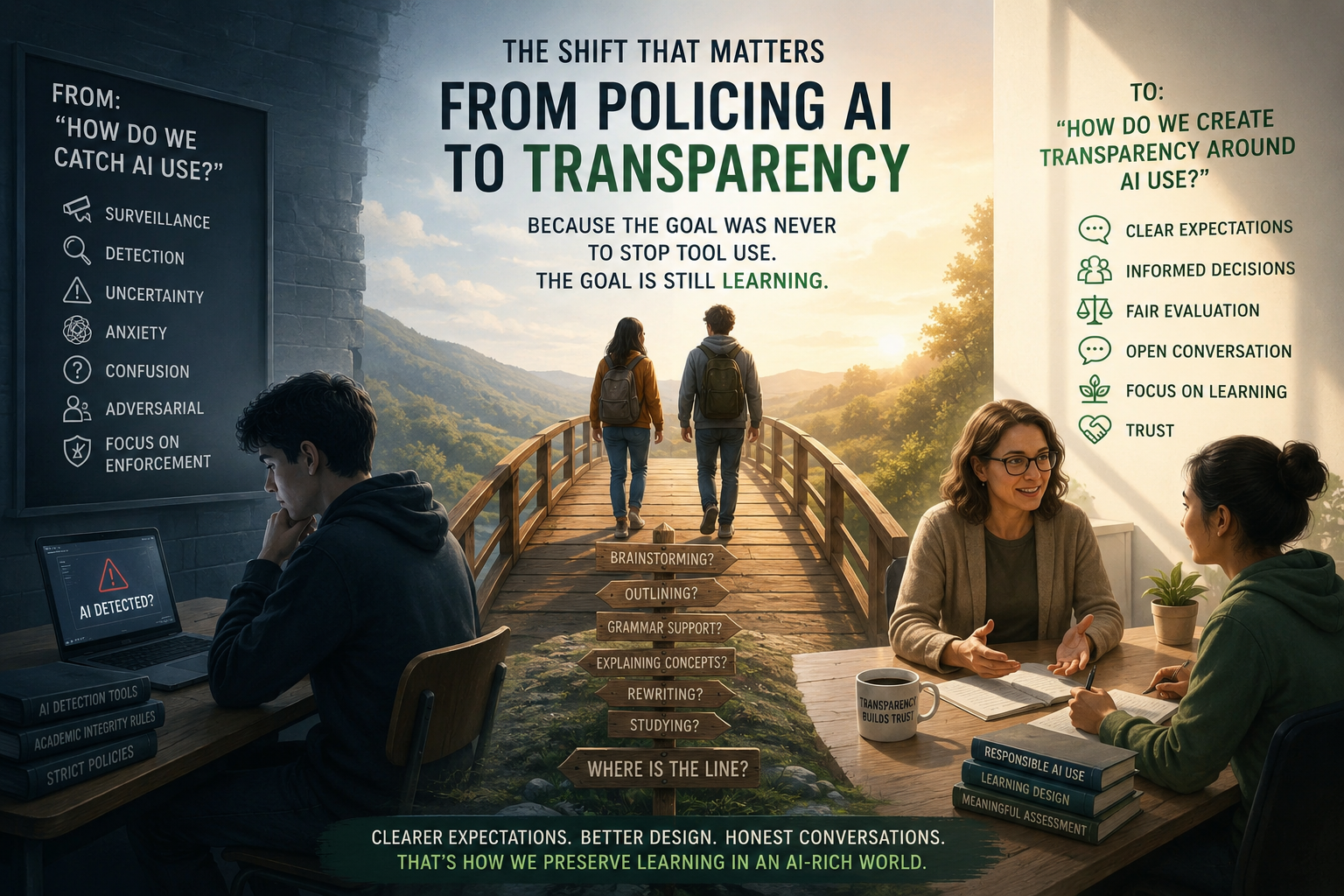
Transparency Over Policing
We keep asking: “How do we stop students from using AI?” But I’m not sure that’s the right question anymore. Because the reality is: You cannot out-police AI use.
The tools are evolving too quickly. Detection systems are inconsistent. And even the companies behind many AI detectors often acknowledge limitations, false positives, and uncertainty in their own documentation.
That creates a dangerous situation in education: