
Verification Is More Than Fact-Checking
AI-generated content can look polished, complete, and convincing even when it contains weak reasoning, missing context, or inaccurate information. Teaching students to verify AI means going beyond simple fact-checking to examine sources, assumptions, evidence, completeness, and whether an answer is reliable enough for its intended purpose.

Cognitive Offloading: What Should We Hand Over to AI?
AI can make learning easier, but easier does not always mean better. Cognitive offloading can free students to focus on more meaningful thinking, but it can also remove the very effort needed to build understanding, judgment, and independence. The challenge is helping students decide what they can responsibly hand over to AI—and what thinking they still need to do themselves.

Metacognition: Understanding Our Own Thinking
As AI makes polished answers easier to produce, students need to become more aware of what is happening to their own thinking. Metacognition helps them recognize when AI is supporting genuine learning—and when it is quietly doing the cognitive work for them.
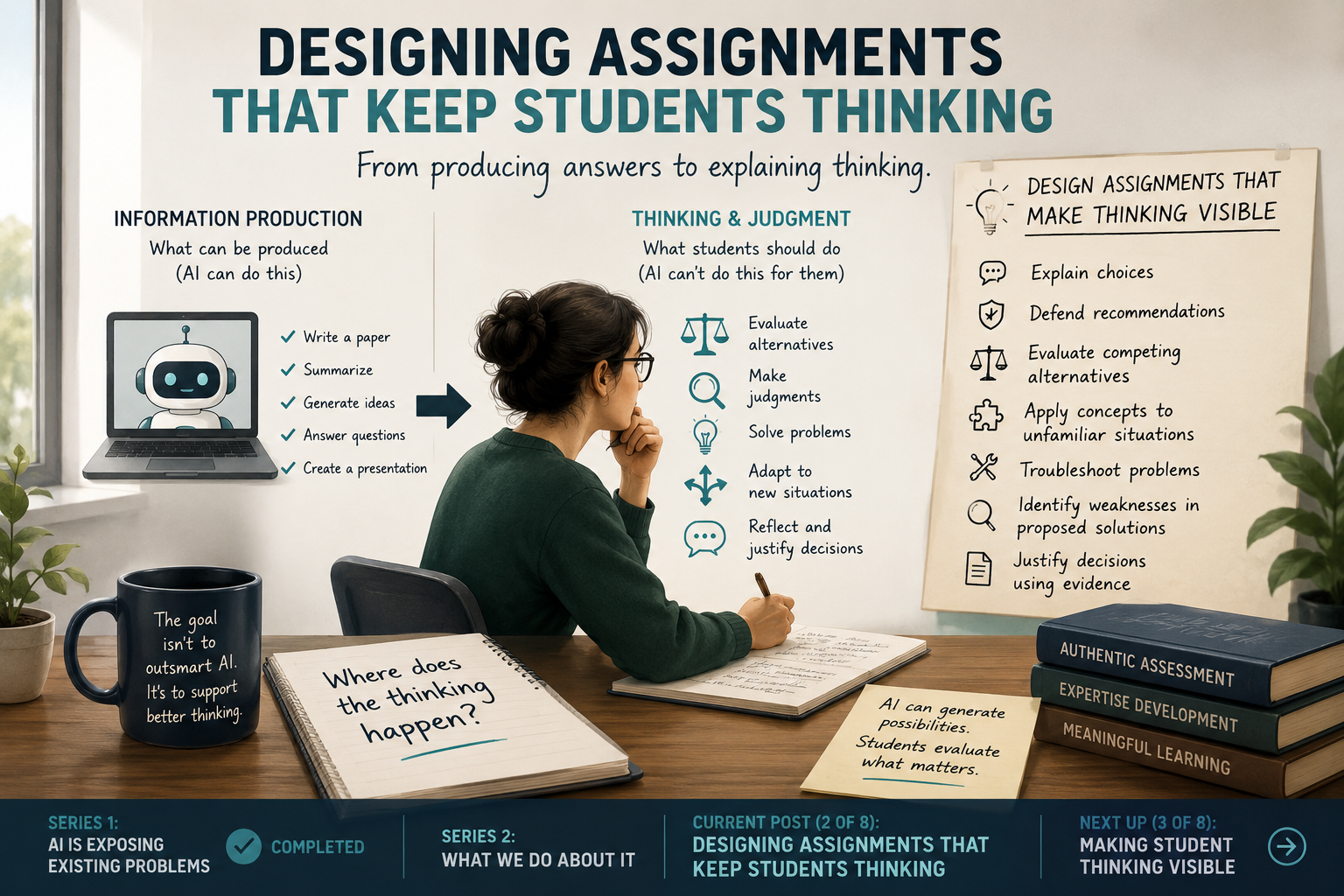
Designing Assignments That Keep Students Thinking
AI can generate information. Learning happens when students evaluate it. Rather than trying to design assignments that prevent AI use, faculty can design assignments that make student thinking visible. The goal isn't to outsmart AI, it's to create opportunities for students to explain, justify, evaluate, and apply their thinking in ways that reflect genuine learning.