

Discernment: Knowing When and How to Use AI
AI literacy is not just knowing how to use AI. It is knowing when to use it, when to delay it, what role it should play, and what thinking should remain human. Discernment helps students make those choices intentionally so that AI supports learning without quietly replacing the thinking through which learning develops.

Prompting Is a Form of Thinking
Prompting is more than a technique for getting better AI responses. It requires students to define the problem, identify what they know, recognize what they still need, and decide what role AI should play. When students remain responsible for those decisions, prompting becomes a form of metacognition—and a way to learn alongside AI without handing over the thinking.
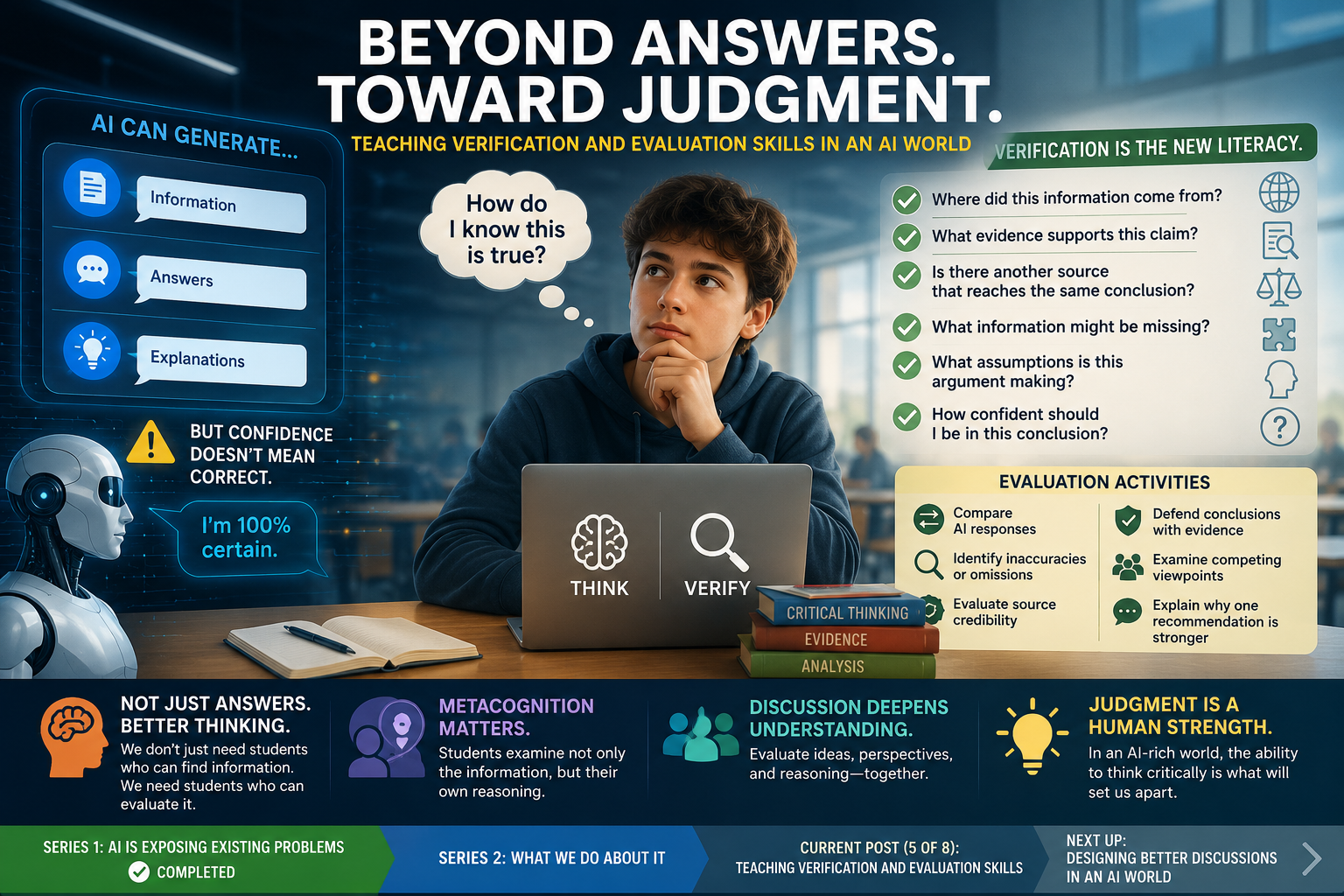
Teaching Verification and Evaluation Skills
AI has changed one of the most important skills students need to develop. The challenge is no longer finding information—it is evaluating it. As AI generates increasingly fluent and convincing answers, students must learn to verify claims, weigh evidence, recognize uncertainty, and exercise sound judgment. In an AI-rich world, the ability to ask, "How do I know this is true?" may become more valuable than simply knowing the answer.

Building Reflection into Learning
Reflection is often treated as an afterthought, but in an AI-rich classroom it may be one of the most valuable learning strategies we have. By asking students to examine what they understood, where they struggled, and how AI influenced their thinking, reflection makes learning visible. It helps students develop metacognitive skills, recognize the difference between AI support and AI substitution, and become more intentional, independent learners.
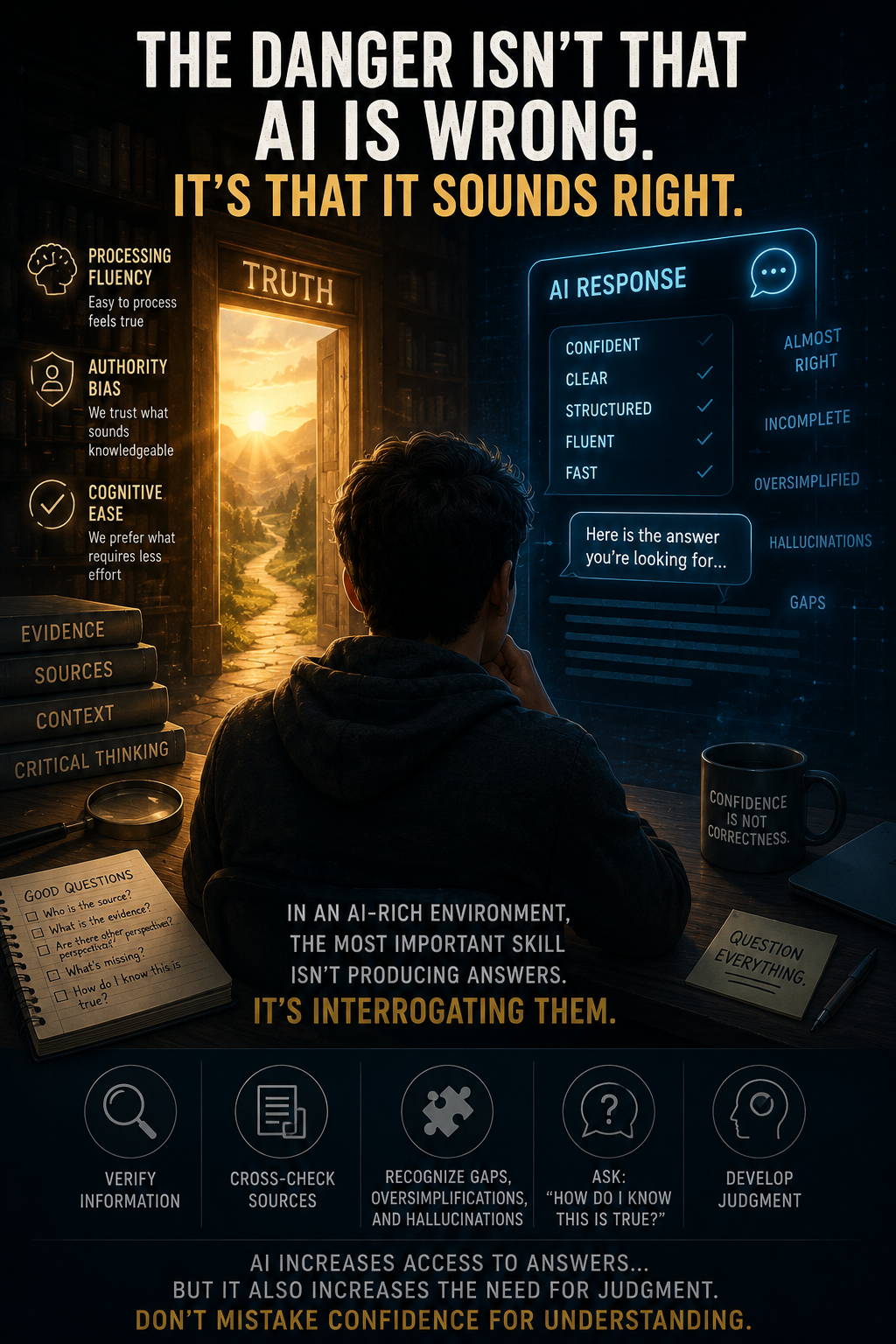
AI Confidence vs. Accuracy
The danger isn’t that AI is wrong. It’s that it sounds right.
AI doesn’t just give answers, it gives confident answers. Clear. Structured. Fluent. Often faster and more polished than what most of us would produce on our own. And that’s exactly the problem.
From a cognitive psychology perspective, this isn’t surprising.
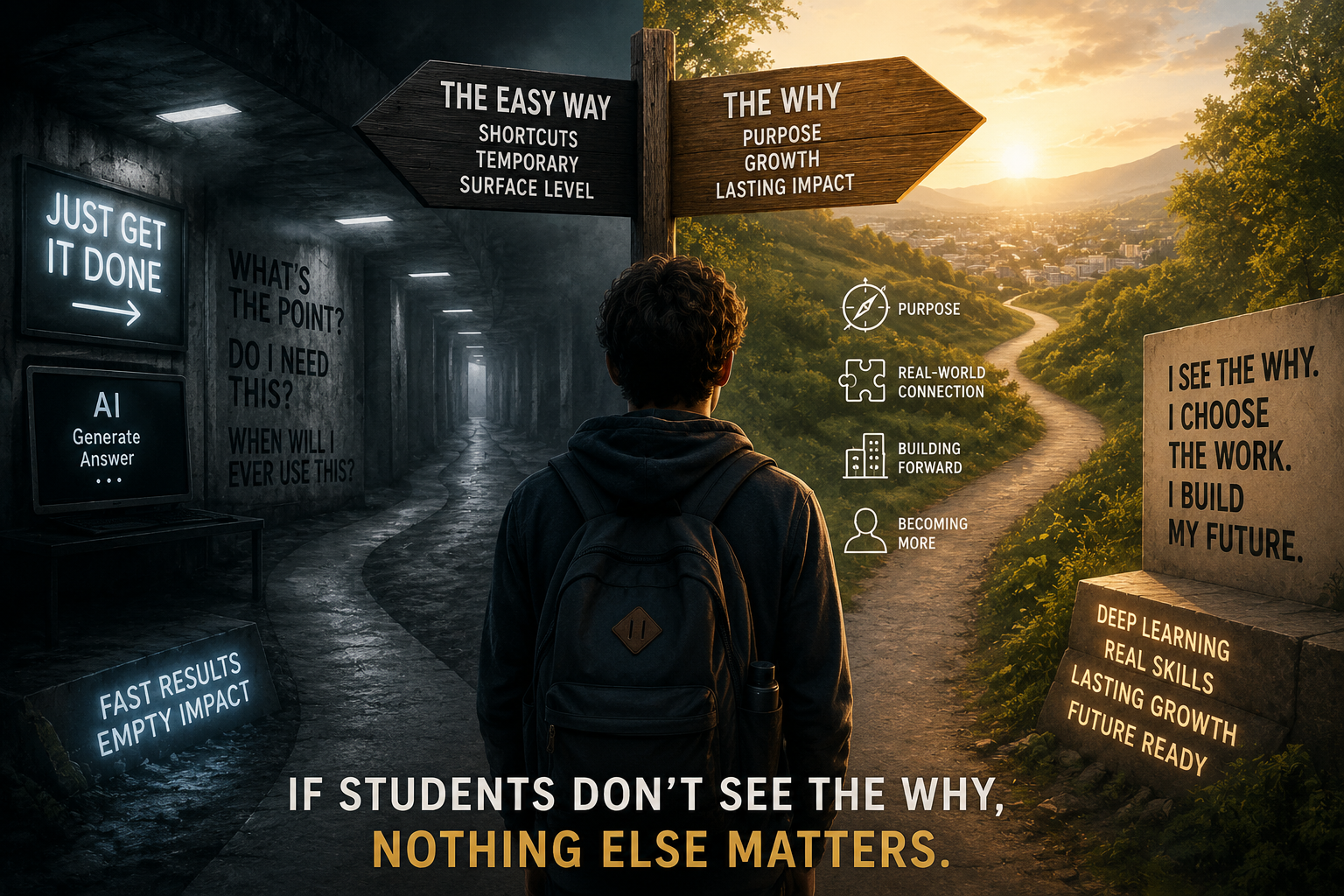
The Missing Purpose Problem
If students don’t see the why, nothing else matters.
We spend a lot of time talking about AI, academic integrity, and “cheating.”
But there’s a more uncomfortable truth underneath it: When students don’t understand the purpose of what they’re doing…shortcut behavior isn’t laziness. It’s rational.