
Protecting Data in an AI-Enabled Workplace
AI tools can be genuinely useful when we provide context—but more context can also mean greater exposure. A customer note, student email, résumé, troubleshooting log, or internal document may contain information entrusted to us by someone else. The professional question is not simply, “Is this private?” It is, “Am I authorized to use this information in this way?” Before sharing anything with AI, we need to pause, minimize what we provide, and consider whose information is at stake.

AI Can Recommend. Humans Still Have to Answer
AI can generate recommendations, identify risks, and help professionals work through complex information. But it cannot carry the consequences of the decisions that follow. As AI becomes part of workplace decision-making, students need more than technical skill: they need the judgment, authority, and professional courage to question a recommendation, recognize its limits, and take responsibility for how it is used.

Discernment: Knowing When and How to Use AI
AI literacy is not just knowing how to use AI. It is knowing when to use it, when to delay it, what role it should play, and what thinking should remain human. Discernment helps students make those choices intentionally so that AI supports learning without quietly replacing the thinking through which learning develops.
Prompting Is a Form of Thinking
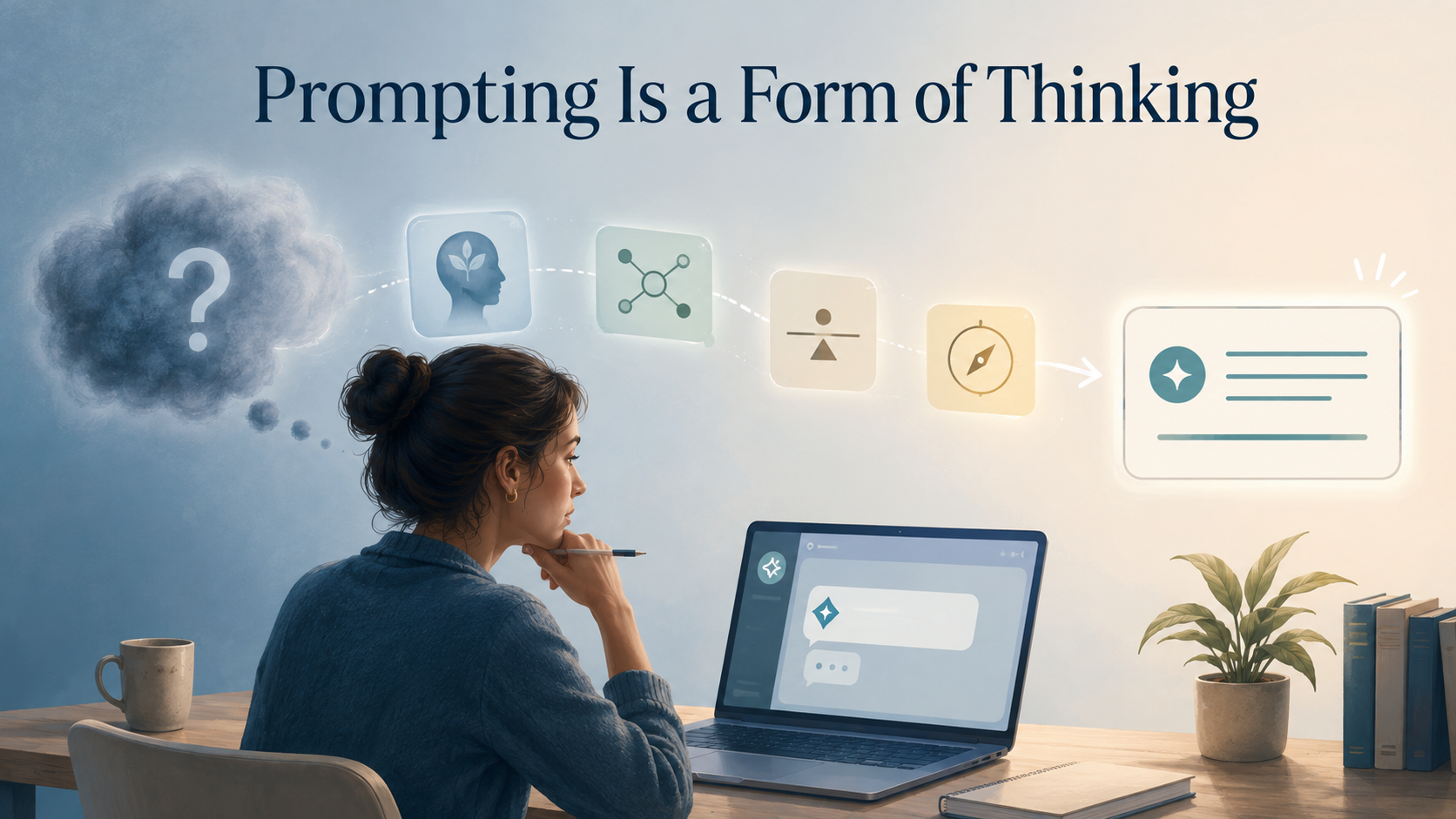
Prompting is more than a technique for getting better AI responses. It requires students to define the problem, identify what they know, recognize what they still need, and decide what role AI should play. When students remain responsible for those decisions, prompting becomes a form of metacognition—and a way to learn alongside AI without handing over the thinking.