
Productive Human-AI Collaboration
Productive human-AI collaboration is not measured by how much work AI completes. It depends on whether the student remains responsible for setting the direction, evaluating possibilities, and making consequential decisions. When AI expands thinking without replacing judgment, students can leave the interaction with more than a finished product—they can become more capable learners.

Verification Is More Than Fact-Checking
AI-generated content can look polished, complete, and convincing even when it contains weak reasoning, missing context, or inaccurate information. Teaching students to verify AI means going beyond simple fact-checking to examine sources, assumptions, evidence, completeness, and whether an answer is reliable enough for its intended purpose.
Cognitive Offloading: What Should We Hand Over to AI?
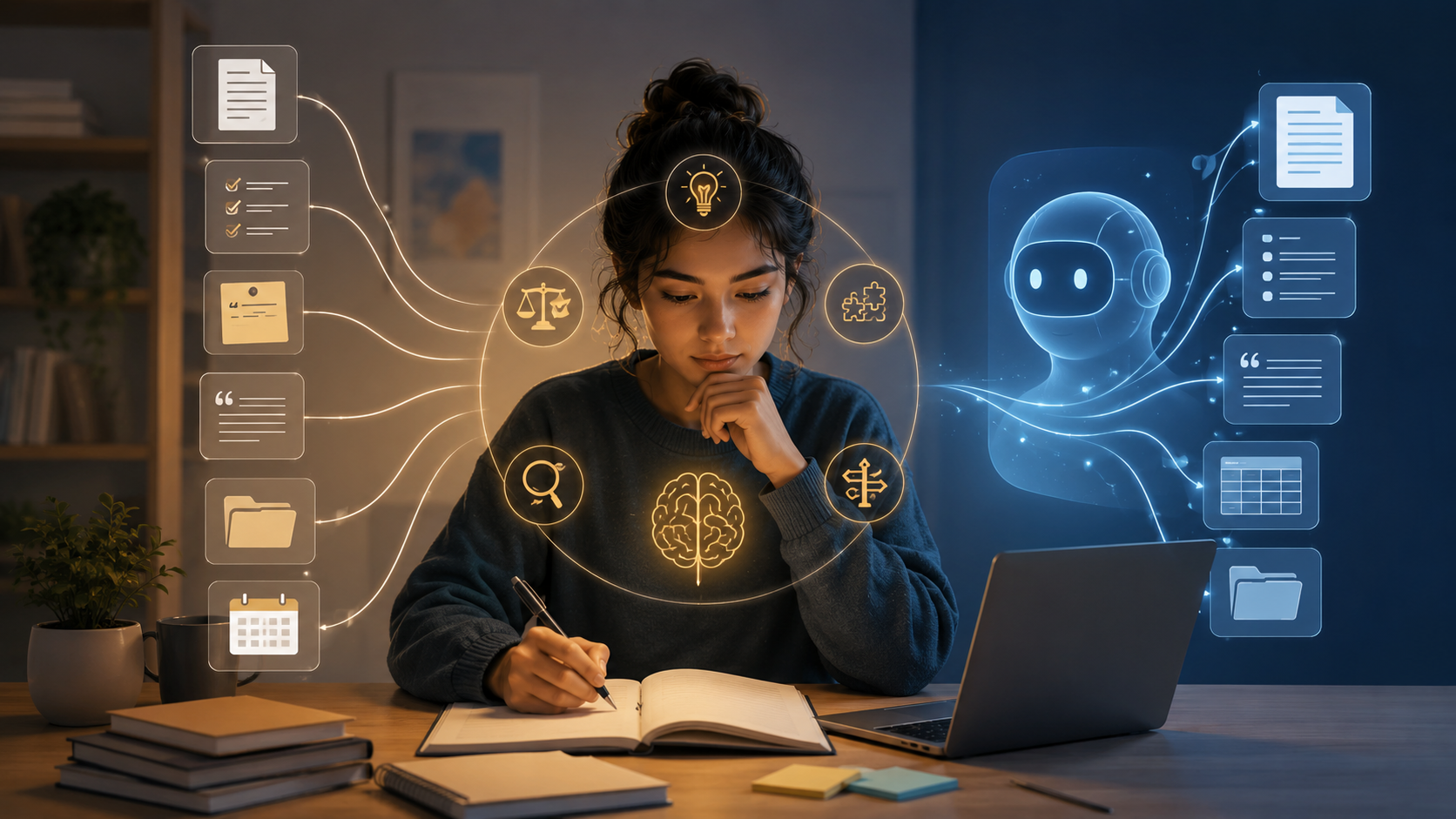
AI can make learning easier, but easier does not always mean better. Cognitive offloading can free students to focus on more meaningful thinking, but it can also remove the very effort needed to build understanding, judgment, and independence. The challenge is helping students decide what they can responsibly hand over to AI—and what thinking they still need to do themselves.

Metacognition: Understanding Our Own Thinking
As AI makes polished answers easier to produce, students need to become more aware of what is happening to their own thinking. Metacognition helps them recognize when AI is supporting genuine learning—and when it is quietly doing the cognitive work for them.
Designing Better Discussions in an AI World
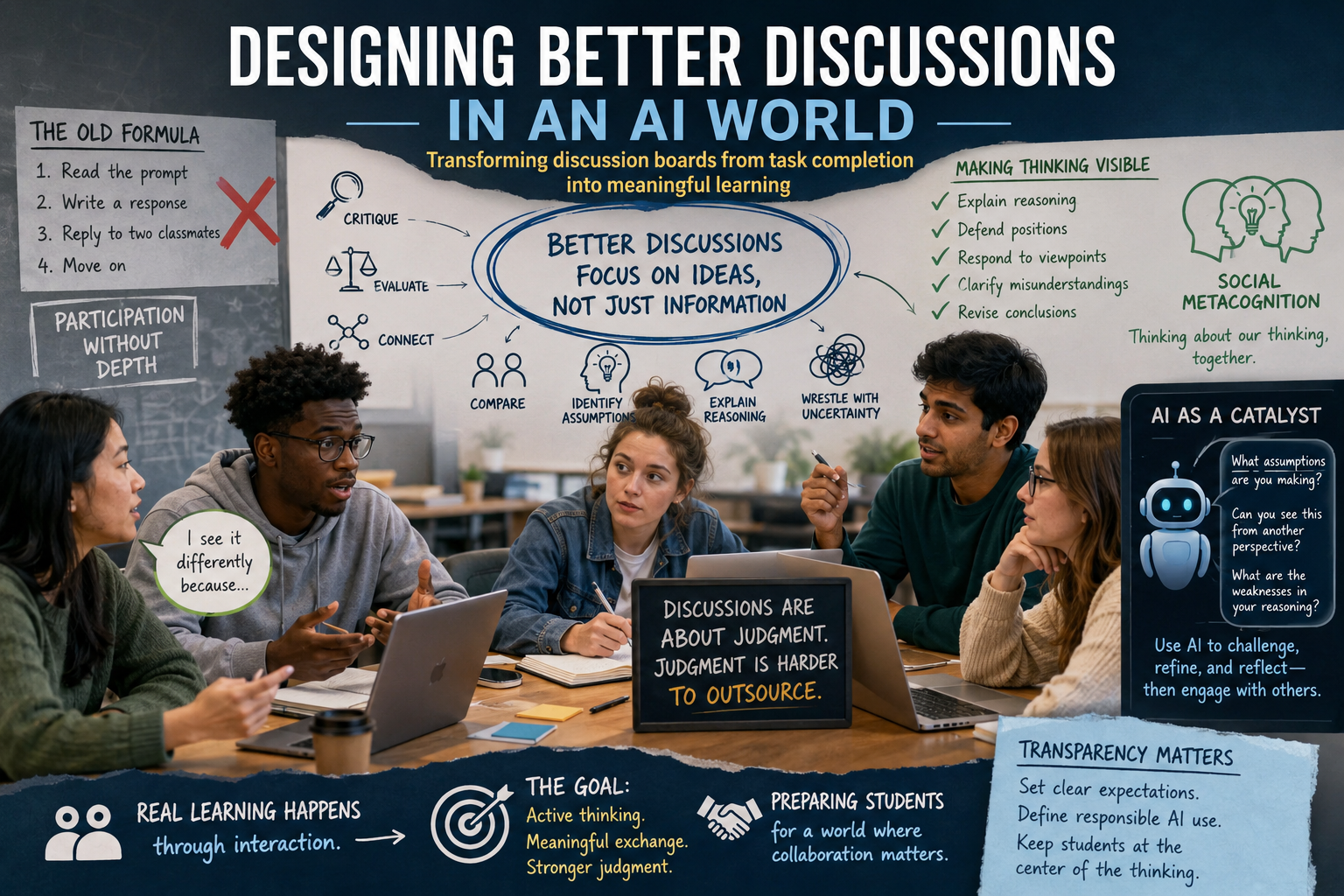
Discussion boards have never been about simply posting answers—they've been about making sense of ideas together. In an AI-rich world, that distinction matters more than ever. Rather than making discussion prompts harder, instructors can design discussions that emphasize reasoning, judgment, and meaningful interaction. By focusing on visible thinking, social metacognition, and thoughtful use of AI, discussions can become powerful opportunities for students to challenge assumptions, refine their understanding, and develop the kinds of judgment that AI cannot easily replace.