
Working With AI Without Losing Professional Expertise
AI can improve a novice’s performance without building the expertise needed to work, evaluate, and recover independently. As AI takes on more entry-level tasks, educators and employers need to ask which capabilities people must retain—and how learning experiences can help them develop those capabilities before efficiency becomes the only goal.

Discernment: Knowing When and How to Use AI
AI literacy is not just knowing how to use AI. It is knowing when to use it, when to delay it, what role it should play, and what thinking should remain human. Discernment helps students make those choices intentionally so that AI supports learning without quietly replacing the thinking through which learning develops.

AI as a Critique Partner
AI can provide immediate feedback, but feedback does not automatically produce learning. When students use AI as a critique partner rather than an editor, it can expose weak reasoning, challenge assumptions, and raise useful questions while leaving students responsible for evaluating the feedback and deciding how to revise.

AI as a Tutor, Not an Answer Machine
AI has real potential as a tutor, but only when it supports rather than removes the thinking students need to practice. The goal is not simply to help students reach answers faster, but to help them become more capable of learning and solving problems independently.

Productive Human-AI Collaboration
Productive human-AI collaboration is not measured by how much work AI completes. It depends on whether the student remains responsible for setting the direction, evaluating possibilities, and making consequential decisions. When AI expands thinking without replacing judgment, students can leave the interaction with more than a finished product—they can become more capable learners.

Knowing When to Trust AI
Students should neither trust AI automatically nor reject it entirely. They need calibrated trust—the ability to weigh an AI response against evidence, their own knowledge, the risks involved, and the consequences of being wrong.

Cognitive Offloading: What Should We Hand Over to AI?
AI can make learning easier, but easier does not always mean better. Cognitive offloading can free students to focus on more meaningful thinking, but it can also remove the very effort needed to build understanding, judgment, and independence. The challenge is helping students decide what they can responsibly hand over to AI—and what thinking they still need to do themselves.
Prompting Is a Form of Thinking
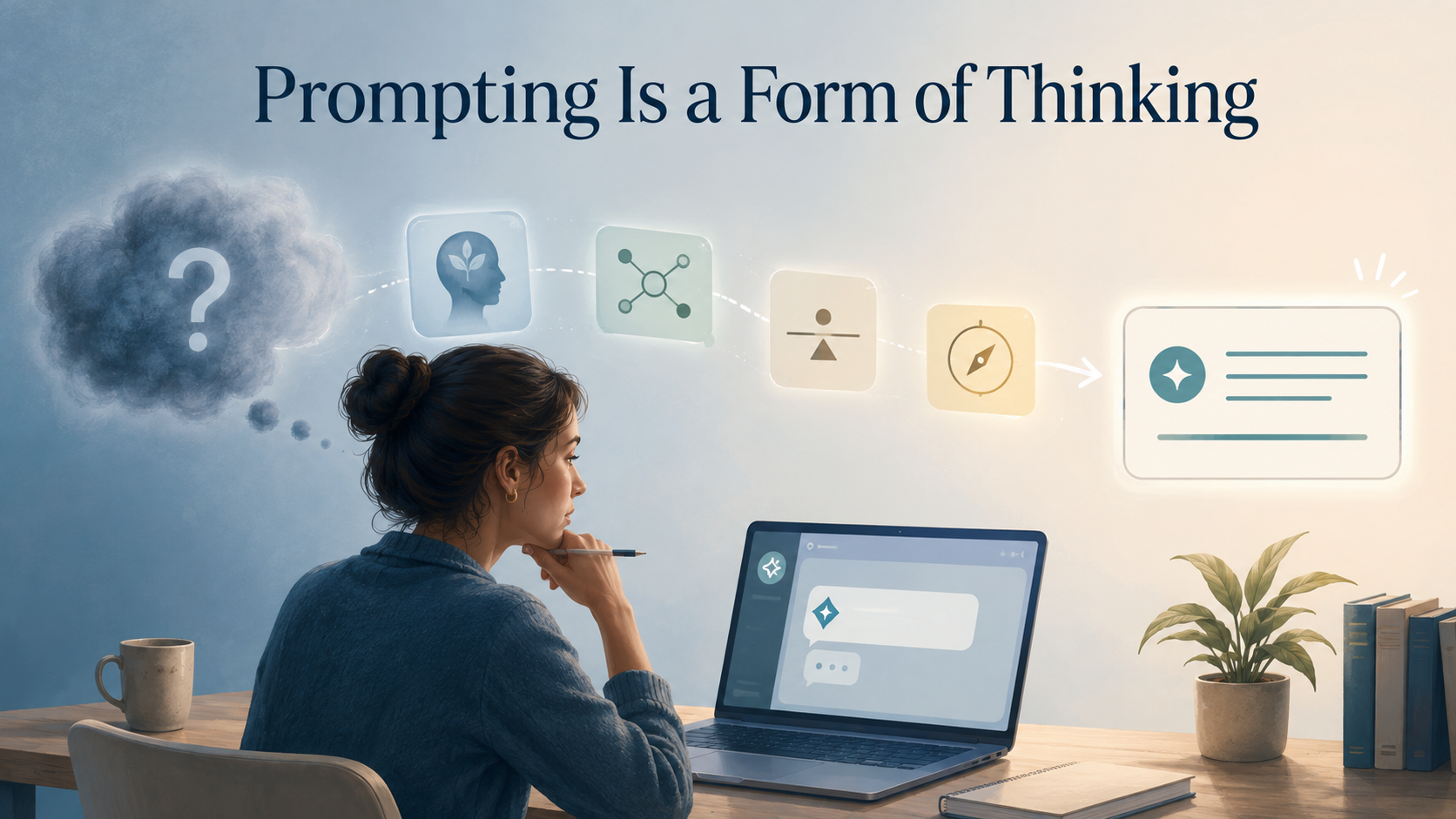
Prompting is more than a technique for getting better AI responses. It requires students to define the problem, identify what they know, recognize what they still need, and decide what role AI should play. When students remain responsible for those decisions, prompting becomes a form of metacognition—and a way to learn alongside AI without handing over the thinking.

Transfer: Applying Knowledge in Unfamiliar Situations
Transfer is more than remembering what we learned. It is the ability to recognize when knowledge applies, adapt it to unfamiliar situations, and explain why it matters. In an AI-rich world, students must learn not simply to receive applications from AI, but to evaluate and make those connections themselves.
Ethical Reasoning: Not Just Can We, But Should We?
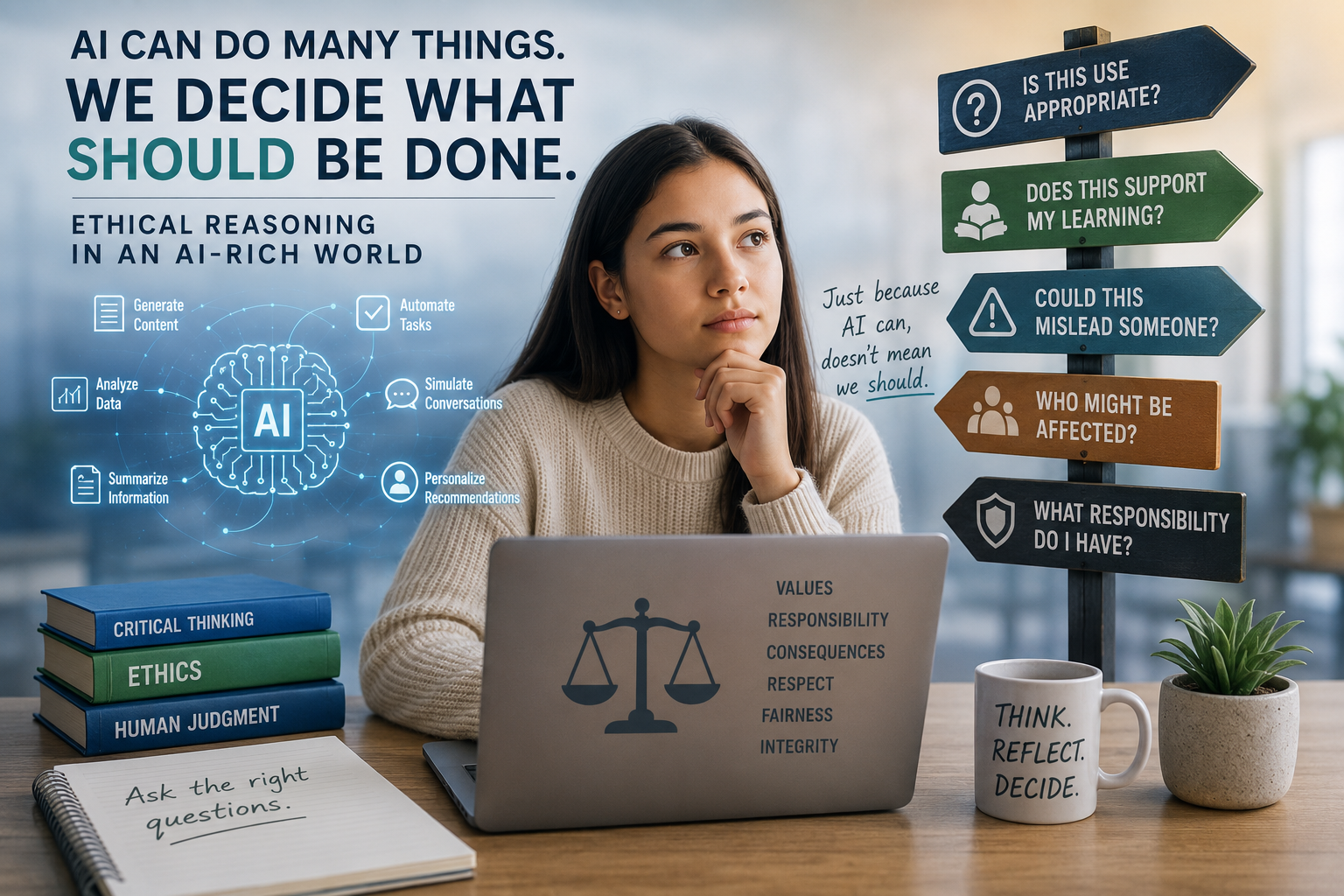
AI can generate content, automate tasks, and offer recommendations, but capability is not the same as responsibility. Students need opportunities to ask not only whether AI can be used, but whether its use supports learning, protects trust, respects others, and preserves human judgment.
Intellectual Humility: Knowing the Limits of Our Knowledge
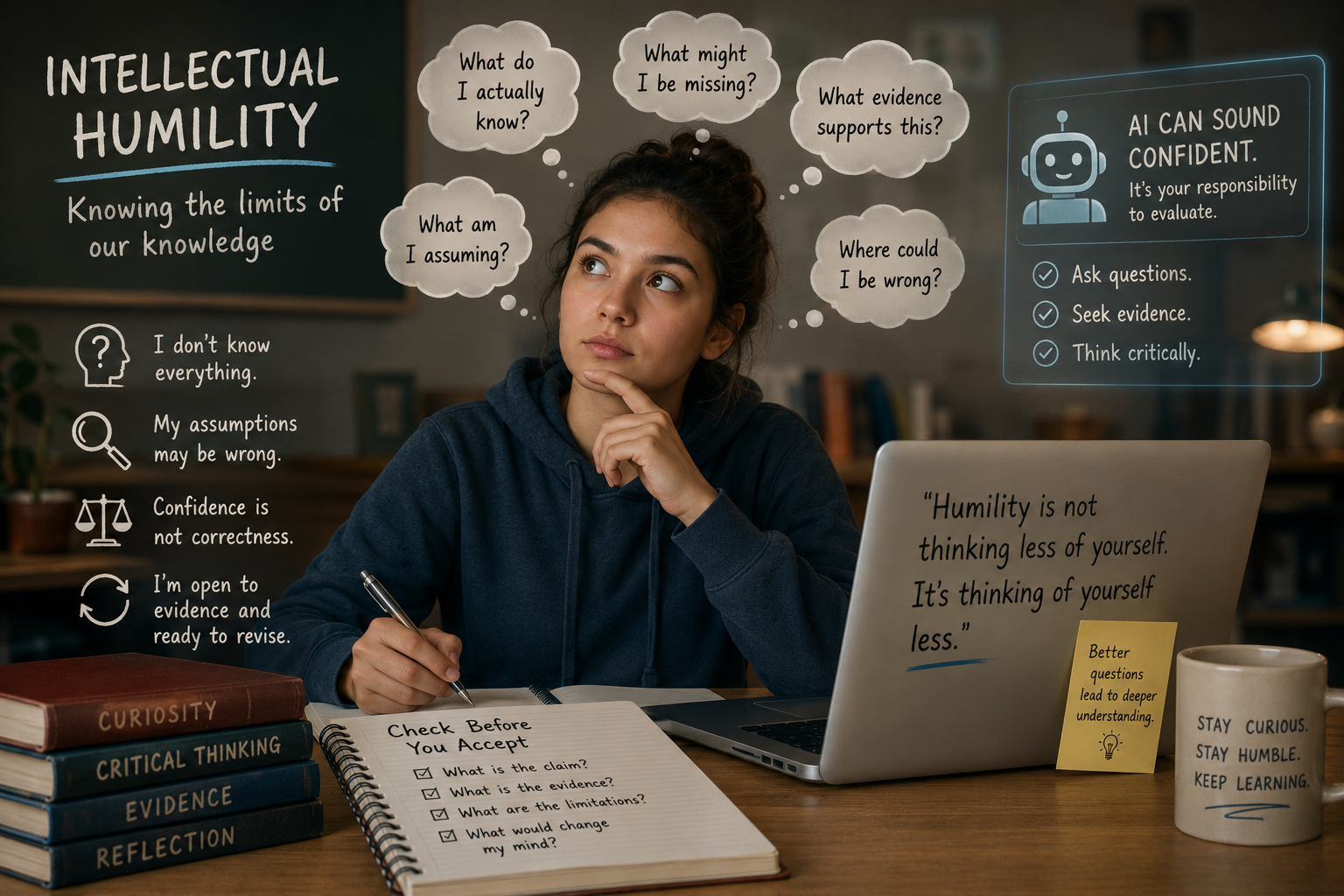
AI can generate polished, confident answers, but confidence is not the same as correctness. Intellectual humility helps students recognize the limits of their own knowledge, question assumptions, seek evidence, and remain open to revision. In an AI-rich world, this habit of mind is essential for helping students use technology without surrendering judgment.

Asking Better Questions
In an AI-rich world, answers are becoming easier to generate—but easy answers can create a false sense of understanding. Curiosity keeps students from stopping at the first response, encouraging them to question assumptions, explore alternatives, and pursue deeper understanding. The students who thrive will not simply know how to get answers quickly; they will know how to keep asking better questions.
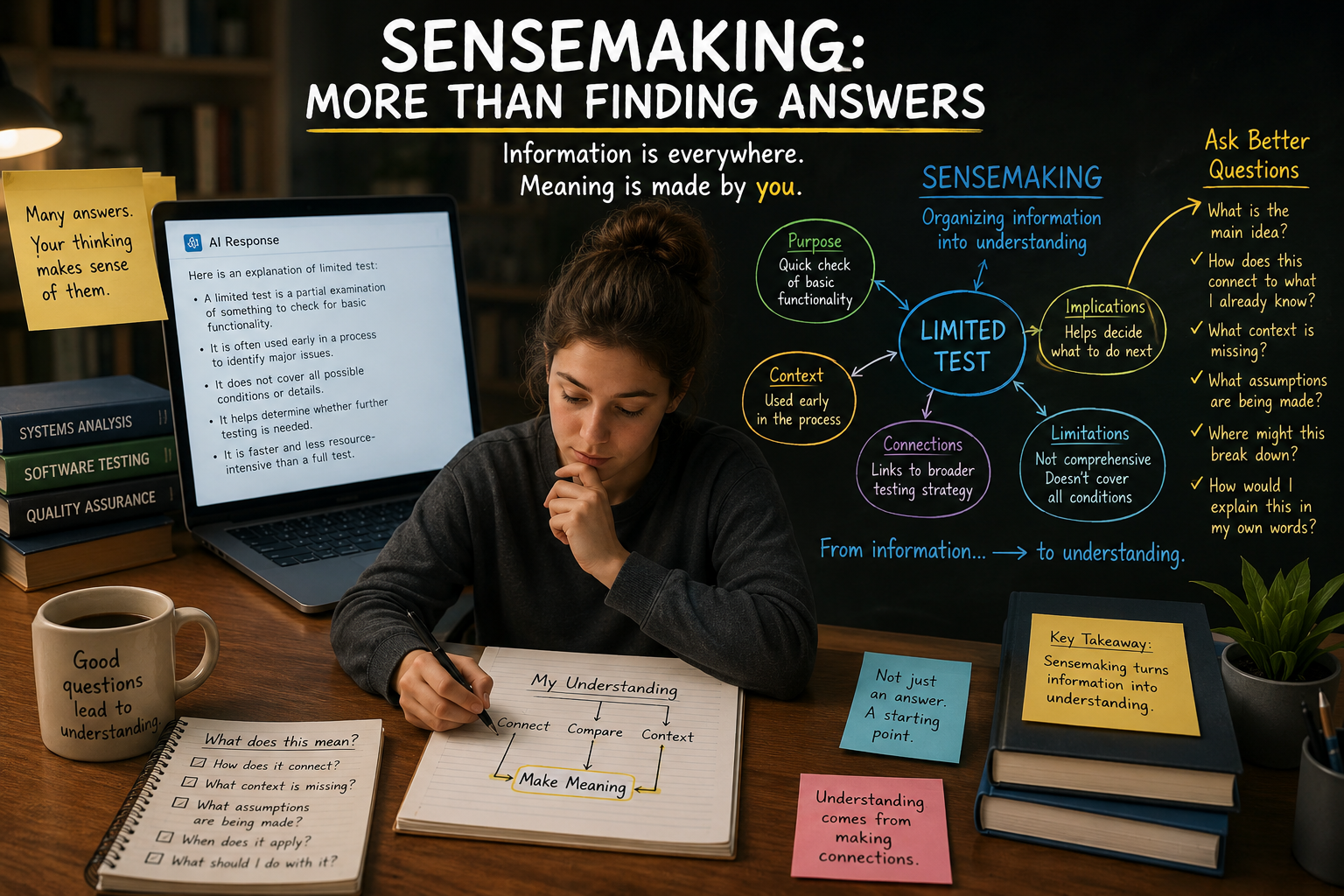
Sensemaking: More Than Finding Answers
AI can make information easier to find, but access is not the same as understanding. In an AI-rich world, students need to do more than receive answers—they need to connect ideas, recognize context, identify what matters, and build meaning. Sensemaking is the work that turns information into understanding.
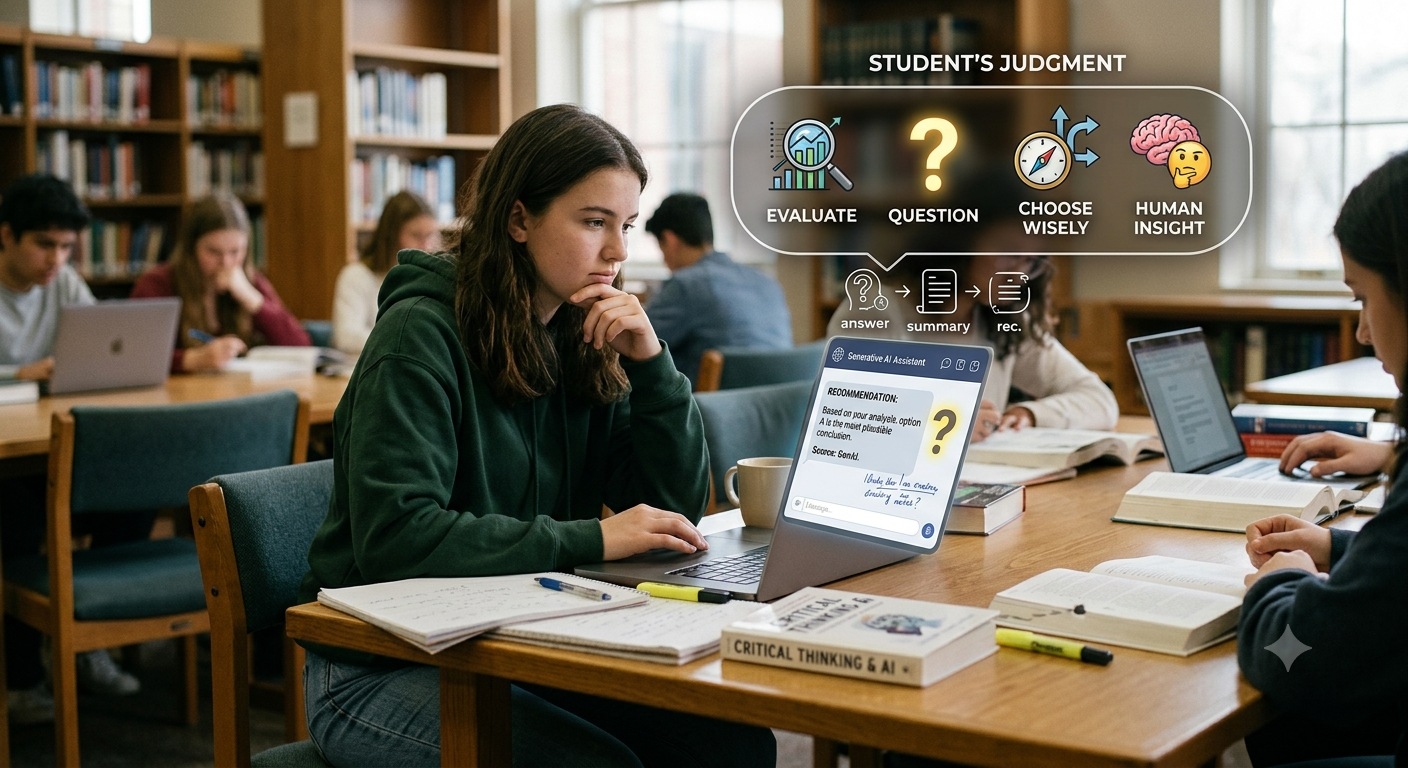
Judgment: Choosing Among Possibilities
In an AI-rich world, students do not only need to produce answers. They need to evaluate them. AI can generate possibilities, summaries, recommendations, and solutions, but students still need to decide what is accurate, appropriate, ethical, and useful. That is why judgment must become a more explicit learning goal. By asking students to compare options, explain criteria, identify trade-offs, and defend decisions with evidence, educators can help them practice the kind of human thinking that AI cannot replace.

Designing for the Thinking We Can't Outsource
AI has not diminished the importance of learning. It has clarified what learning has always been about: not simply producing answers, but developing judgment. As AI becomes a permanent partner in education, the central question is not what students can automate, but what kinds of thinking they still need to practice for themselves.
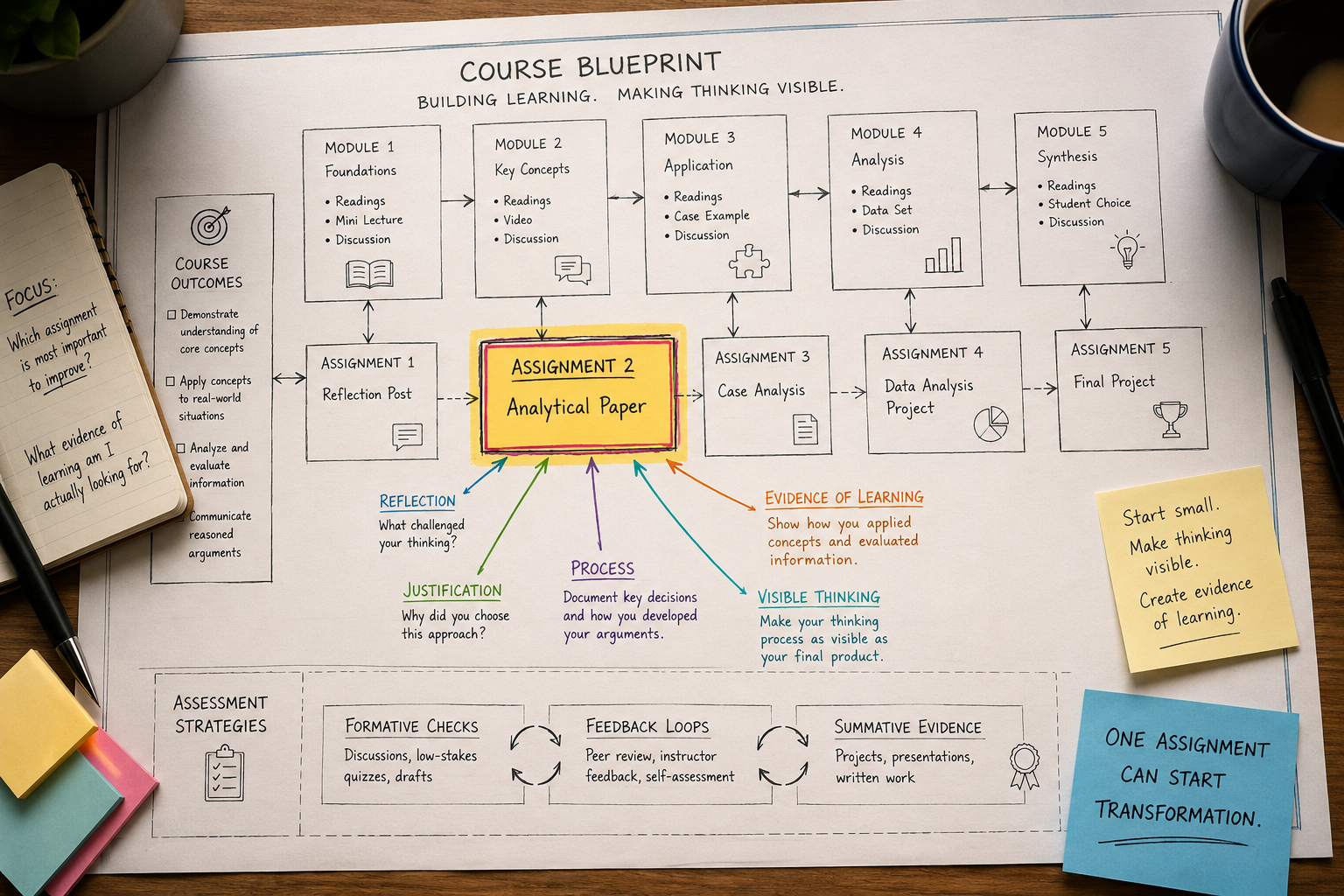
Start With One Assignment, Not Your Entire Course
AI has exposed a challenge that may have existed long before generative AI: a completed assignment is not necessarily the same thing as evidence of learning. Rather than redesigning an entire course, faculty can begin with a single assignment and ask a simple question: What evidence of learning am I actually looking for? Small changes that make student thinking more visible can often have a surprisingly large impact.
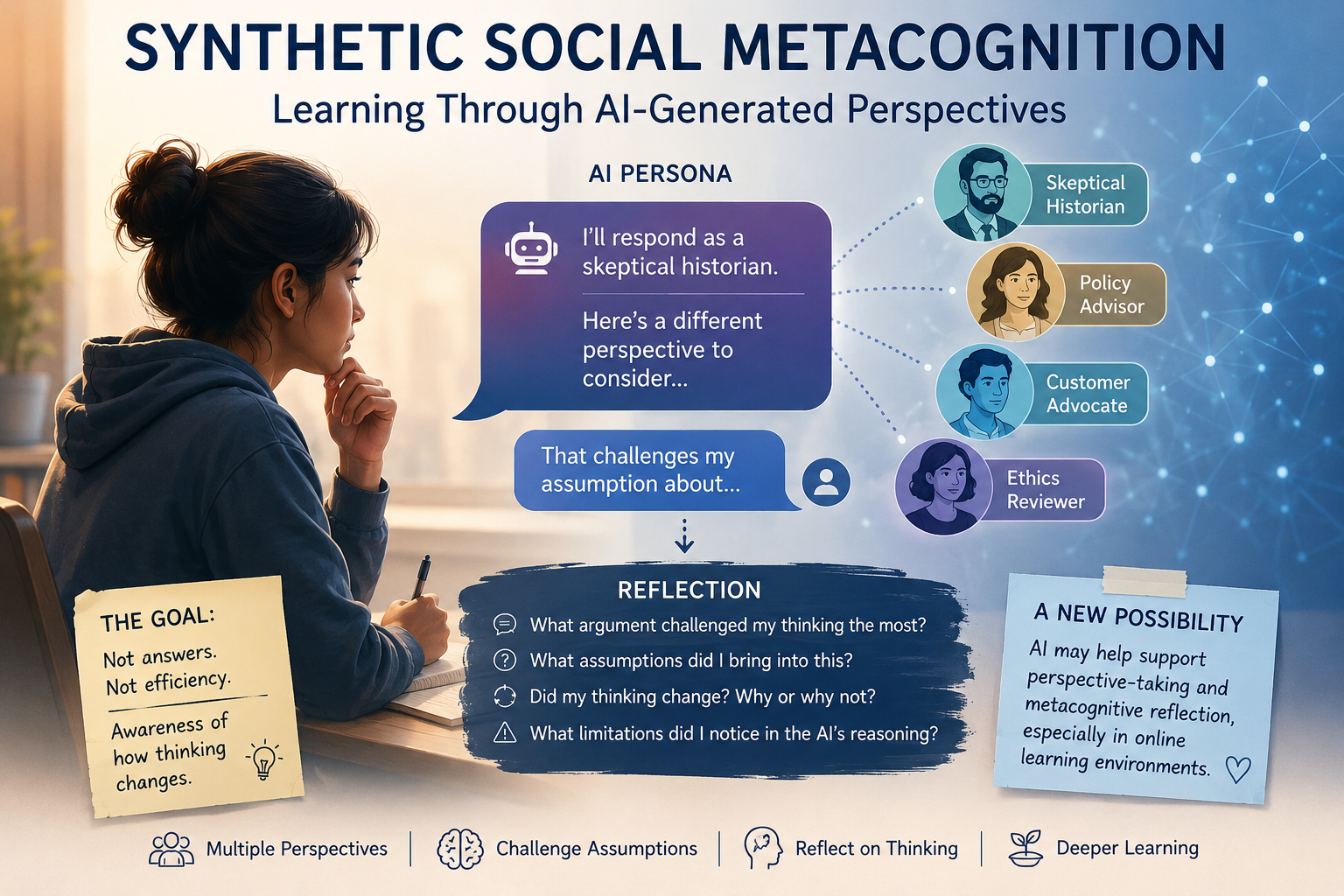
Can AI Support Social Metacognition?
Learning often happens when our assumptions are challenged and our thinking evolves. Traditionally, peers, instructors, and collaborative activities have helped create those moments. But could AI also play a role? This post explores the possibility of using AI personas to encourage perspective-taking, reflection, and metacognitive awareness—a concept I'm calling Synthetic Social Metacognition.

The Real Role of Faculty in an AI World
Artificial intelligence is changing many aspects of higher education, but perhaps the most important change is forcing us to reconsider the role of faculty. When information, explanations, and answers are available instantly, the value of education shifts from delivering content to developing judgment. In an AI world, faculty are not simply providers of knowledge, they are designers of learning experiences that help students think critically, reflect on their decisions, and develop the metacognitive skills needed to navigate an increasingly complex world.