

Metacognition: Understanding Our Own Thinking
As AI makes polished answers easier to produce, students need to become more aware of what is happening to their own thinking. Metacognition helps them recognize when AI is supporting genuine learning—and when it is quietly doing the cognitive work for them.

Small Design Changes That Shift Everything
AI is creating pressure for change in higher education, but meaningful course evolution rarely starts with a complete redesign. More often, it begins with small, intentional design choices that make student thinking more visible. Reflection prompts, justification questions, and process checkpoints may seem minor, but they shift the focus from simply producing answers to developing judgment, reasoning, and deeper learning. In an AI-rich world, those small changes can make all the difference.
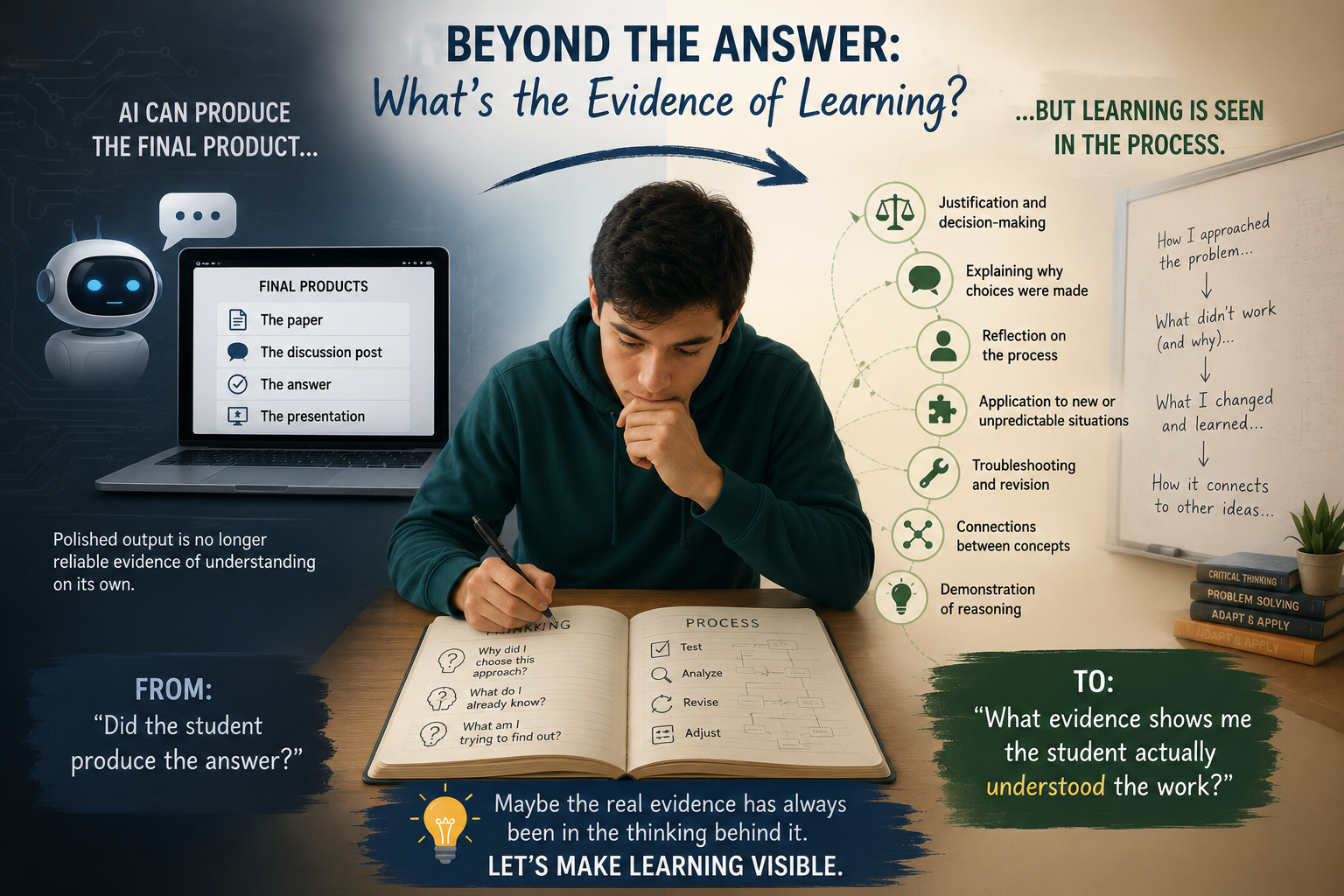
What Counts as Evidence of Learning?
AI is forcing a question that higher education has been able to avoid for a long time: What actually counts as evidence that learning happened? Because for years, many assignments have focused heavily on the final product:
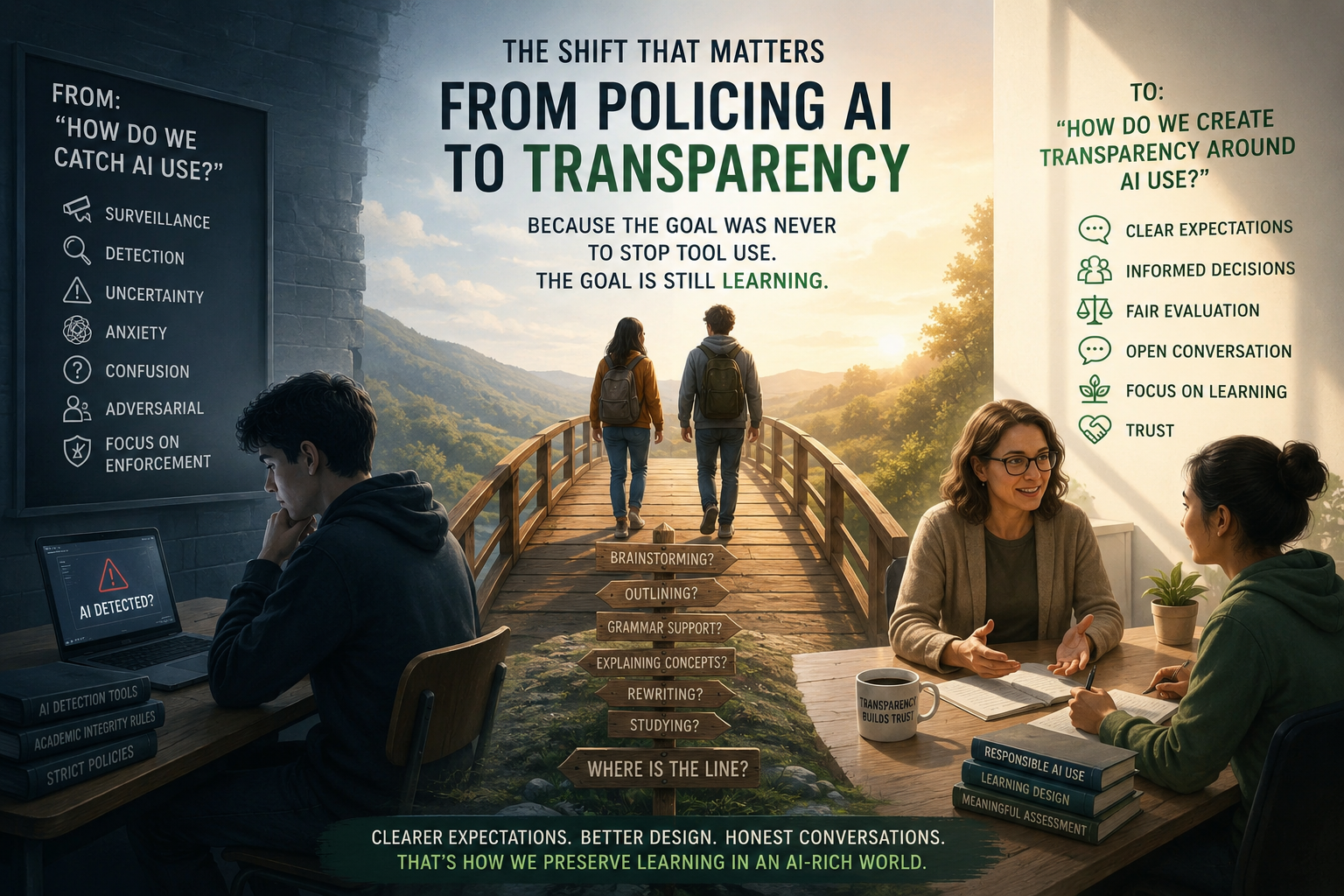
Transparency Over Policing
We keep asking: “How do we stop students from using AI?” But I’m not sure that’s the right question anymore. Because the reality is: You cannot out-police AI use.
The tools are evolving too quickly. Detection systems are inconsistent. And even the companies behind many AI detectors often acknowledge limitations, false positives, and uncertainty in their own documentation.
That creates a dangerous situation in education:
AI Confidence vs. Accuracy
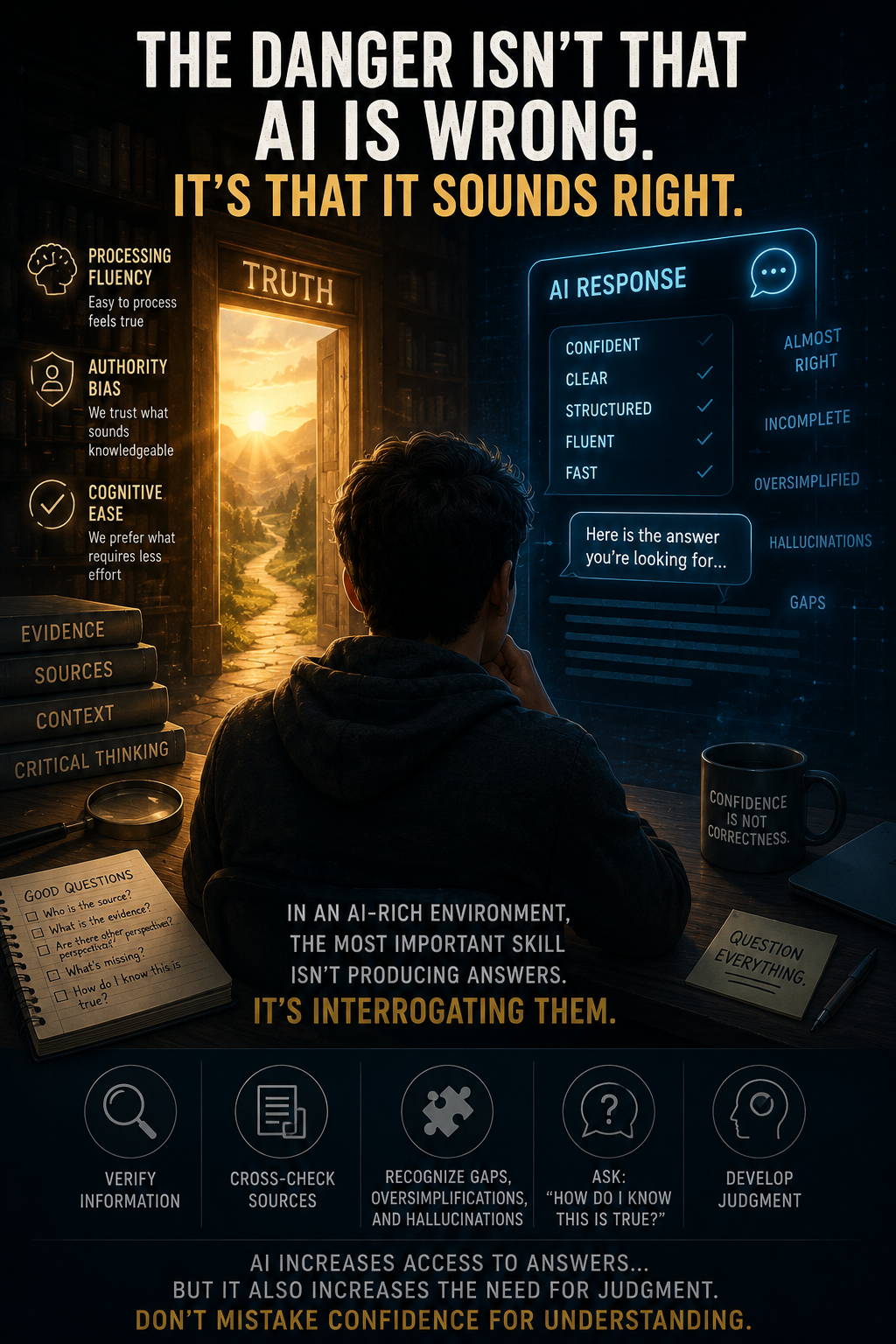
The danger isn’t that AI is wrong. It’s that it sounds right.
AI doesn’t just give answers, it gives confident answers. Clear. Structured. Fluent. Often faster and more polished than what most of us would produce on our own. And that’s exactly the problem.
From a cognitive psychology perspective, this isn’t surprising.
The Missing Purpose Problem
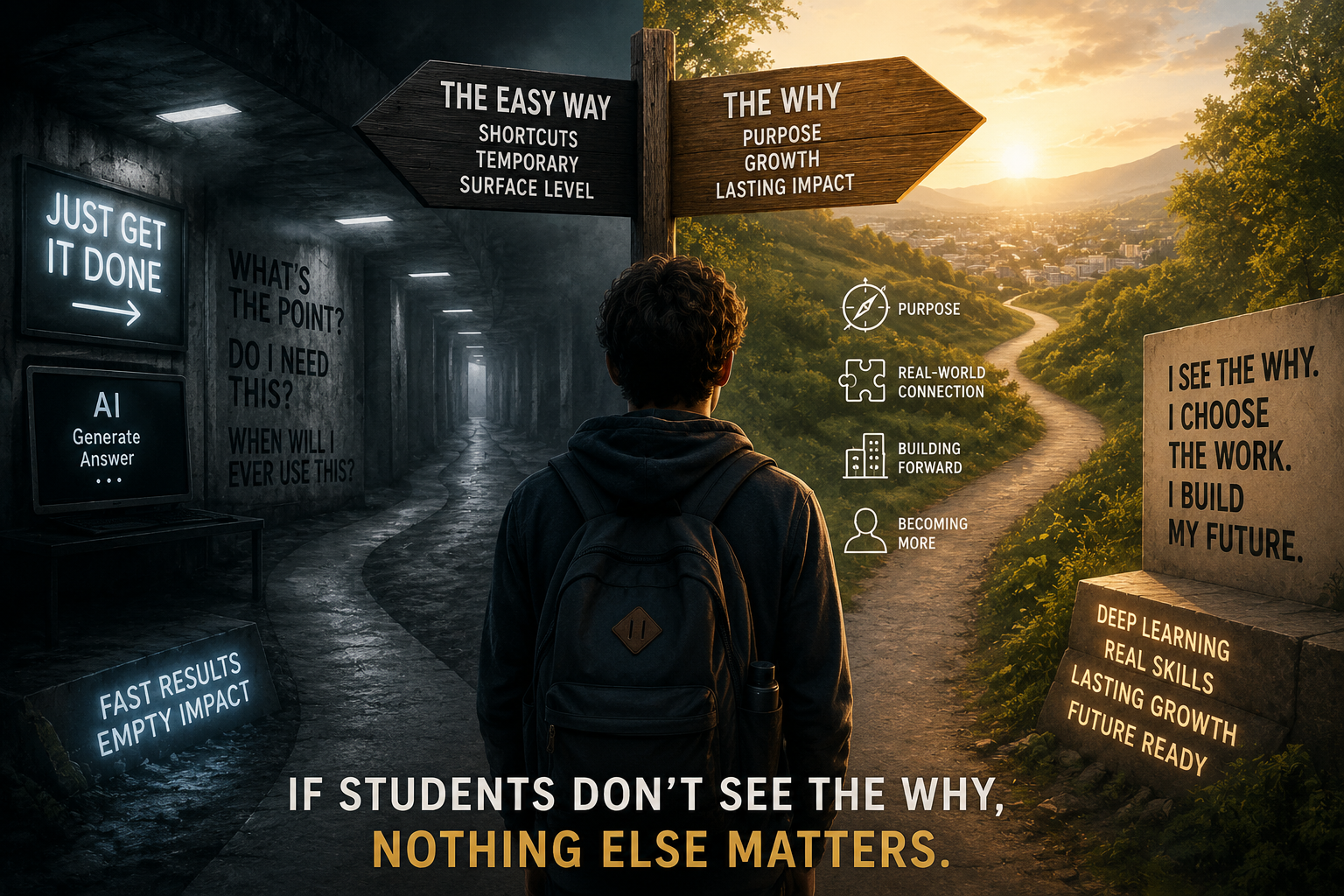
If students don’t see the why, nothing else matters.
We spend a lot of time talking about AI, academic integrity, and “cheating.”
But there’s a more uncomfortable truth underneath it: When students don’t understand the purpose of what they’re doing…shortcut behavior isn’t laziness. It’s rational.