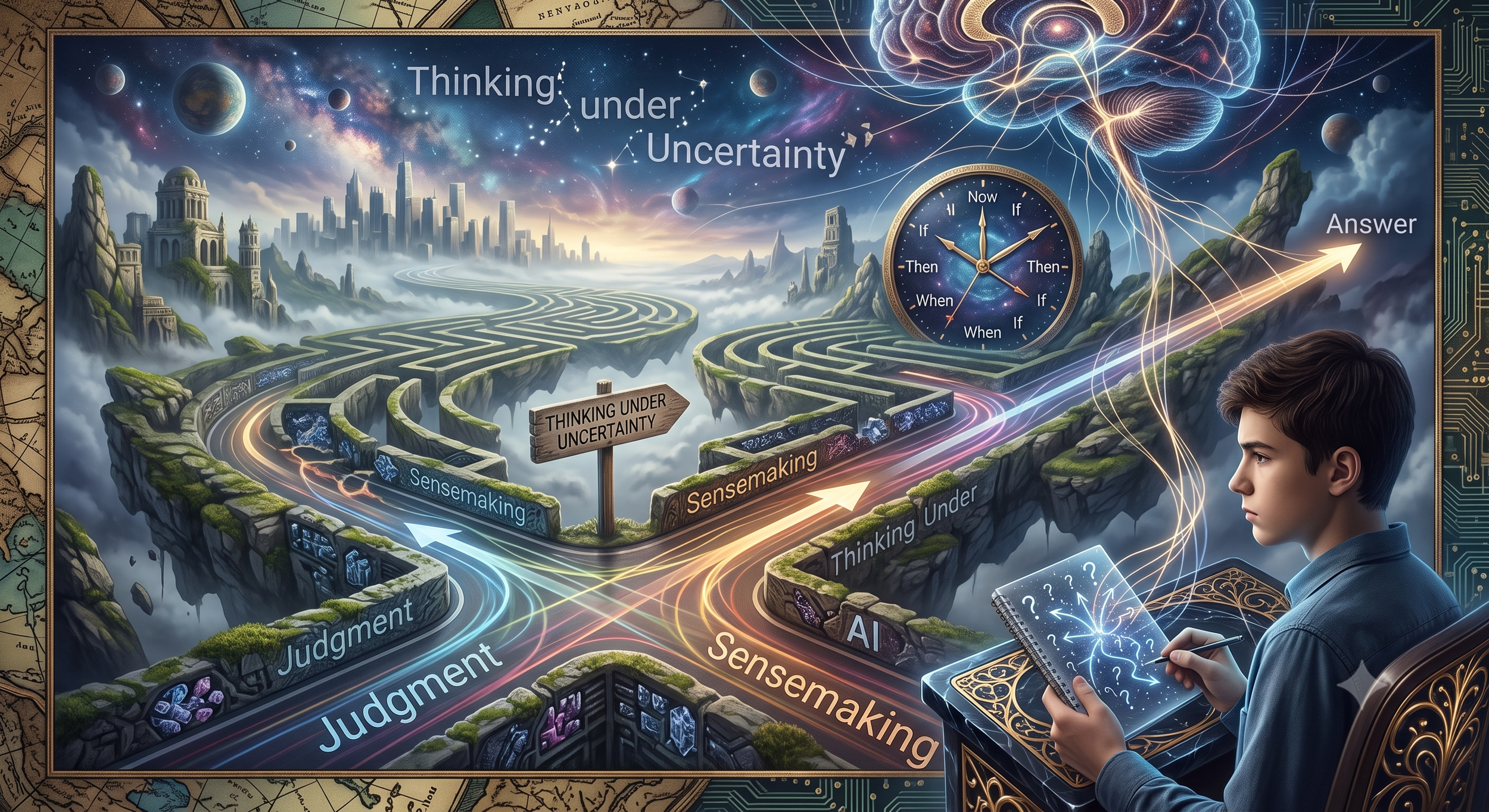
Thinking Under Uncertainty
The Illusion of Certainty
AI can create the impression that uncertainty has disappeared. Ask a question, and an answer appears. Ask for a recommendation, and the tool offers one. Ask for an explanation, and the response often arrives with clarity, structure, and confidence.
That confidence can be useful. But it can also be misleading.
Because many of the most important questions students will face do not have simple, final, or universally correct answers. What is the best solution for this situation? Which source should I trust? What matters most in this decision? What risks should I consider?
Those questions do not ask students simply to retrieve information. They ask students to reason through uncertainty.
Would you like a different excerpt that focuses more on the practical classroom strategies, or perhaps one that sets up the introduction?
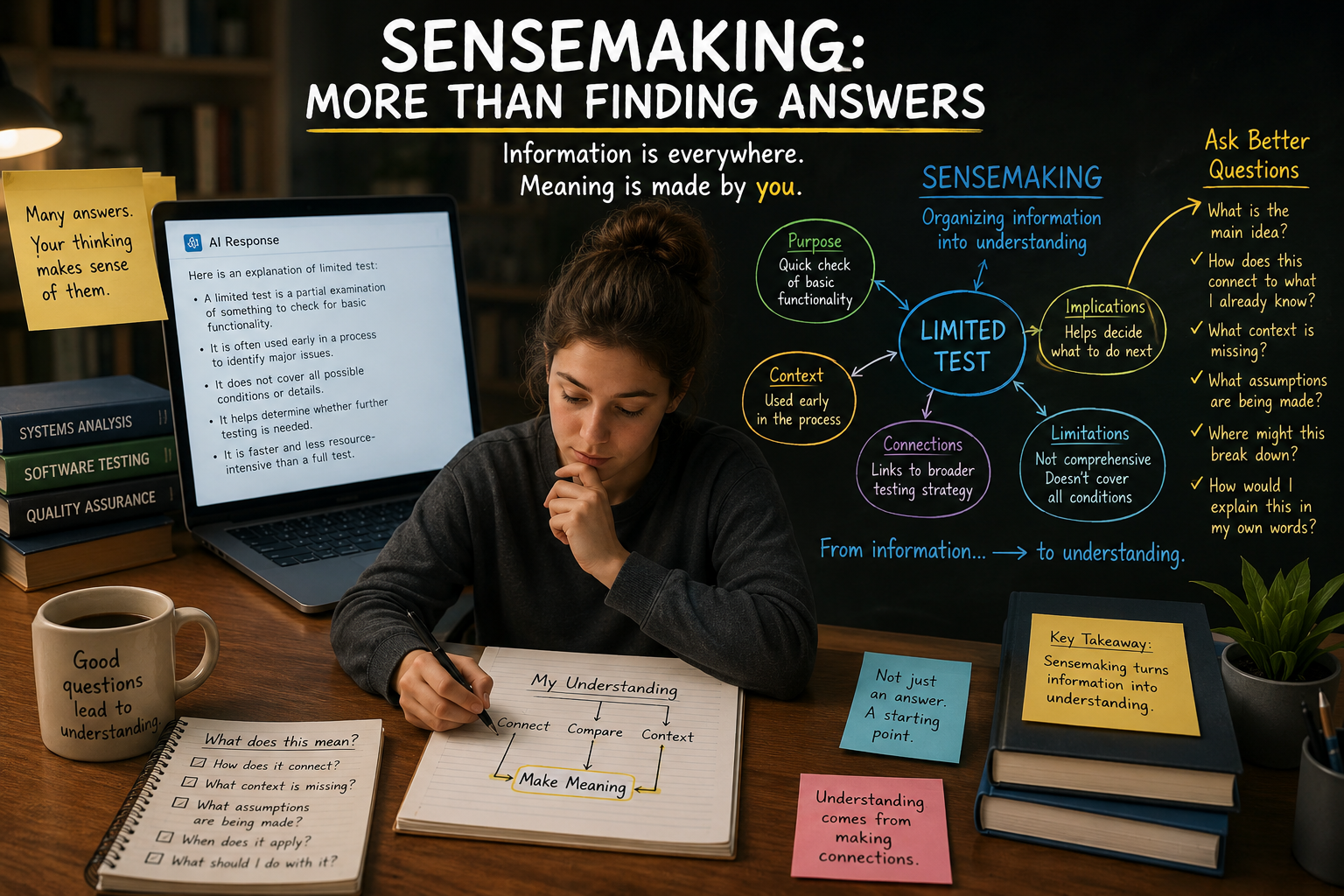
Sensemaking: More Than Finding Answers
AI can make information easier to find, but access is not the same as understanding. In an AI-rich world, students need to do more than receive answers—they need to connect ideas, recognize context, identify what matters, and build meaning. Sensemaking is the work that turns information into understanding.
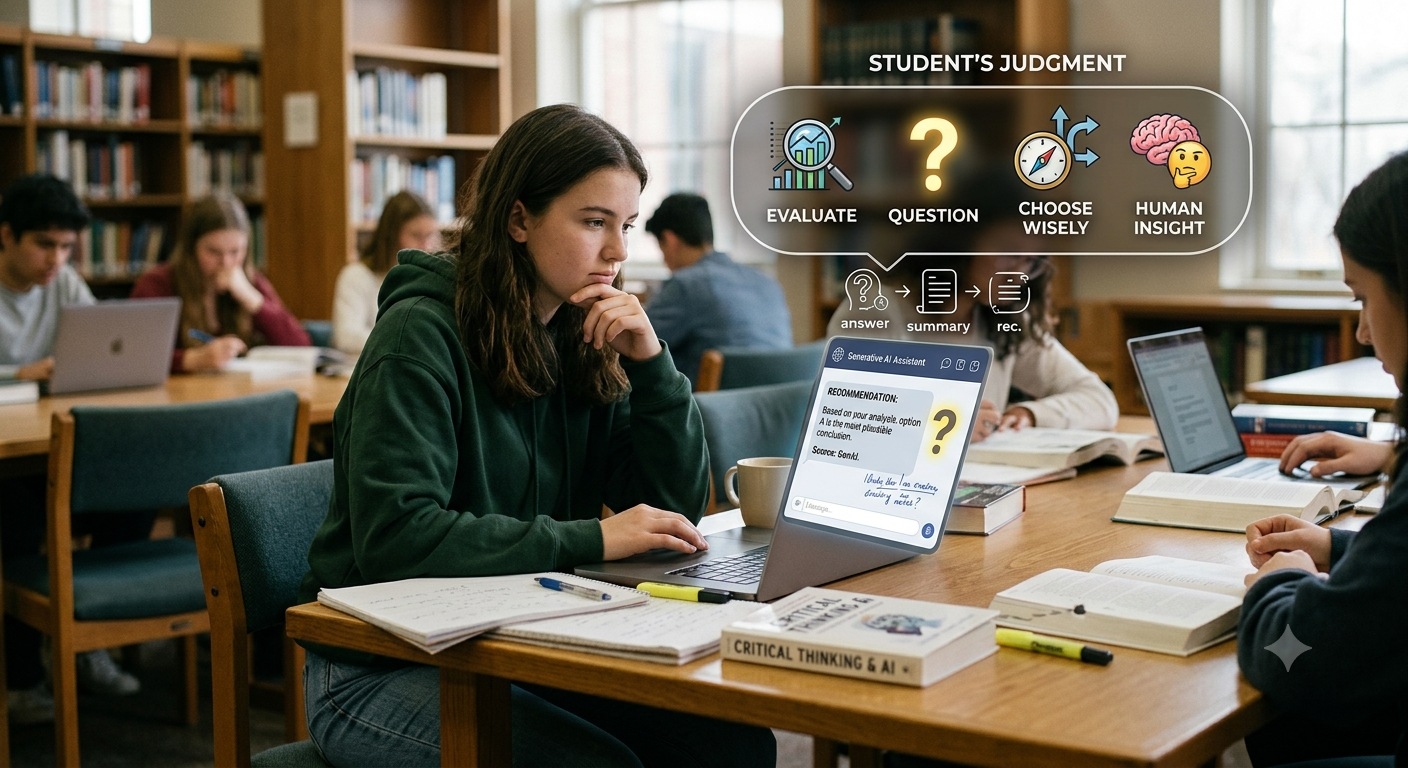
Judgment: Choosing Among Possibilities
In an AI-rich world, students do not only need to produce answers. They need to evaluate them. AI can generate possibilities, summaries, recommendations, and solutions, but students still need to decide what is accurate, appropriate, ethical, and useful. That is why judgment must become a more explicit learning goal. By asking students to compare options, explain criteria, identify trade-offs, and defend decisions with evidence, educators can help them practice the kind of human thinking that AI cannot replace.

Designing for the Thinking We Can't Outsource
AI has not diminished the importance of learning. It has clarified what learning has always been about: not simply producing answers, but developing judgment. As AI becomes a permanent partner in education, the central question is not what students can automate, but what kinds of thinking they still need to practice for themselves.
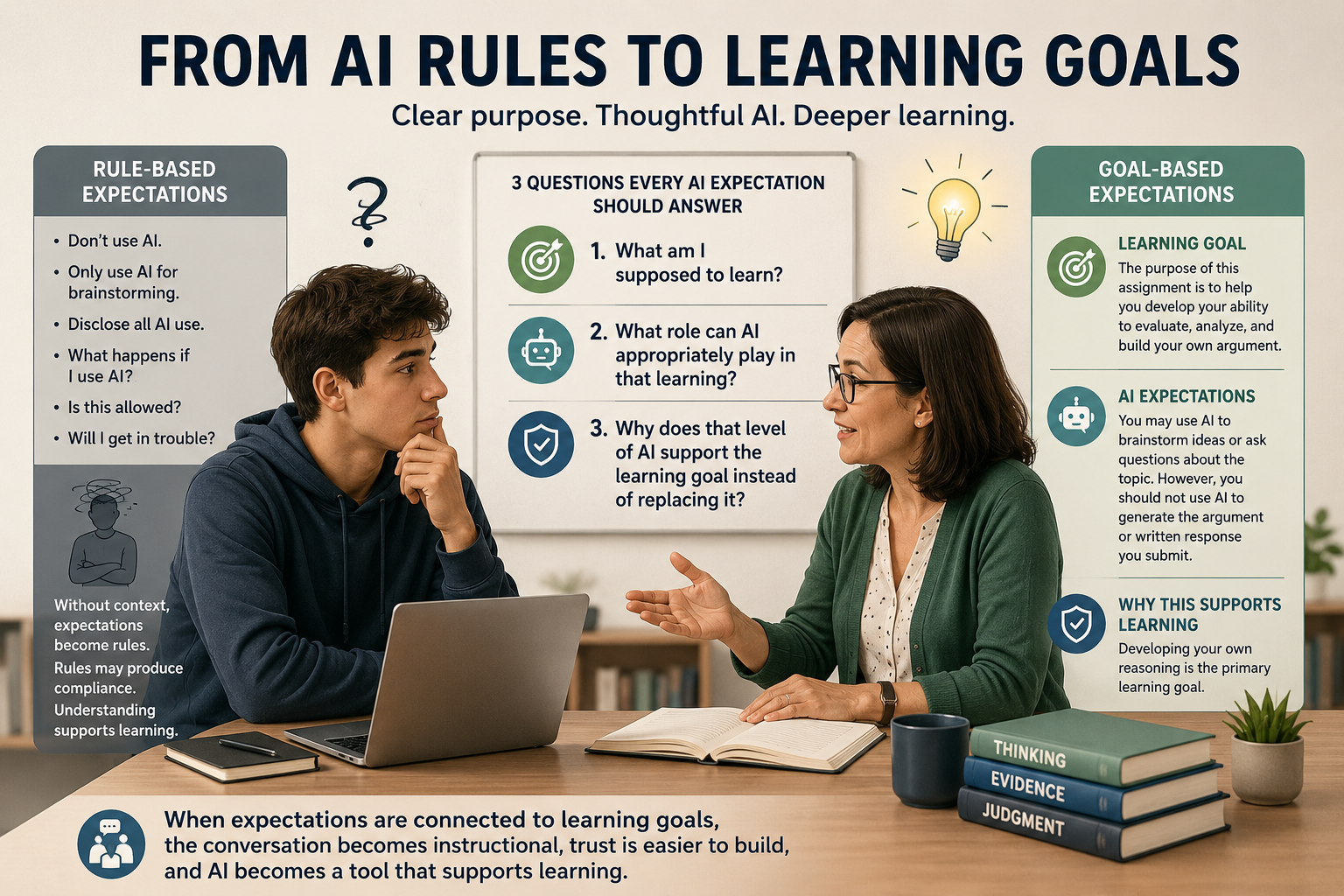
From AI Rules to Learning Goals
AI policies often focus on rules: what students can do, what they can't do, and when they must disclose AI use. But those rules make much more sense when students first understand what they're supposed to learn. Instead of starting with restrictions, we should start with learning goals. When AI expectations are connected to purpose rather than policy, students are more likely to understand not only what is expected, but why those expectations matter.
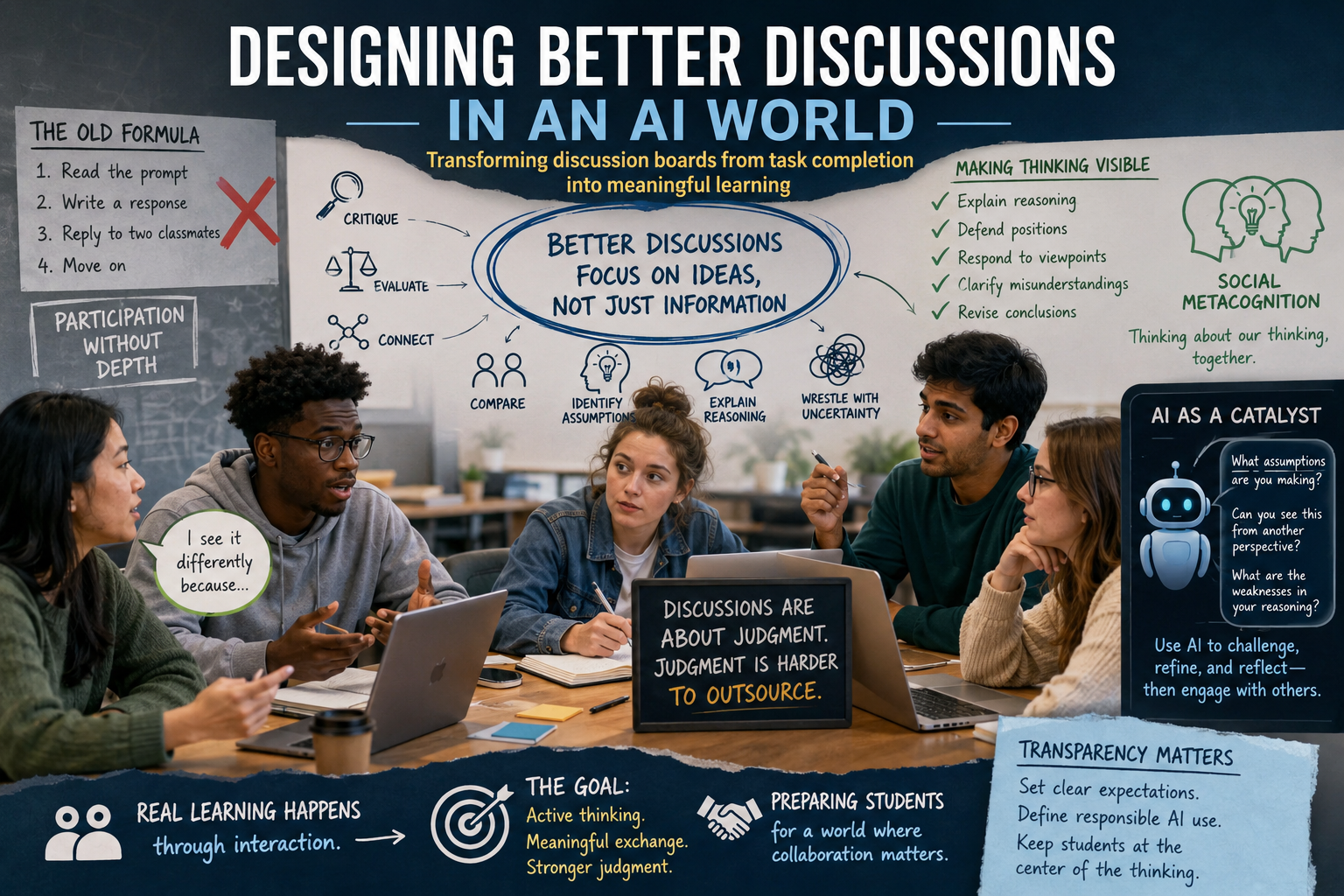
Designing Better Discussions in an AI World
Discussion boards have never been about simply posting answers—they've been about making sense of ideas together. In an AI-rich world, that distinction matters more than ever. Rather than making discussion prompts harder, instructors can design discussions that emphasize reasoning, judgment, and meaningful interaction. By focusing on visible thinking, social metacognition, and thoughtful use of AI, discussions can become powerful opportunities for students to challenge assumptions, refine their understanding, and develop the kinds of judgment that AI cannot easily replace.
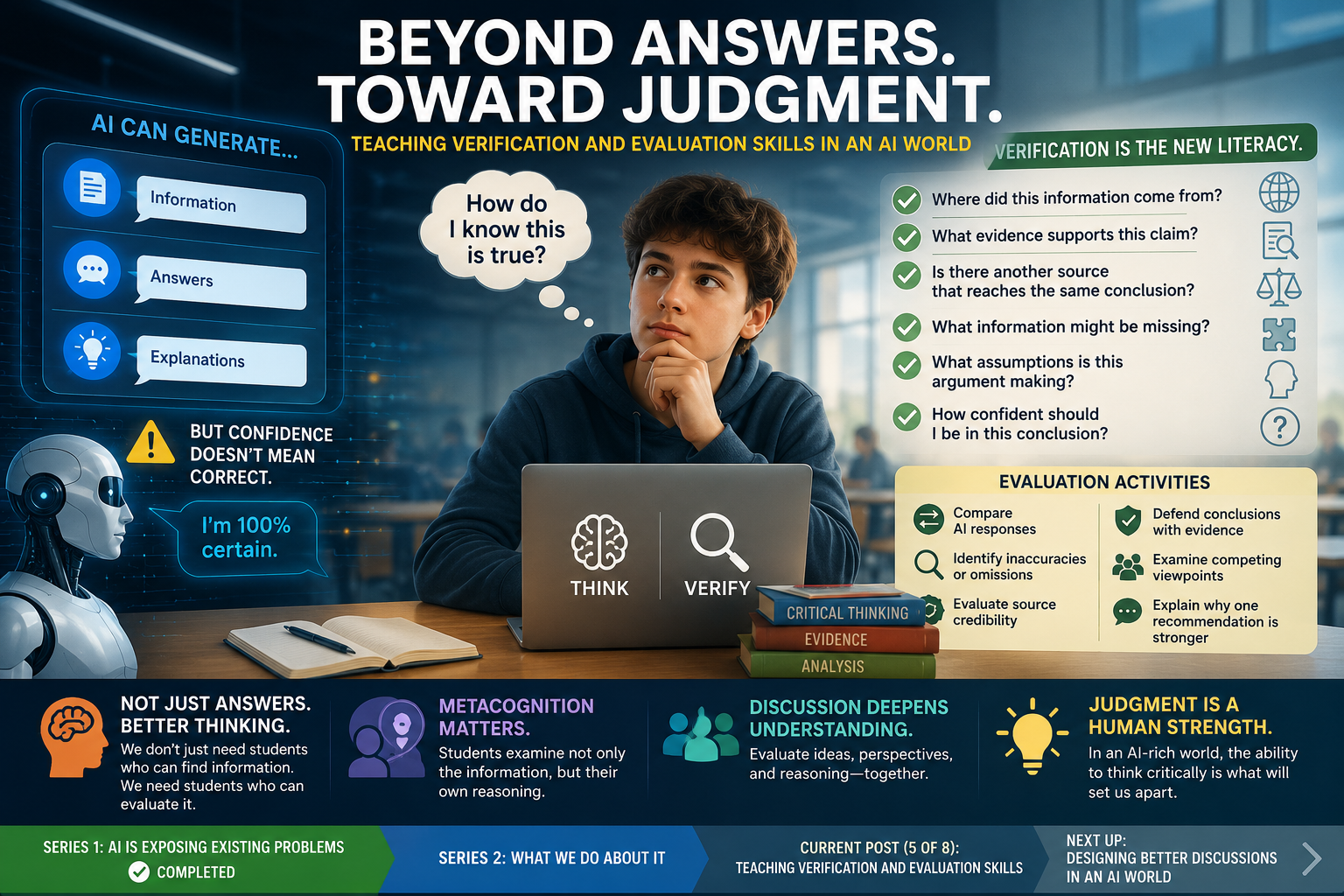
Teaching Verification and Evaluation Skills
AI has changed one of the most important skills students need to develop. The challenge is no longer finding information—it is evaluating it. As AI generates increasingly fluent and convincing answers, students must learn to verify claims, weigh evidence, recognize uncertainty, and exercise sound judgment. In an AI-rich world, the ability to ask, "How do I know this is true?" may become more valuable than simply knowing the answer.

Building Reflection into Learning
Reflection is often treated as an afterthought, but in an AI-rich classroom it may be one of the most valuable learning strategies we have. By asking students to examine what they understood, where they struggled, and how AI influenced their thinking, reflection makes learning visible. It helps students develop metacognitive skills, recognize the difference between AI support and AI substitution, and become more intentional, independent learners.
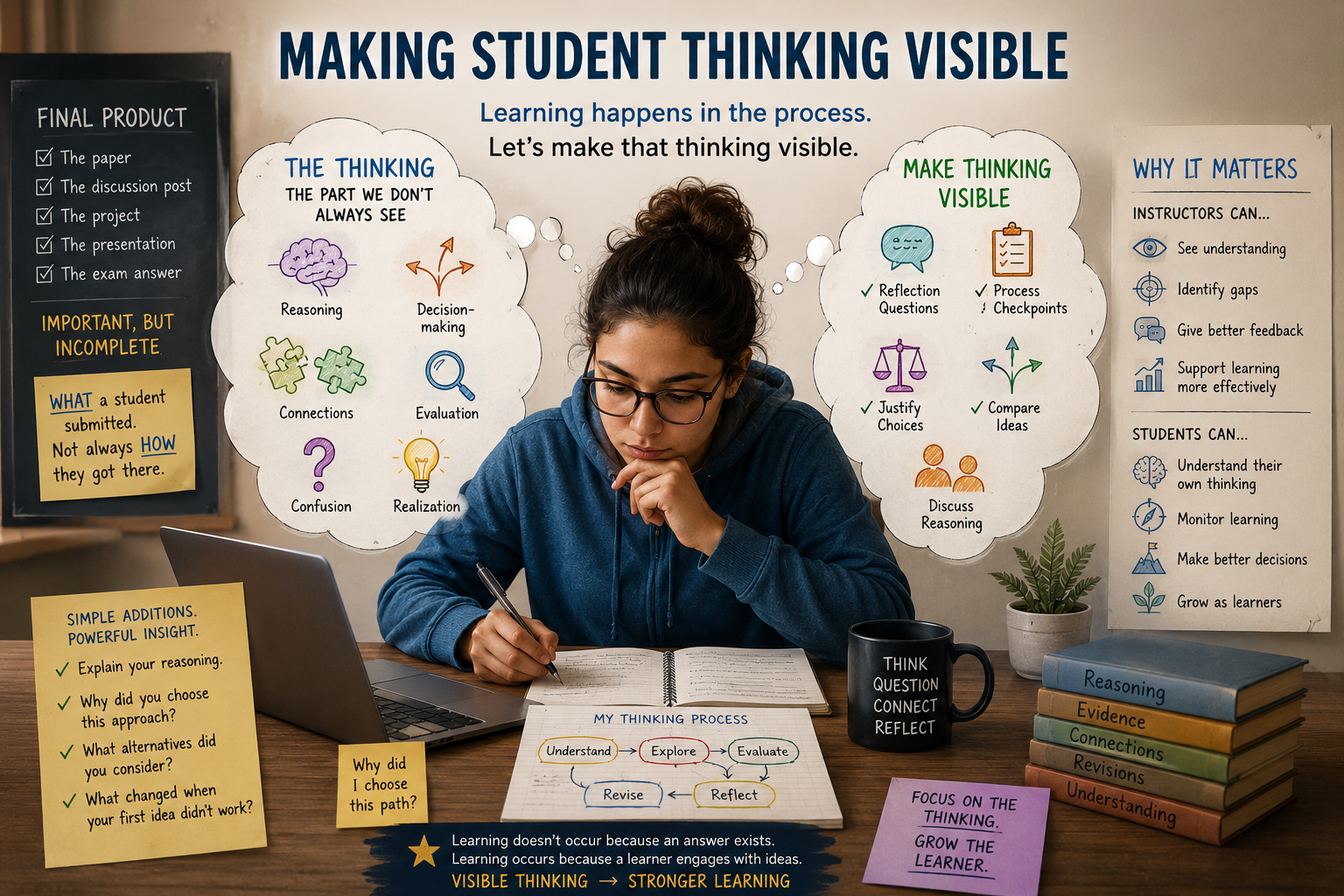
Making Student Thinking Visible
AI has not changed what learning is, but it has exposed how difficult it can be to see. Too often, we assess the final product without understanding the thinking that produced it. In an AI-rich world, instructional design must shift toward making reasoning, decision-making, and reflection visible. Small changes, such as asking students to justify their choices or explain their process, can provide richer evidence of learning while helping students develop the metacognitive skills that matter most.
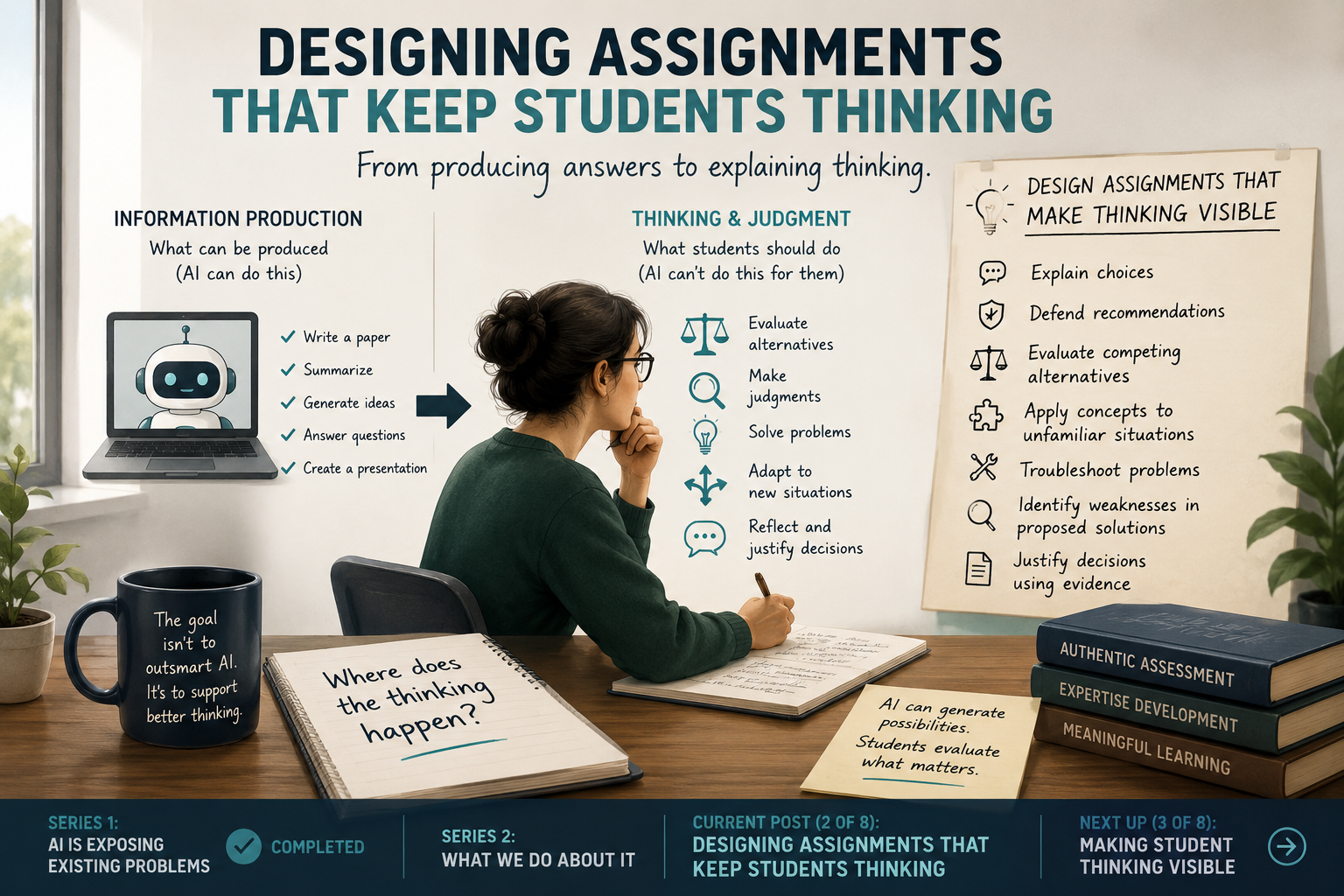
Designing Assignments That Keep Students Thinking
AI can generate information. Learning happens when students evaluate it. Rather than trying to design assignments that prevent AI use, faculty can design assignments that make student thinking visible. The goal isn't to outsmart AI, it's to create opportunities for students to explain, justify, evaluate, and apply their thinking in ways that reflect genuine learning.
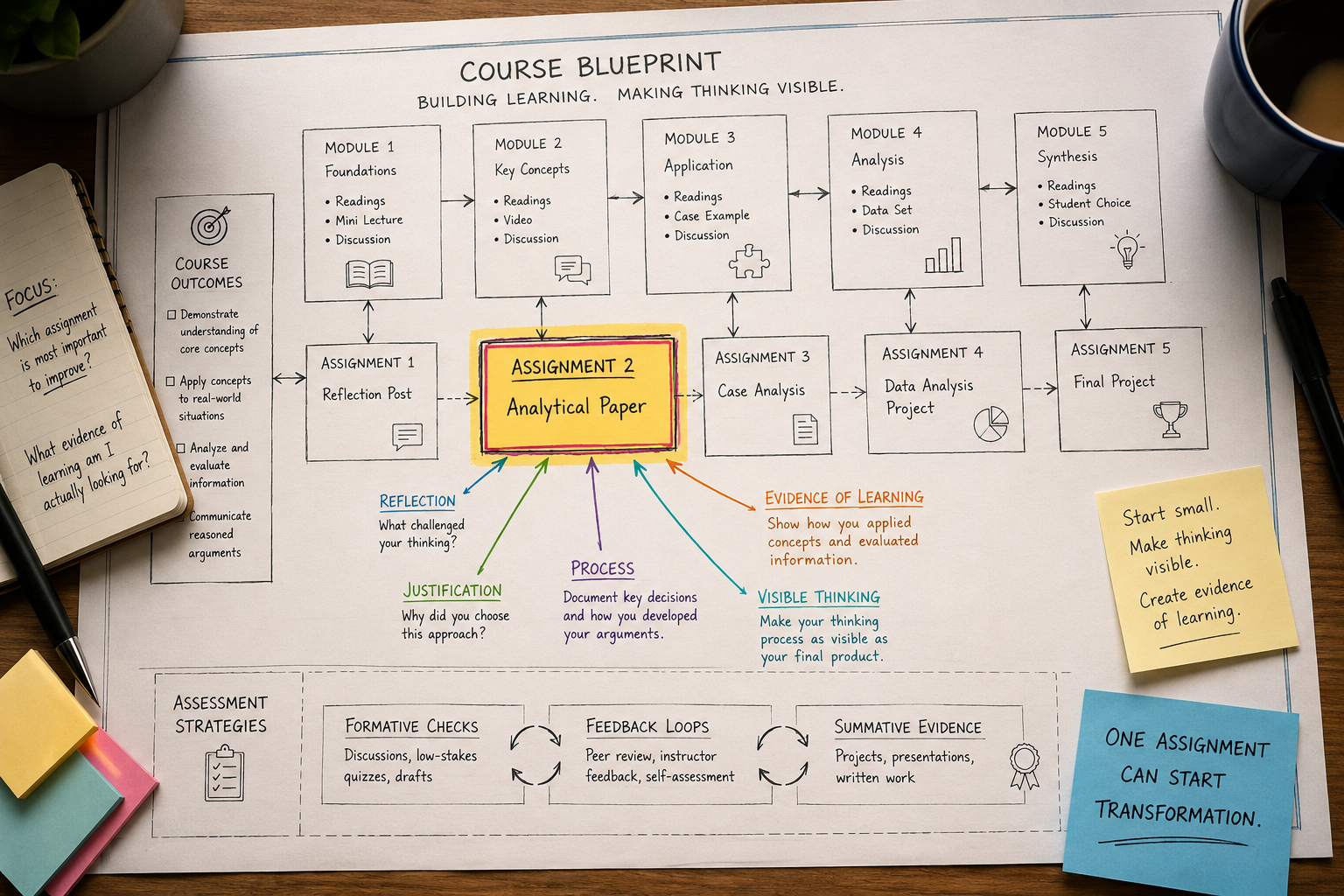
Start With One Assignment, Not Your Entire Course
AI has exposed a challenge that may have existed long before generative AI: a completed assignment is not necessarily the same thing as evidence of learning. Rather than redesigning an entire course, faculty can begin with a single assignment and ask a simple question: What evidence of learning am I actually looking for? Small changes that make student thinking more visible can often have a surprisingly large impact.
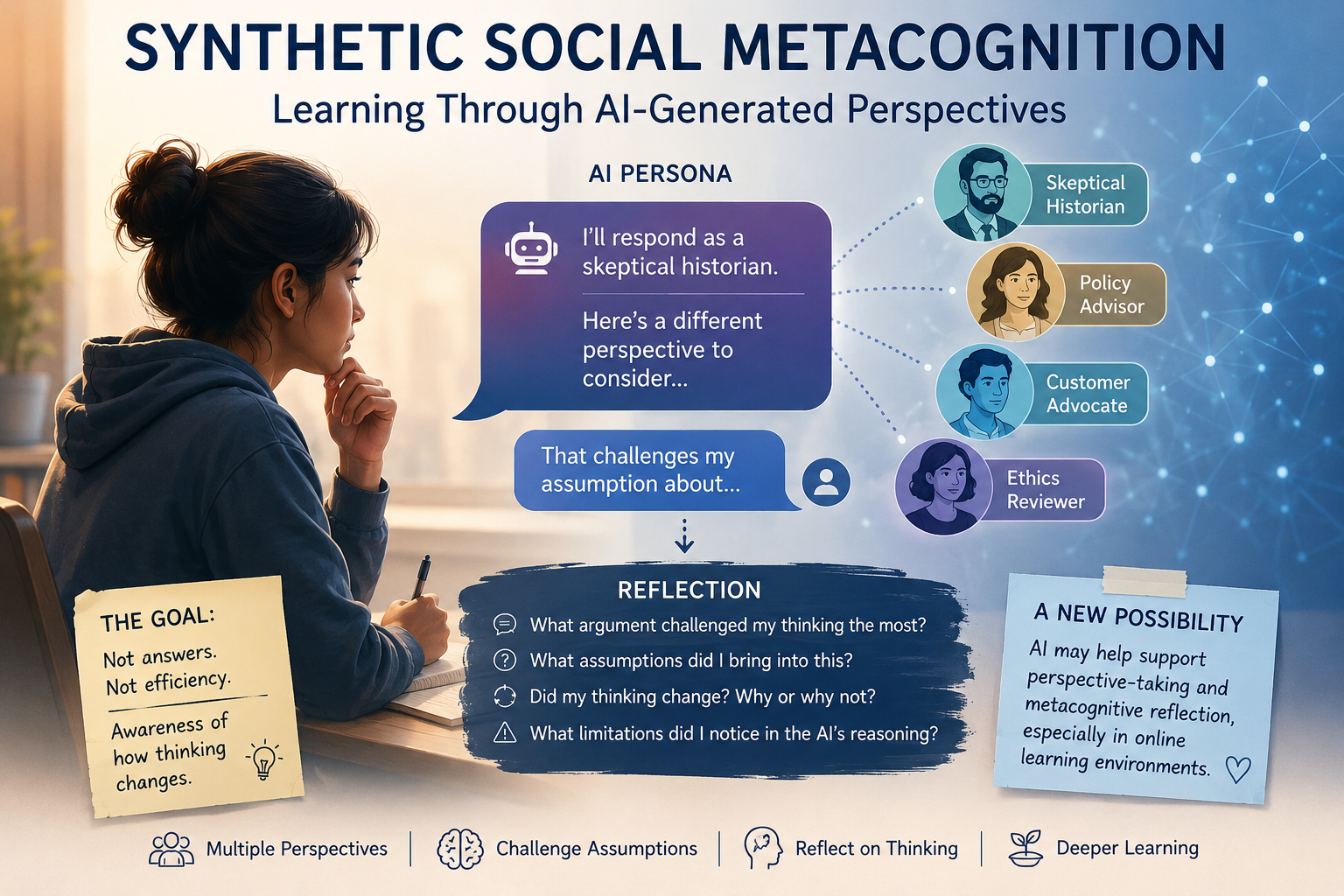
Can AI Support Social Metacognition?
Learning often happens when our assumptions are challenged and our thinking evolves. Traditionally, peers, instructors, and collaborative activities have helped create those moments. But could AI also play a role? This post explores the possibility of using AI personas to encourage perspective-taking, reflection, and metacognitive awareness—a concept I'm calling Synthetic Social Metacognition.

The Real Role of Faculty in an AI World
Artificial intelligence is changing many aspects of higher education, but perhaps the most important change is forcing us to reconsider the role of faculty. When information, explanations, and answers are available instantly, the value of education shifts from delivering content to developing judgment. In an AI world, faculty are not simply providers of knowledge, they are designers of learning experiences that help students think critically, reflect on their decisions, and develop the metacognitive skills needed to navigate an increasingly complex world.

Small Design Changes That Shift Everything
AI is creating pressure for change in higher education, but meaningful course evolution rarely starts with a complete redesign. More often, it begins with small, intentional design choices that make student thinking more visible. Reflection prompts, justification questions, and process checkpoints may seem minor, but they shift the focus from simply producing answers to developing judgment, reasoning, and deeper learning. In an AI-rich world, those small changes can make all the difference.
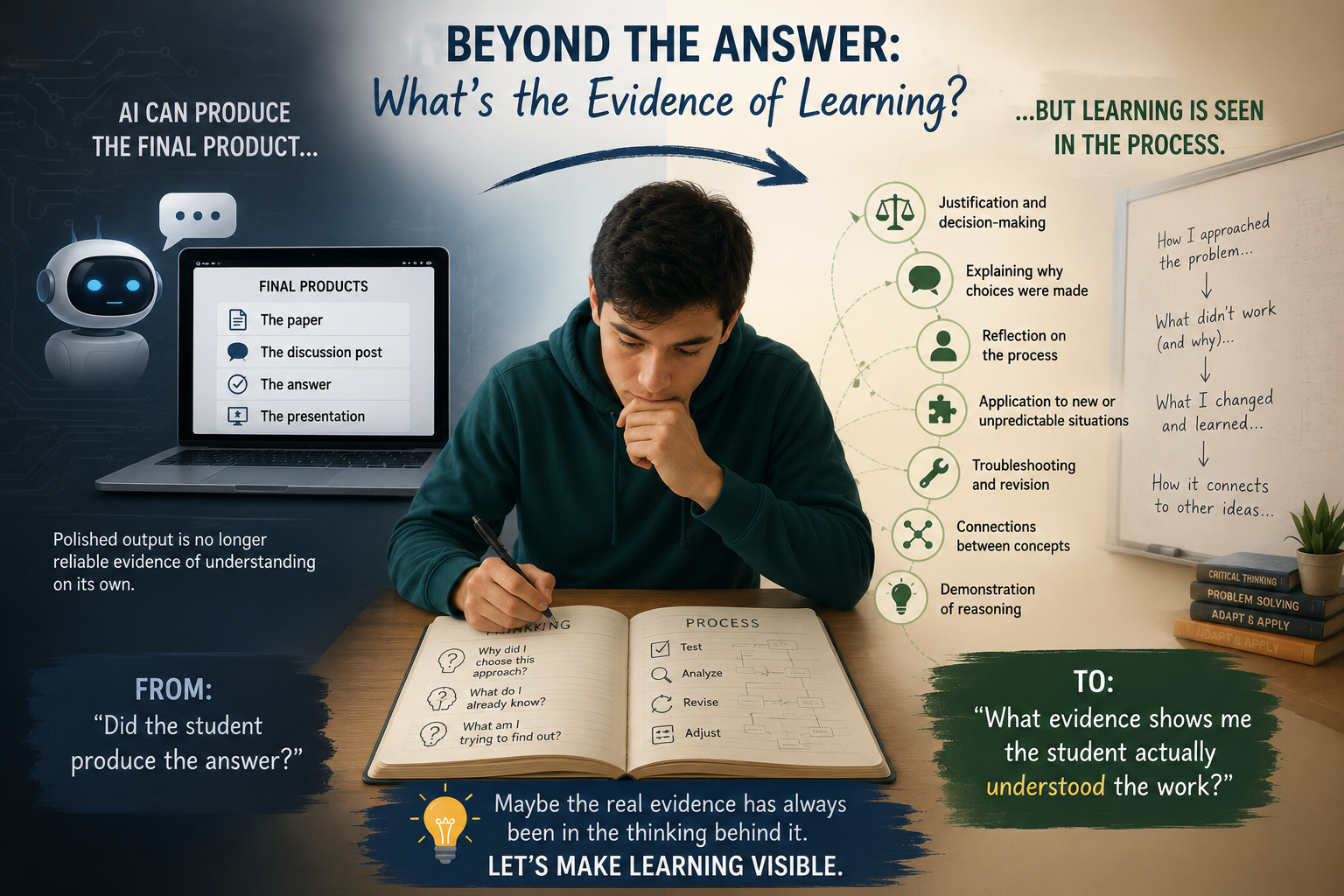
What Counts as Evidence of Learning?
AI is forcing a question that higher education has been able to avoid for a long time: What actually counts as evidence that learning happened? Because for years, many assignments have focused heavily on the final product:
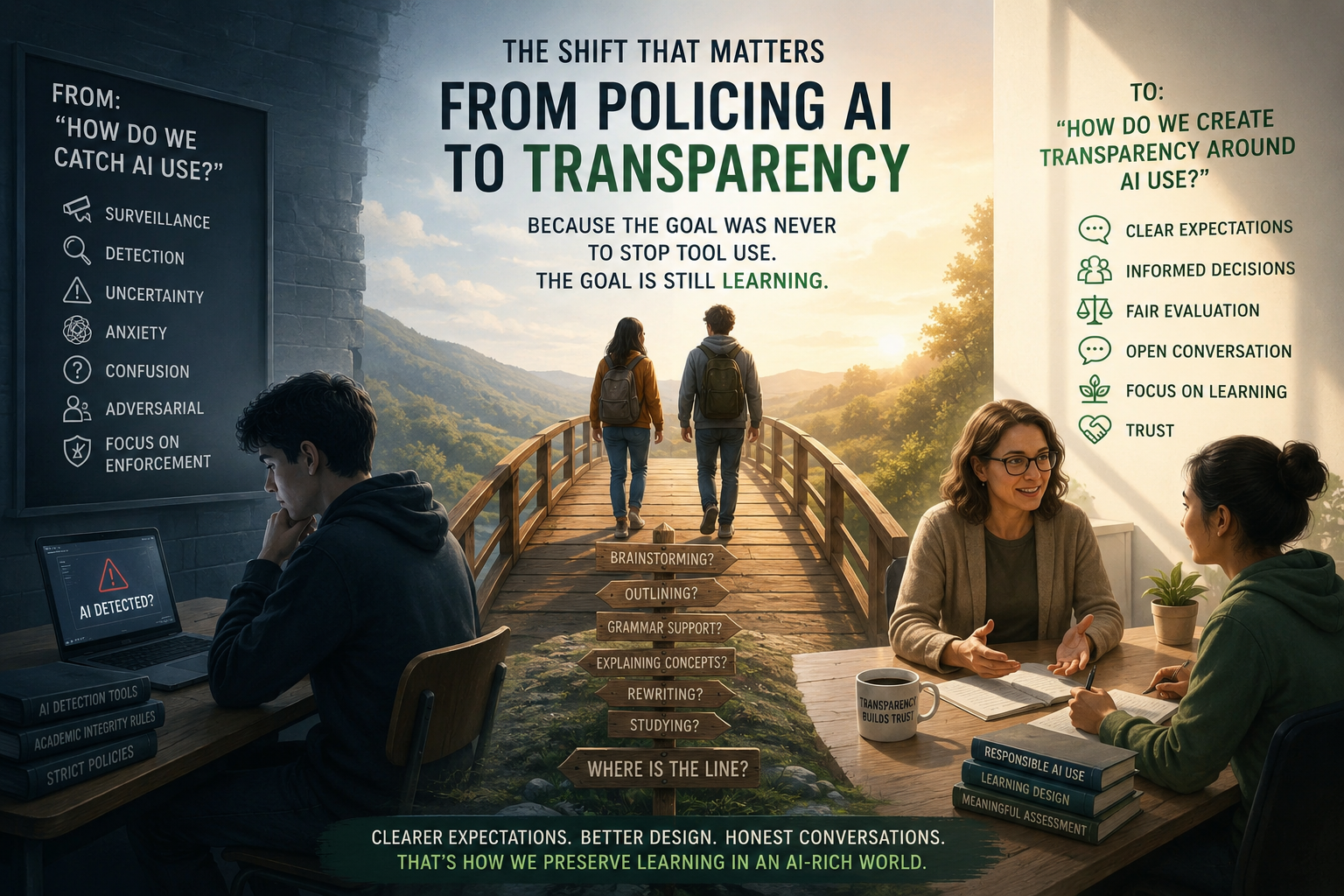
Transparency Over Policing
We keep asking: “How do we stop students from using AI?” But I’m not sure that’s the right question anymore. Because the reality is: You cannot out-police AI use.
The tools are evolving too quickly. Detection systems are inconsistent. And even the companies behind many AI detectors often acknowledge limitations, false positives, and uncertainty in their own documentation.
That creates a dangerous situation in education:
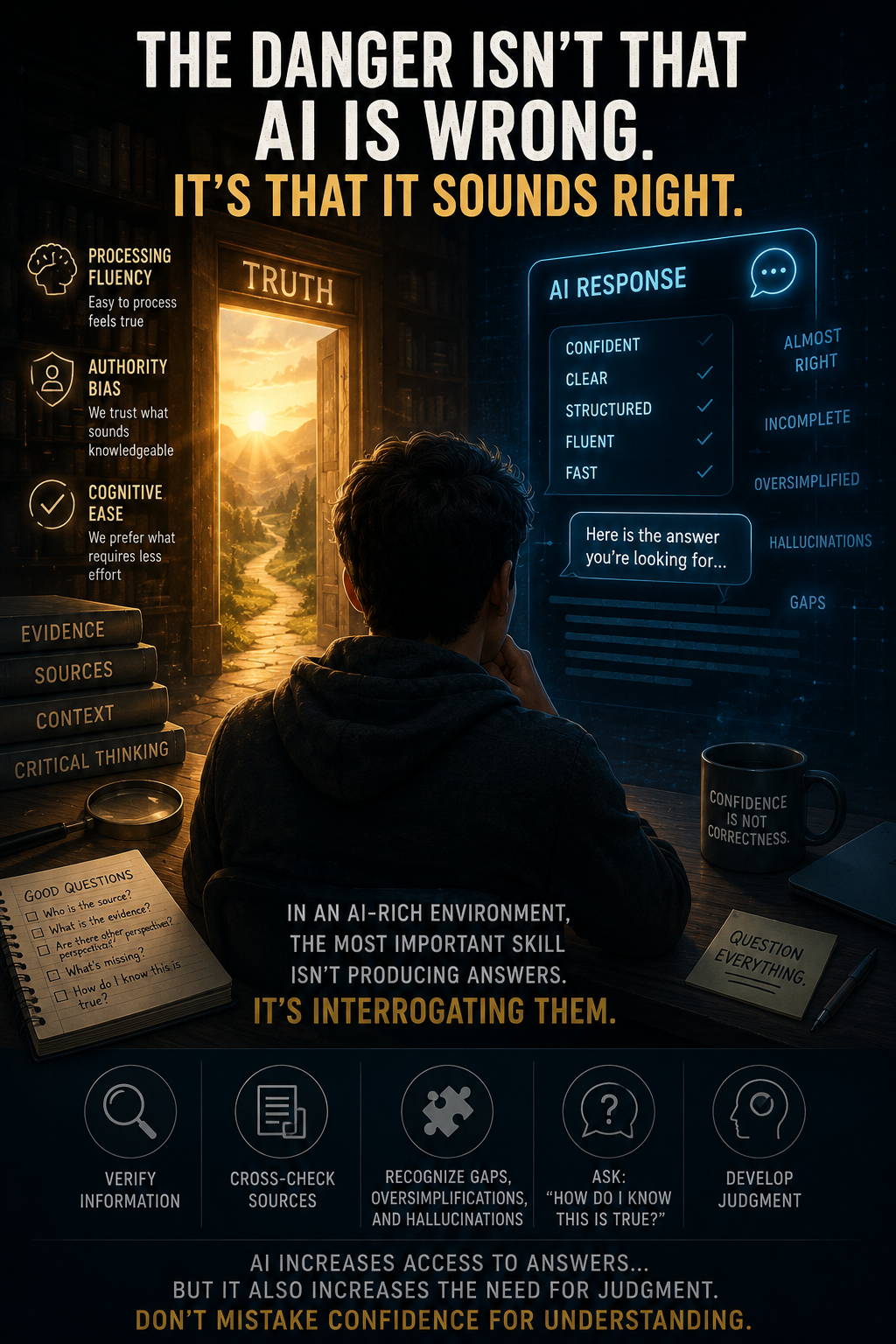
AI Confidence vs. Accuracy
The danger isn’t that AI is wrong. It’s that it sounds right.
AI doesn’t just give answers, it gives confident answers. Clear. Structured. Fluent. Often faster and more polished than what most of us would produce on our own. And that’s exactly the problem.
From a cognitive psychology perspective, this isn’t surprising.
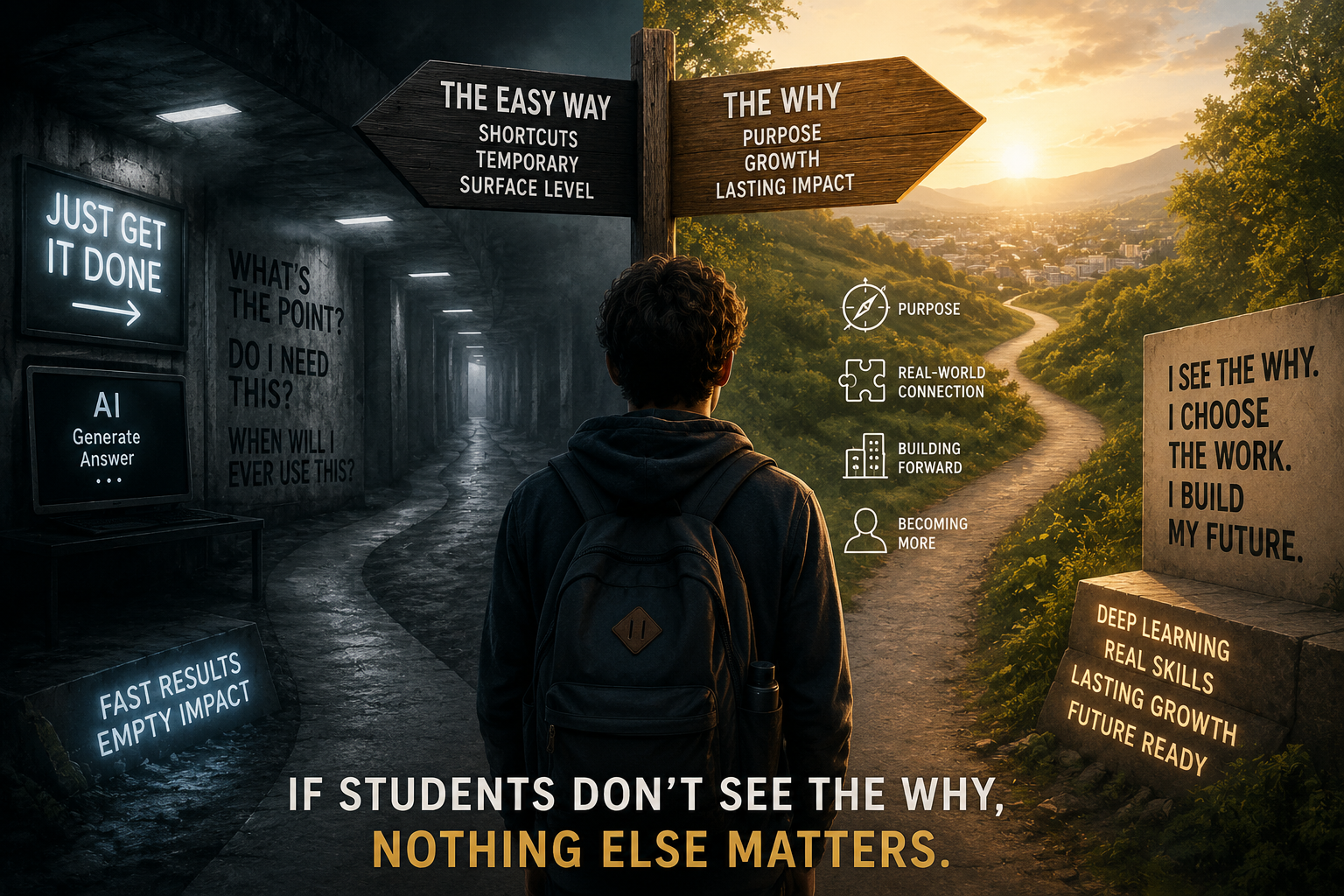
The Missing Purpose Problem
If students don’t see the why, nothing else matters.
We spend a lot of time talking about AI, academic integrity, and “cheating.”
But there’s a more uncomfortable truth underneath it: When students don’t understand the purpose of what they’re doing…shortcut behavior isn’t laziness. It’s rational.